
Thyroid Essentials and What You Need to Know About the Thyroid and GLP1 with Dr. Chhaya Makhija
Feel tired, struggle with your weight, or just not feel like yourself? Your thyroid could be part of the story.
The thyroid plays an important role in your energy, metabolism, mood, and overall health. But understanding your thyroid blood tests can be confusing. What do TSH, free T4, and free T3 actually mean? And what can those numbers tell you about how your thyroid is working?
In this week’s episode, we break down the thyroid in simple terms — what it does, how to understand your lab results, how thyroid health can affect your weight, and what you should know about taking a GLP-1 medication if you have a thyroid condition.
Joining the conversation is Dr. Chhaya Makhija, a triple board-certified endocrinologist with nearly 20 years of experience in hormone and metabolic health. She shares practical insights to help make thyroid health easier to understand and navigate.
Your thyroid labs may be saying more than you think. Let’s get into it.
The Thyroid: The Hormone Behind Your Metabolism
When it comes to the thyroid, it helps to start with the basics. The thyroid is a small, butterfly-shaped gland located in the center of the neck, just below the Adam's apple. It produces thyroid hormones, primarily T4 and T3, which are essential for sustaining life.
The thyroid's main job is closely connected to metabolism, as in how your body converts food into energy. The hormone T4 is produced in larger amounts and travels through the bloodstream, eventually entering cells throughout the body. Inside those cells, T4 is converted into T3, the more active form, which helps support and maintain that cell’s processes. It's kind of like giving each cell the information it needs to keep its own little engine going. Thyroid hormones affect cells throughout the body, so when thyroid function slows down, as it can with hypothyroidism, people may experience symptoms like fatigue, lethargy, weight gain, puffiness, water retention, difficulty thinking clearly, and, in more severe cases, a slowed heart rate.
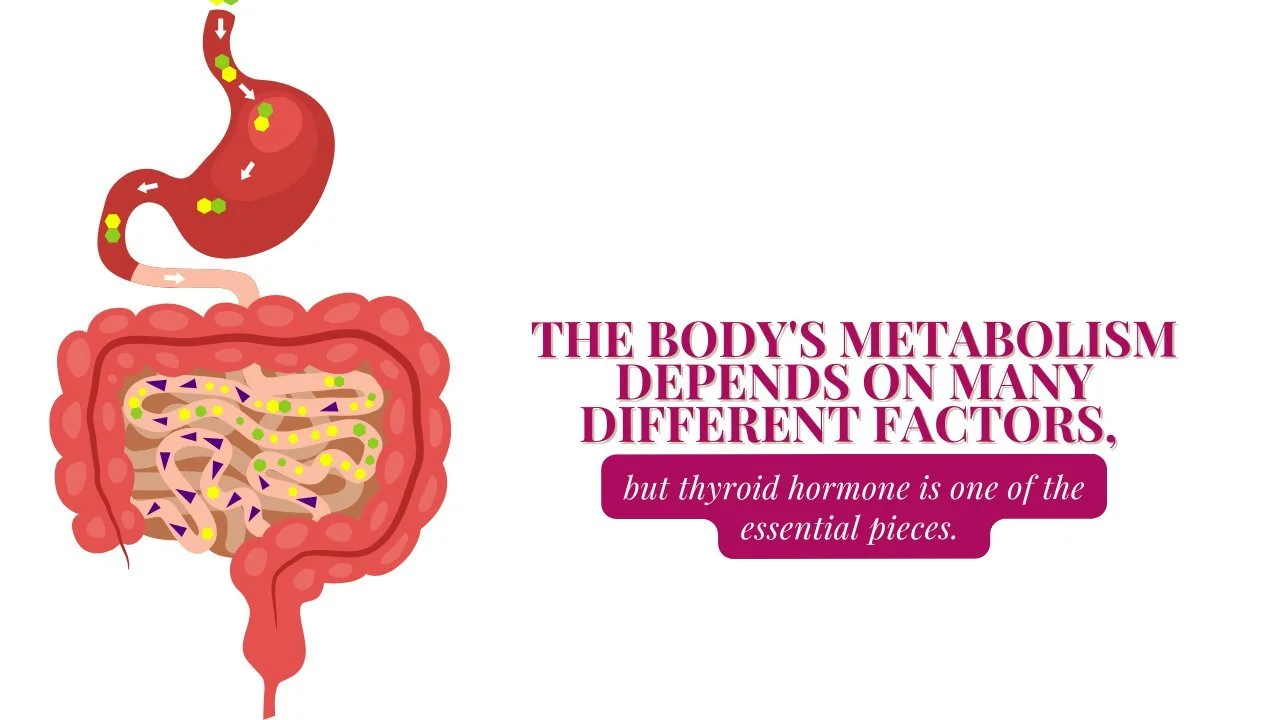
Because the thyroid plays such a central role in metabolism, understanding what it does also helps explain why thyroid blood tests matter. The body's metabolism depends on many different factors, but thyroid hormone is one of the essential pieces. Having a clear picture of how the thyroid works can make those lab results—and the symptoms that often go along with them—much easier to understand. It's a surprisingly small gland with a pretty major job.
High TSH, Low TSH: Decoding the Brain-Thyroid Chain of Command
The thyroid doesn’t work on its own. It’s actually part of a communication system between the brain and the thyroid gland. It starts with the hypothalamus, which sends a signal called TRH (Thyrotropin-releasing hormone) to the pituitary gland, a small gland located at the base of the brain. The pituitary then releases TSH (thyroid-stimulating hormone), which is the thyroid test most people are familiar with.
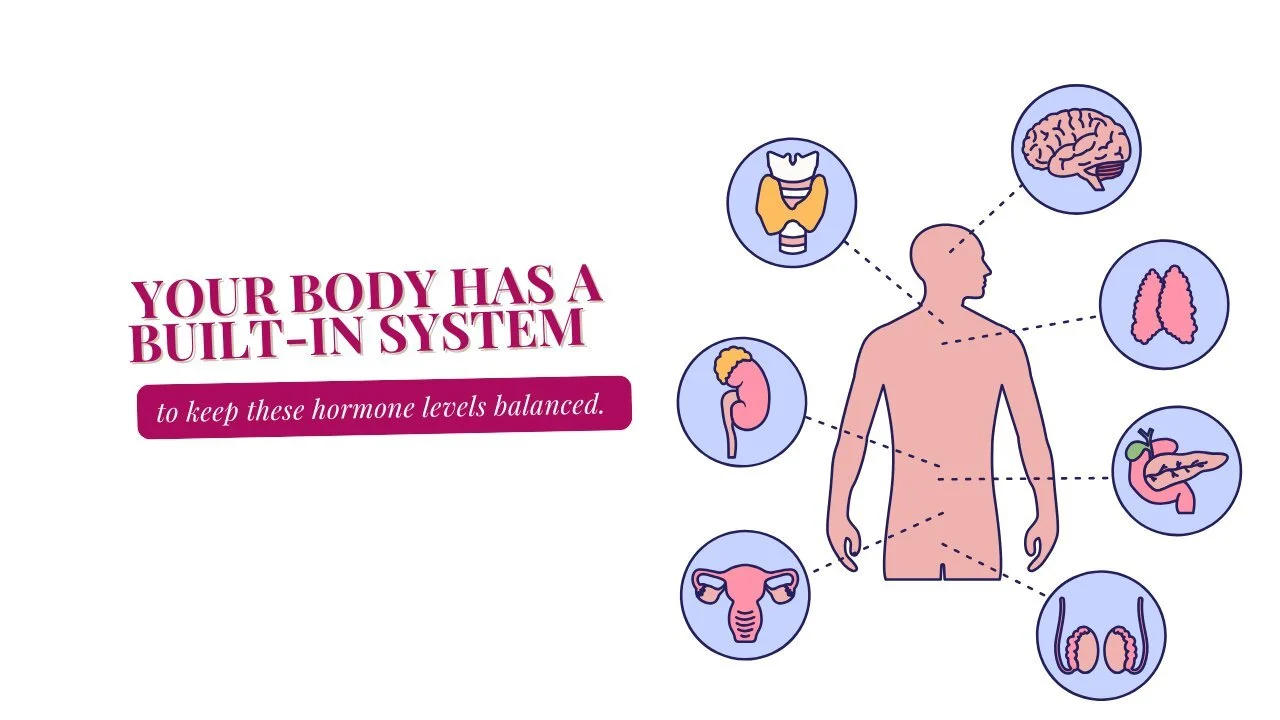
TSH travels through the blood to the thyroid and tells it how much thyroid hormone, mainly T4 and T3, to produce. Your body has a built-in system to keep these hormone levels balanced. When there’s too much thyroid hormone, the brain tells the pituitary to make less TSH. When there isn’t enough, the pituitary makes more TSH to tell the thyroid to work harder.
This is why thyroid test results can seem confusing at first. A high TSH usually points to an underactive thyroid, because the brain is sending more signals to get the thyroid working harder. A low TSH usually points to an overactive thyroid, because the brain is trying to slow the thyroid down.
Once you understand how these signals work together, thyroid lab results become much easier to make sense of.
The Truth About Free T3 — And Why Labs Can't Agree On It
When doctors check for thyroid problems, they usually start with a TSH test. It gives them a quick idea of whether the thyroid may be working too slowly, too quickly, or somewhere in the normal range. But TSH alone doesn’t always tell the whole story.
If the TSH comes back outside the normal range, doctors may also check free T4. This is often done through a test called TSH with reflex free T4, which means the lab will automatically check free T4 if the TSH result is abnormal. This saves you from having to get another blood test just to get a clearer picture of what’s going on.
You may also come across tests called total T4, total T3, free T4, and free T3. The difference can be confusing, but it basically comes down to how thyroid hormones travel through your blood. Some of the hormone is attached to proteins that help carry it around, while the “free” hormone is the portion that’s available for your body to use.
Free T3 can be especially tricky to interpret. It’s often talked about online as an important thyroid test, especially when someone has normal TSH and free T4 but a slightly low free T3. However, free T3 tests can vary quite a bit depending on the lab, and T3 also doesn’t stay in the bloodstream for very long.
Because of this, one low free T3 result doesn’t automatically mean you have an underactive thyroid, especially if your TSH and free T4 are normal. Your doctor may look at the result again, consider other tests, and most importantly, look at all of your thyroid results together.
The biggest takeaway? Don’t let one thyroid number scare you. Thyroid tests are meant to be looked at as a whole, along with your symptoms and medical history, rather than focusing on one result by itself.
Why Endocrinologists Say the Thyroid Isn't Always the Problem
One story that really drives this point home involves a patient who came in years ago after visiting a clinic that offered testosterone pellets along with a whole panel of other hormone tests. Her TSH was practically textbook perfect, sitting around 1.1, and her T4 fell right in the middle of the normal range. Her free T3, though, was just barely below range, and that alone was enough for the clinic to start her on levothyroxine. By the time she came in for a primary care visit, she was dealing with depression, anxiety, and mood changes that seemed to have shown up right around the same time as the new medication.
A quick look at her labs made it clear the thyroid medicine was never actually appropriate for her, and it was likely contributing to the mood symptoms rather than fixing anything. That scenario isn't unusual — in consultations and chart reviews, the thyroid turns out to be the actual problem only a fraction of the time. More often, the real culprit is something else entirely: perimenopause or menopause, undiagnosed iron deficiency, sleep apnea, or insulin resistance, all of which can mimic classic thyroid symptoms like fatigue and weight gain. That said, autoimmune thyroid conditions like Hashimoto's genuinely do show up more often in younger women, especially during the postpartum period, and subclinical hypothyroidism — where the thyroid is only partially underperforming — is common enough that it requires real clinical judgment rather than a reflexive prescription.
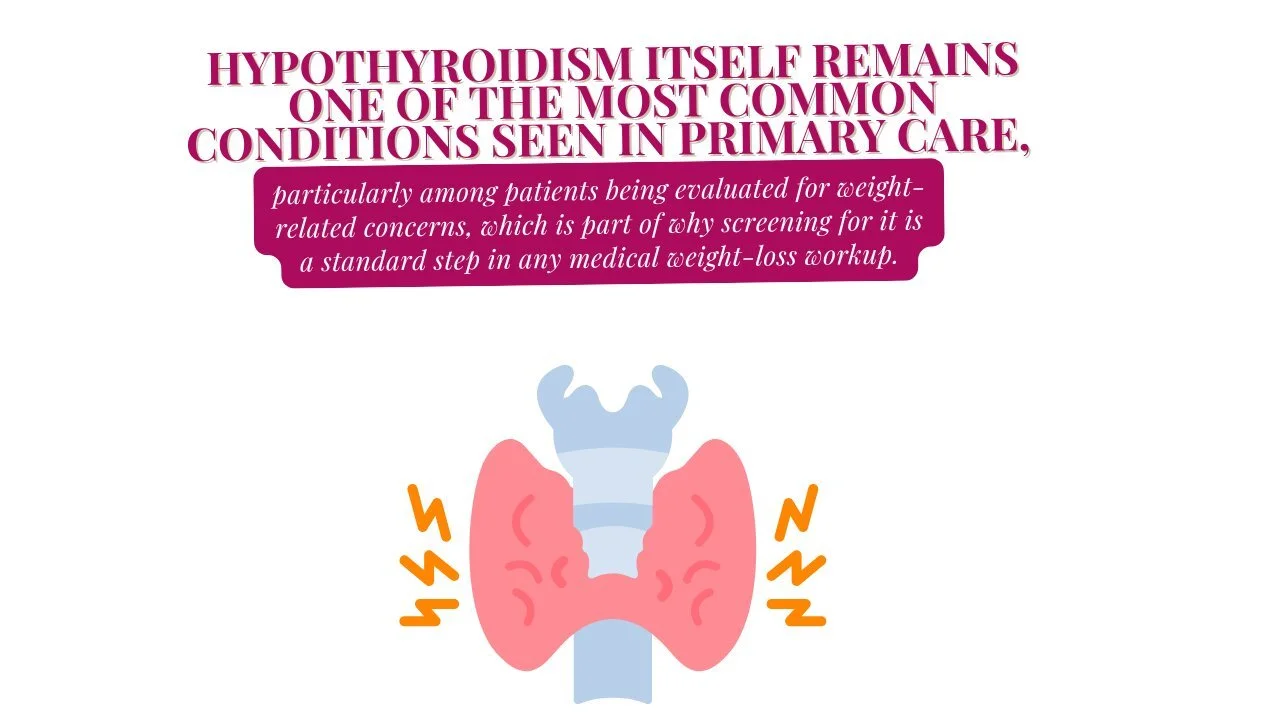
Deciding whether to treat subclinical hypothyroidism usually comes down to a conversation between patient and physician, often involving a trial period of low-dose thyroid hormone with close monitoring of TSH and free T4 over 30 to 60 days to see if symptoms actually improve. That kind of nuanced, ongoing evaluation is exactly why endocrinologists, family medicine, internal medicine — and to some extent gynecologists for women's hormone health — are considered the true specialists in this space, given how deeply hormonal systems interact and influence each other. Hypothyroidism itself remains one of the most common conditions seen in primary care, particularly among patients being evaluated for weight-related concerns, which is part of why screening for it is a standard step in any medical weight-loss workup.
The Wide-Ranging, Often Misread Symptoms of an Underactive Thyroid
True hypothyroidism, where the thyroid gland genuinely isn't functioning properly, tends to show up through a pretty recognizable set of symptoms. Fatigue, weight gain, and an overall sense of everything slowing down are classic signs, along with facial puffiness or water retention. There's even fat deposition that can build up at the back of the tongue before weight gain becomes noticeable, which can lead to snoring or mild sleep apnea in both men and women. Digestion slows down too, often showing up as constipation, since thyroid hormone essentially controls the body's engine. Left untreated for long enough, hypothyroidism can even start affecting cognition, and in older patients who aren't getting screened regularly, prolonged untreated cases can look a lot like memory loss or early dementia rather than what it actually is.
TSH numbers themselves can get pretty dramatic, too, with some patients showing levels as high as 150 when a normal range typically falls somewhere between 0.4 and around 4. What's surprising is that patients with numbers that extreme, often in the postpartum period, can be completely asymptomatic. These cases are usually transient, tied to thyroiditis, where inflammation after pregnancy or delivery temporarily throws thyroid hormone levels off before the body recovers on its own. Figuring out the actual cause behind an abnormal TSH matters a lot here, since watching and waiting makes sense for a case that's recovering from thyroiditis, but not for something that looks like lingering, permanent hypothyroidism. Starting thyroid hormone in someone who's actually in a temporary recovery phase can flip them into hyperthyroidism within just a few weeks, creating a whole new set of problems.
This kind of hormonal back-and-forth can leave patients feeling pretty rough, even when labs eventually normalize. It happens more than people expect — hearing that thyroid numbers look excellent while still feeling completely exhausted — and that disconnect between how a person feels and what the labs show is worth paying attention to rather than dismissing. Clinical judgment has to bridge that gap, weighing the full picture — symptoms, history, and labs together — instead of treating a single number in isolation.
The Real Story Behind Thyroid-Related Weight Struggles
The relationship between thyroid function and weight is a lot more nuanced than most people assume, especially for women, who make up the vast majority of hypothyroidism diagnoses. Hypothyroidism itself can stem from several different causes — autoimmune conditions, post-surgical thyroidectomy, or radiation thyroiditis — and what counts as an "optimal" TSH really needs to be individualized rather than just falling somewhere in the standard 0.4 to 4.2 range. In some cases, adding a low dose of T3 alongside the usual T4 replacement can help patients feel symptomatically better, particularly in thyroid cancer patients dealing with post-surgical hypothyroidism, even though it's not going to be the thing that drives weight loss on its own. Desiccated animal thyroid extracts like Armour or Nature-Throid come up in these conversations often too, and while some patients truly feel better on them, the risk of tipping into hyperthyroidism is notably higher than with synthetic T4 alone, which makes careful lab interpretation essential.
There isn't solid research showing that every hypothyroid patient is destined to struggle with weight, even when thyroid levels look perfectly optimized. Weight and metabolism involve a whole cast of hormones beyond just thyroid hormone, including estrogen and progesterone shifts that tend to push fat distribution toward the midsection after the mid-to-late 30s. Sleep disturbances and mild sleep apnea play a bigger role than people realize, too, since disrupted sleep raises baseline cortisol levels in a way that messes with circadian rhythm and metabolism over time. Continuous glucose monitoring has actually made this pattern pretty visible in clinical practice — patients with no changes to diet or exercise still show nighttime blood sugar spikes tied directly to poor sleep, driven by the cortisol and adrenaline surge that triggers the liver to produce more glucose.
One of the most important points to understand, though, is that treating hypothyroidism doesn't undo weight that was already gained while the condition went untreated. Getting TSH into a normal range will stop further hypothyroidism-related weight gain and can ease symptoms like water retention and puffiness, but reversing existing weight gain still requires the usual combination of diet, exercise, medication, or other interventions. It also matters how hypothyroidism gets treated in the first place — patients with an atrophic (ie weak/ thin and not functioning properly) thyroid gland who get started on a tiny dose and left there for months at a time are technically still hypothyroid the whole while, and it's exactly why pinpointing the underlying cause early on matters for getting patients to an appropriate dose sooner rather than dragging out the adjustment period unnecessarily.
From Ultrasound to Peace of Mind: What Happens When You Find a Thyroid Nodule
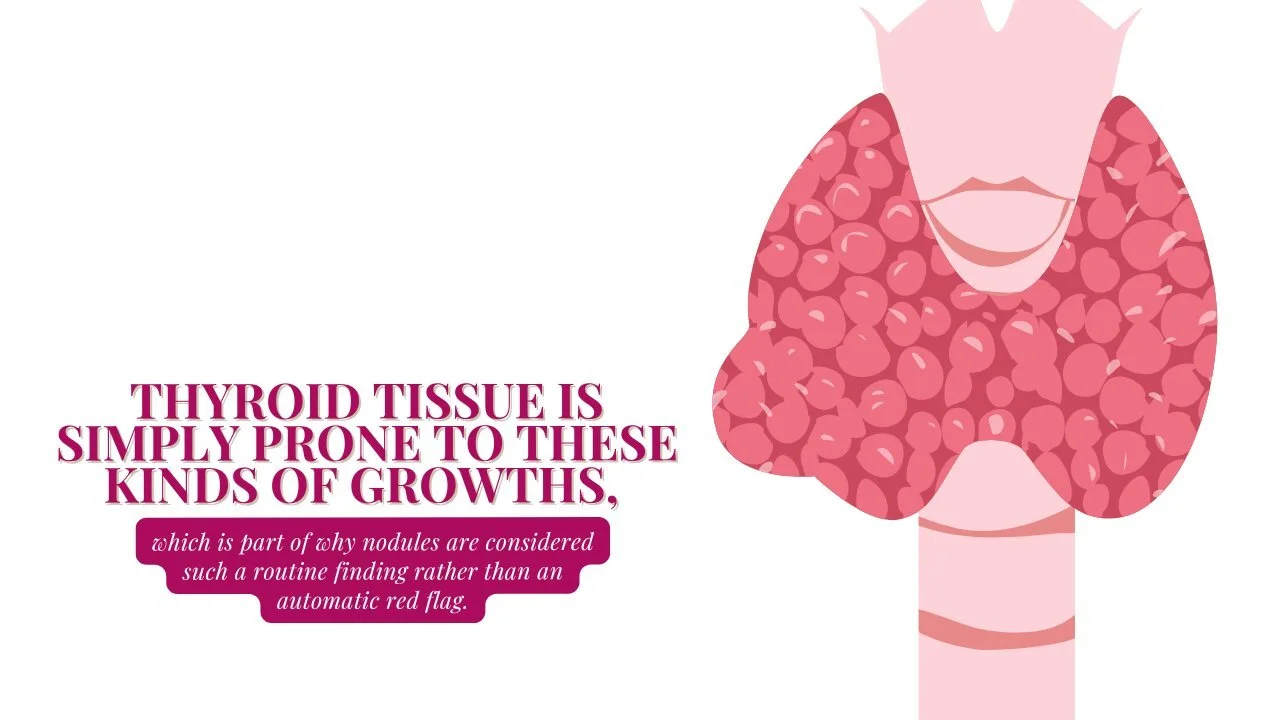
Thyroid nodules come up constantly, but they're really nothing to panic about — only about 3 to 5% turn out to be cancerous, and having nodules in the first place is just a normal part of having a thyroid gland. Small cystic nodules in the five-to-ten millimeter range are common, and even small solid nodules under a centimeter show up frequently in adults without ever being a problem. Thyroid tissue is simply prone to these kinds of growths, which is part of why nodules are considered such a routine finding rather than an automatic red flag.
That said, not worrying doesn't mean ignoring it, either. If something's felt in the neck or shows up on imaging, the right move is simply asking for a thyroid ultrasound, which is inexpensive and easy to get. Radiologists typically evaluate nodules using established criteria, like TIRADS or American Thyroid Association guidelines, to determine whether a nodule just needs periodic monitoring or warrants a fine needle aspiration for further testing. That structured approach takes a lot of the guesswork out of next steps and makes the whole process feel a lot less overwhelming.
Even when cancer does turn out to be the diagnosis, the outlook tends to be reassuring, since papillary and follicular thyroid cancers — the most common types — are highly treatable, often resolved with a thyroidectomy and sometimes followed by iodine therapy. Rarer forms like anaplastic and medullary thyroid carcinoma exist, but they're exceptionally uncommon. Getting an ultrasound and following through with recommended testing is really all it takes to stay on top of a thyroid nodule without letting it become a source of unnecessary worry.
On a GLP-1 and Have Hypothyroidism? Here's What to Watch For
The black box warning on GLP-1 medications tends to spark a lot of anxiety, mostly because it flags a risk of medullary thyroid cancer based on rodent studies. As of now, that warning doesn't translate into real concern for humans, and a screening thyroid ultrasound isn't even necessary before starting a GLP-1 receptor agonist. The doses used in those rodent studies were very different from human dosing, and since the first FDA-approved GLP-1 came out back in 2005, there's been two decades of clinical use without a single human case report linking these medications to medullary thyroid carcinoma. A prior history of papillary or follicular thyroid cancer, the most common types, isn't a contraindication either — and if someone actually had medullary thyroid carcinoma in the past, it's rare enough that they would almost certainly remember being told about it, given how significant that diagnosis is.
For anyone already managing hypothyroidism who's starting or already on a GLP-1, the medication itself isn't off the table — it's considered safe to use alongside thyroid hormone replacement. The bigger consideration is monitoring, especially once weight loss picks up. Losing more than about 10 pounds within a few months of starting a GLP-1 is a good cue to recheck thyroid labs, since thyroid hormone dosing is partly weight-based, and failing to adjust it can quietly lead to excess thyroid hormone circulating in the body, showing up as things like palpitations or anxiety.
GLP-1s can also aggravate GERD in some patients, which often leads people to start reaching for antacids or medications like Prilosec or Nexium without realizing those can interfere with thyroid hormone absorption if taken too close together. That combination can end up looking like a weight-loss plateau when it's really just a thyroid dosing issue caused by timing or absorption problems. Staying in touch with a clinician about both weight changes and any new medications being added into the mix goes a long way toward keeping thyroid hormone dosing accurate throughout treatment.
Your thyroid may be small, but it can have a big impact on how you feel. Understanding your symptoms and lab results can help you make more informed decisions about your health.
If you’ve ever wondered whether your thyroid could be affecting your energy, weight, or overall well-being, this episode is worth a listen.
Check out the full episode for the complete conversation with Dr. Chhaya Makhija and a deeper look at thyroid health, lab results, weight, and GLP-1s.
More from The Dr. Francavilla Show:
Subscribe to The Dr. Francavilla Show on