
Muscle Mass and GLPs with Dr. Ali Novitsky
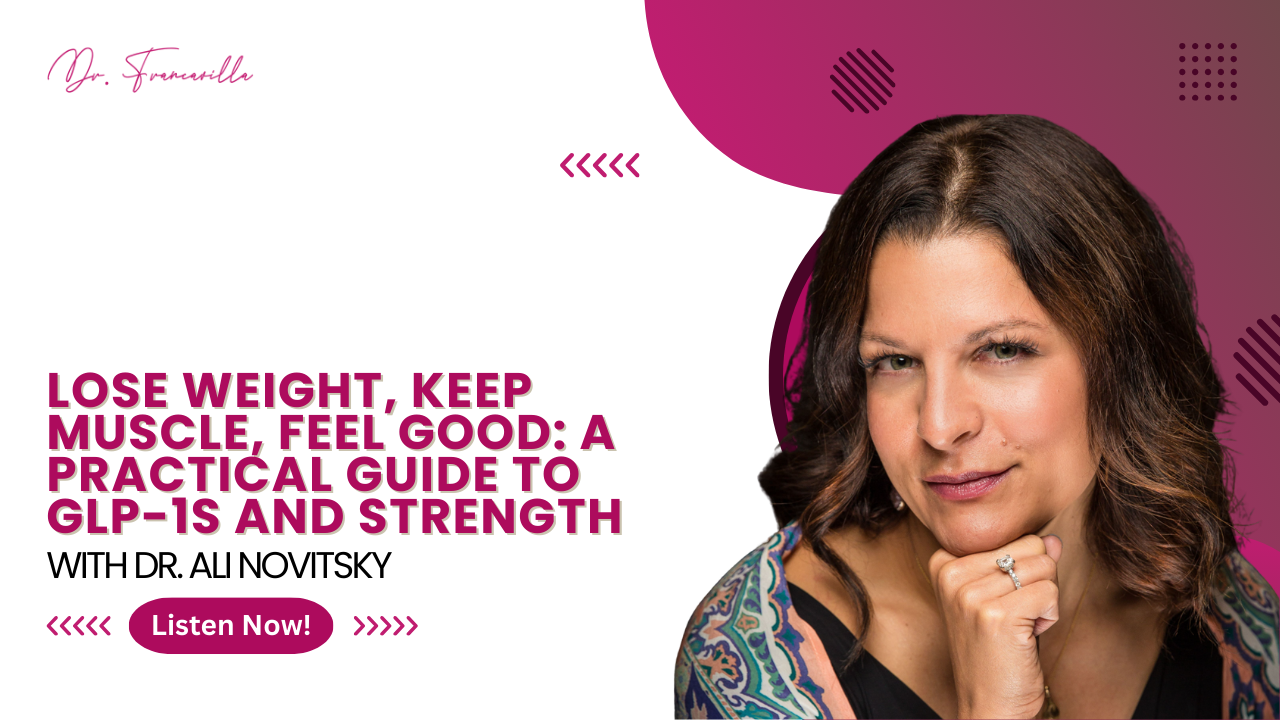
Worried you’ll lose muscle while losing weight on GLP-1 medications?
It’s one of the most common concerns people have when they start these treatments—and for good reason. Most people don’t just want the scale to go down. They want to feel stronger, protect their metabolism, and avoid feeling weaker as the weight comes off.
That’s why we invited Dr. Ali Novitsky, CEO and founder of The Fit Collective, as a guest. She shares her insights on combining obesity medicine with practical strength training and sustainable habits. With both personal experience navigating weight challenges and clinical experience supporting patients, her approach centers on building a healthier body—not just a smaller one.
The concern about muscle loss with GLP-1 medications isn’t totally unfounded, but it’s often overstated. Any meaningful weight loss can come with some muscle loss. The good news is that with enough protein, intentional strength training, and realistic movement habits, much of that muscle loss can be minimized. GLP-1 medications work best when they’re part of a bigger plan—one that prioritizes strength, function, and long-term health.
If you want to discover Dr. Novitsky’s strategies for building strength while losing weight, don’t stop here.
GLP-1s and Muscle Loss: The Fear vs. The Facts
When it comes to muscle mass and strength on GLP-1 medications, people often freak out for no reason. Like, let’s get this straight—GLP-1s don’t directly make you lose muscle. The real risk happens when appetite drops and you end up eating or moving too little. Your body adapts by shedding tissue it doesn’t think it needs, which is really a support-and-strategy issue, not a medication problem. These medications level the metabolic playing field, but they don’t replace the basics: fueling your body and keeping it moving.
Muscle measurements can also be super misleading. Muscle holds water, glycogen, and even some fat, so when inflammation goes down with weight loss, your body scans might show a drop in “muscle mass”—even if you’re actually stronger and more functional. And honestly, where you start matters a lot. If someone has a higher baseline of muscle, losing a little lean tissue won’t make them weak. What really counts is how your body moves, functions, and handles daily life, not a single number on a scan.
And then there’s strength training, which gets way overcomplicated sometimes. You don’t need to lift heavy or follow the latest Instagram trends. Strength is all about resistance and progressive overload—basically, asking your muscles to do a little more over time. That can be weights, bands, bodyweight, or even simple isometric moves, like pressing your palms together or holding a plank. Muscle size and strength aren’t always linked, so you can get stronger even if your muscle mass shifts during weight loss. Pair GLP-1s with enough protein, realistic movement, and consistent strength work, and you’re not just supporting weight loss—you’re building a stronger, more capable body that actually works for you.
Strength Training Anywhere
Strength training doesn’t have to look like a fancy gym session or a scheduled workout. Honestly, it’s basically anytime your body moves against resistance. Walking through a pool, pushing down on the arms of a chair, lifting your knees while seated, or pressing your palms together—these all activate muscles. They might seem small or low-key, but they do count. Strength work doesn’t need perfect timing, special gear, or a set routine. It can be built into everyday life in really simple, practical ways.
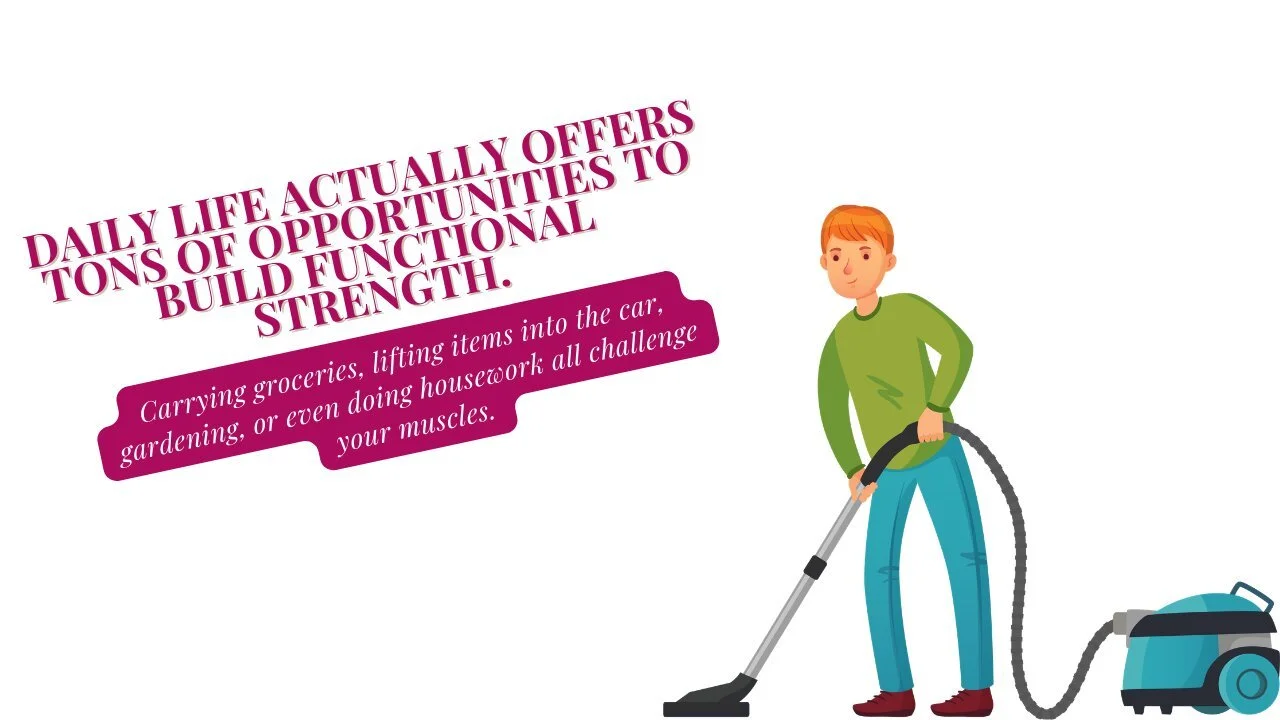
Daily life actually offers tons of opportunities to build functional strength too. Carrying groceries, lifting items into the car, gardening, or even doing housework all challenge your muscles. Remember the goal is keeping your body capable of doing the things that actually matter, whether that’s traveling comfortably, carrying bags, or just staying active well into older age.
On GLP-1s, appetite changes can make it easier to accidentally underfuel if you wait until you’re “hungry” or try to eat as little as possible. The good news? Regular protein intake and even modest daily movement go a long way in keeping muscles strong. Muscle loss becomes a real concern only when nutrition is inadequate and activity disappears. With some basic support—enough protein, enough calories, and consistent movement—most people can protect their strength and function while still losing weight.
Overcoming Exercise Barriers
One of the biggest challenges people face with exercise isn’t actually time or access, it’s mindset. Many people, especially those who have struggled with their weight, avoid strength training because they think it will make them “bigger.” Others assume they need a gym, special clothes, or complicated routines to start. Some fall into all-or-none thinking, where missing one session makes the whole effort feel wasted. These mental barriers can be just as limiting as physical obstacles, and overcoming them usually starts with reframing what exercise is really for.
A key strategy is helping people actually enjoy moving their bodies instead of dreading it. Exercise isn’t just about changing your shape, it’s about how you feel. Strength training can fit any lifestyle or preference. Dancing, gardening, lifting groceries, or simple bodyweight moves all count. The focus is on functional movement and consistency, not perfection or extreme effort. Even short, manageable sessions like 10–20 minutes a few times per week can improve mood, reduce stress, and build habits that stick. Over time, people notice the difference in how they feel, and that becomes the real motivator to keep going.
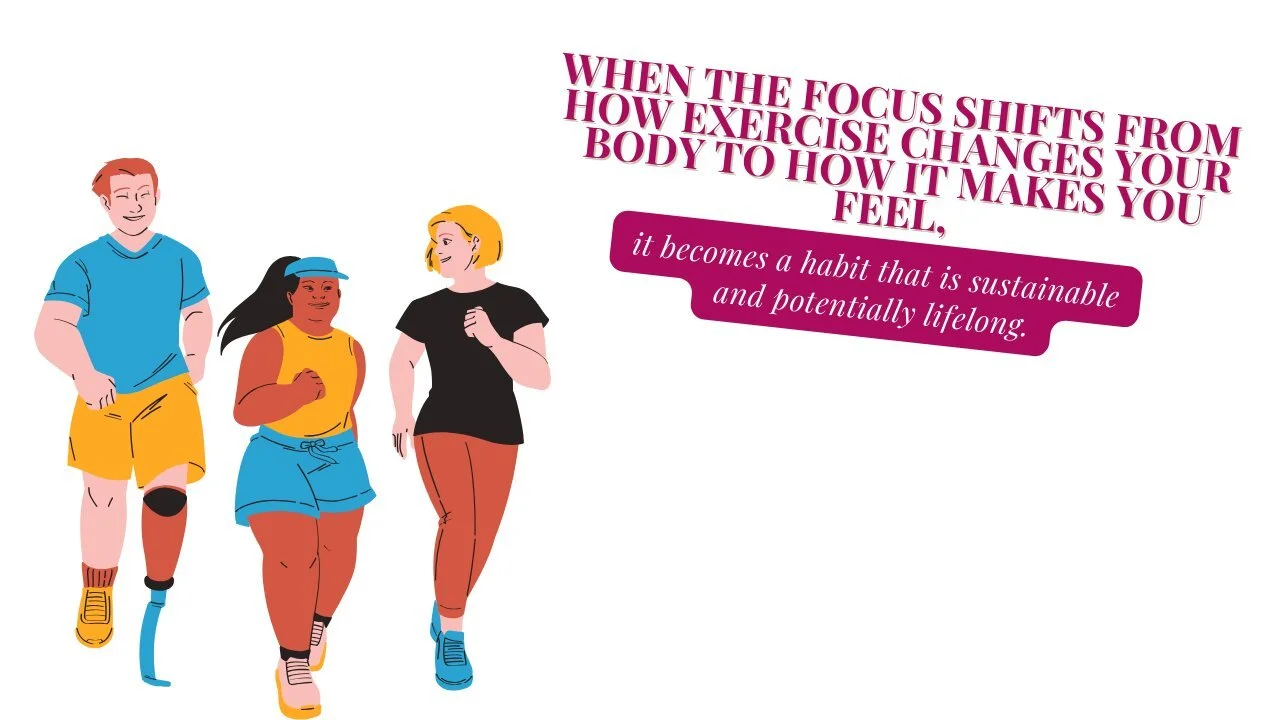
For many, the emotional payoff of exercise is the secret to staying consistent. Movement boosts brain-derived neurotrophic factor (BDNF), which supports mood, memory, and stress regulation. Short sessions alone can reduce irritability, improve focus, and help manage daily stress. Journaling how you feel after moving makes these benefits more tangible, and pairing exercise with relatable, human elements like conversation, storytelling, or problem-solving can make sessions approachable and enjoyable. When the focus shifts from how exercise changes your body to how it makes you feel, it becomes a habit that is sustainable and lifelong.
Plateaus = Progress
Have you ever hit a weight loss plateau and felt frustrated, like something we in nt wrong? It happens to basically everyone, and honestly, it’s not a sign that you’ve failed. Plateaus are just your body’s way of adjusting. As you lose weight, your energy needs change, and your basal metabolic rate adapts. Eventually, you reach a point where the calories you’re eating match what your body needs, and weight loss naturally slows or stops. Think of it as your body learning a new “set point” and settling into it—it’s totally normal and actually a good sign that your metabolism is adjusting to your new body.
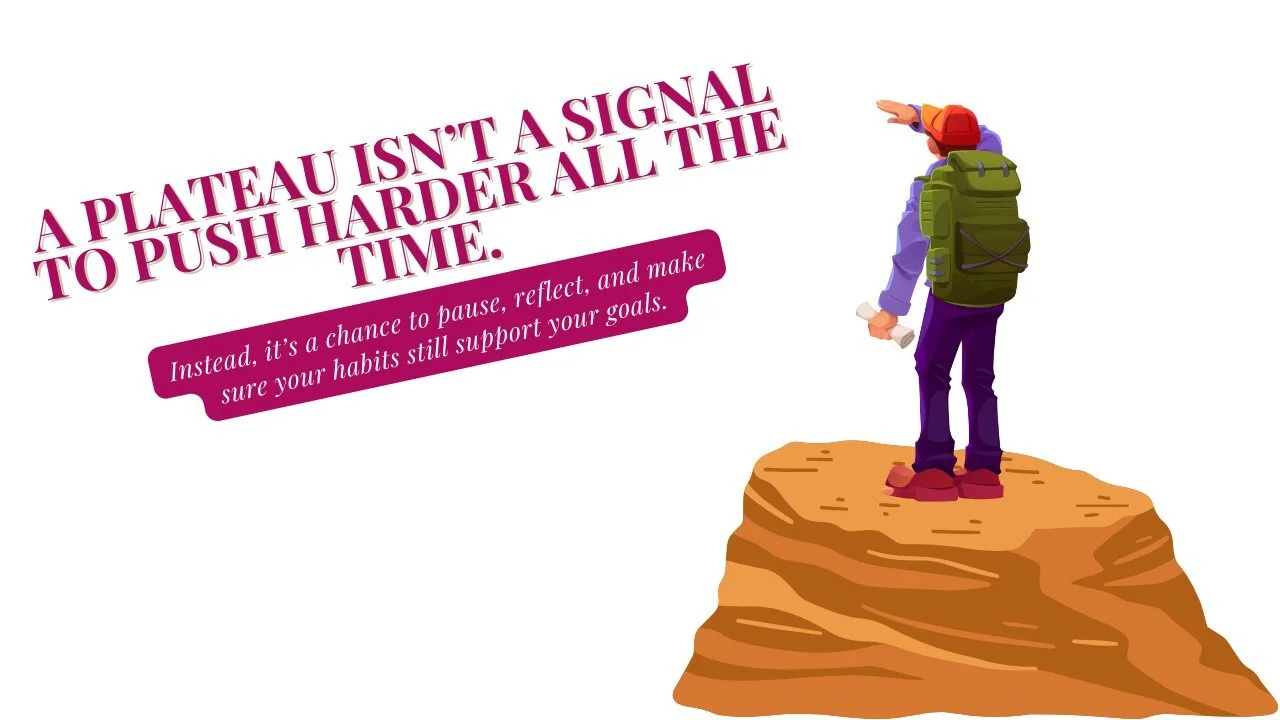
A plateau isn’t a signal to push harder all the time. Instead, it’s a chance to pause, reflect, and make sure your habits still support your goals. Maybe you want to keep losing weight, or maybe you’re okay where you are. Small, intentional tweaks—like adding some strength training—can help build muscle, gently boost metabolism, and restart progress without overdoing it. The key is to see this pause as part of the process, not a failure. Your body is just taking a beat to adapt, and giving it that space often sets you up for more sustainable success.
Plateaus also teach a bigger lesson about mindset. Weight loss alone doesn’t automatically make life happier or improve mood. Progress often shows up in ways you can’t immediately measure, like increased strength, better fitness, or improved metabolic health. Getting comfortable with these pauses is all about learning to appreciate the journey, not just the number on the scale. Your path is about consistency, reflection, and growth over time, and plateaus are just another part of that story.
If this conversation sparked questions or made you want to learn more, Dr. Ali Novitsky shares helpful resources on her website, thefitcollective.com. It’s the main hub for her work, programs, and patient resources.
You can also find her on social media under the handle Ali Novitsky MD, where she regularly shares practical, evidence-based insights on weight health, habits, and sustainable care.
If this episode was helpful, take a second to subscribe and leave a review—it really helps the show reach more people who need this kind of support. Share it with a friend, and we’ll see you next week with more real-life tips for building a healthier, stronger body!
More from The Dr. Francavilla Show:
Subscribe to The Dr. Francavilla Show on