
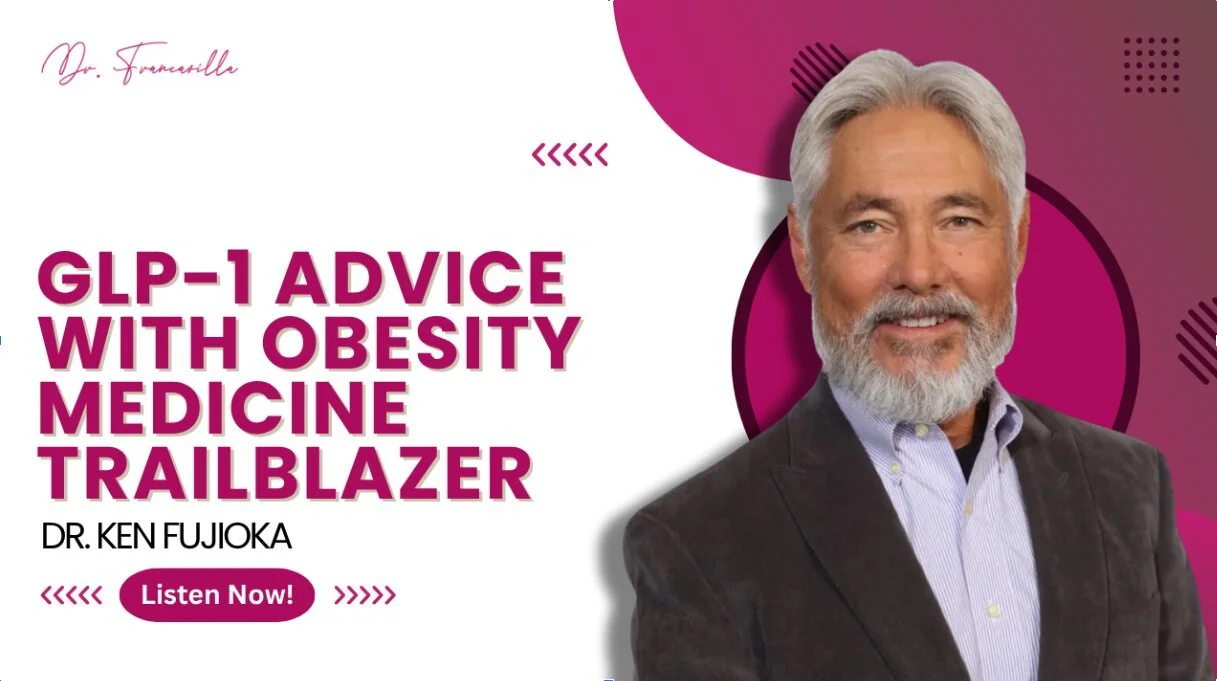
GLP-1 Advice with Obesity Medicine Trailblazer Dr. Ken Fujioka
What if the biggest breakthrough in weight loss medicine isn’t just the medications themselves—but how we actually use them in real life?
This week, we’re joined by Dr. Ken Fujioka, a pioneer in obesity medicine and one of the early leaders who helped shape how we understand and treat obesity today. As Director of Nutrition and Metabolic Research and Obesity Telemedicine at Scripps Clinic, and with over 150 clinical trials and 125+ peer-reviewed publications, Dr. Fujioka brings deep expertise in how obesity treatments have evolved—from early lifestyle-based approaches to today’s GLP-1 era.
In this conversation, we break down how GLP-1 medications like semaglutide and tirzepatide have genuinely transformed obesity care, helping many patients achieve meaningful weight loss along with improvements in blood sugar, mobility, and overall metabolic health. But alongside the excitement, we also look closely at the challenges—such as rapid expansion of access, non-medical prescribing environments, and concerns around compounded medications that may vary in dosing and quality. The discussion also highlights why medical supervision matters, especially when it comes to safety, consistency, and long-term outcomes.
Beyond the medications themselves, we explore what it really takes to get the most out of GLP-1 therapy in a sustainable way. That includes thoughtful dosing strategies, understanding that weight loss is rarely linear, and avoiding overly rapid loss that can affect muscle and bone health. We also dive into practical habits that support success—like prioritizing protein without ignoring hidden fats, incorporating strength training, considering basic supplementation when food intake drops, and even using food tracking as a tool for awareness rather than restriction. If you want to understand not just what GLP-1s can do, but how to use them wisely for long-term health, keep reading to dive deeper into the full conversation.
GLP-1s Changed Weight Loss—But Not Without Risk
GLP-1 medications have honestly changed the game in obesity medicine in a pretty big way. For clinicians, treatments like semaglutide and tirzepatide have made it much more realistic to help patients achieve meaningful weight loss—often around 15% of body weight. And that’s not just a number on a scale, like it actually translates into real improvements: better blood sugar control, easier movement, and improvement in conditions linked to weight. For a lot of patients, this level of progress can feel genuinely life-changing, which is why there’s so much excitement around these medications.
But alongside all of that progress, there are also some real concerns popping up. We’ve seen a similar pattern before with medications like Fen-Phen (a combination of the drugs phentermine and fenfluramine that was once widely used for weight loss but was later withdrawn due to serious safety concerns), where early success led to rapid widespread use, but also misuse and poorly supervised treatment models. Now with GLP-1s becoming more popular, access has expanded quickly—but not always safely. Some people are getting these medications through providers who may not be trained in obesity medicine, or even through non-medical settings online or in places like gyms or salons, which is honestly really concerning. On top of that, compounded versions can vary a lot in quality, dosing, and even accuracy, which makes it hard to know what someone is actually receiving.
The encouraging part is that the field is also responding in a more structured way. More clinicians are getting formal training in obesity care, and organizations like the American Board of Obesity Medicine and the Obesity Medicine Association are helping standardize education and certification for providers. So for patients, the takeaway is kind of simple: these medications can be incredibly powerful, like truly, but they work best—and safest—when they’re prescribed and monitored by trained professionals who understand how to use them properly.
Slow, Steady, and Safe: Getting the Most Out of GLP-1s
Getting the most out of GLP-1 medications isn’t about rushing the process—it’s about using them the right way.
One of the most important factors is dosing. There’s been a lot of talk lately about “microdosing,” but the reality is that these medications—especially newer ones like semaglutide and tirzepatide—are already very effective at standard, medically guided doses. Not everyone needs to go up to the highest dose to see results. In fact, many patients do well staying at a lower dose and increasing gradually over time.
Slowing down the process can actually lead to better outcomes. When weight loss happens too quickly, there’s a higher risk of losing muscle and bone along with fat. That’s something to avoid, especially for women in perimenopause or postmenopause who may already be at risk for bone loss. Taking a steady, gradual approach helps protect overall health while still supporting weight loss.
It’s also important to understand that progress won’t always be consistent. Weight loss is not linear. While clinical studies often show smooth, downward trends, real life looks different. There may be weeks where the scale doesn’t move at all, followed by a sudden drop. That doesn’t mean the medication isn’t working—it’s just how the body responds. Human metabolism isn’t predictable, and small fluctuations are completely normal.
Patience plays a big role here. It’s natural to want fast results, especially when hearing about 15% or even 20% weight loss. But those results don’t happen overnight. In clinical trials, patients reached those outcomes over the course of a year or more. Sustainable weight loss takes time, and trying to rush it can do more harm than good.
Working with an experienced clinician makes a difference. A trained provider will focus on steady progress, adjust dosing carefully, and help set realistic expectations. The goal isn’t just faster weight loss—it’s safer, more sustainable results that support long-term health.
GLP-1s Work Best When You Don’t Rely on Them Alone
GLP-1 medications can do a lot of the heavy lifting—but they’re not meant to do everything on their own.
Some people take them and see weight come off without changing much. That can happen. Appetite drops, portions get smaller, and the scale moves. But that kind of “auto-pilot” weight loss isn’t where the full benefit comes in.
The real difference shows up when the medication is paired with intentional habits.
Adding structure to meals, being more mindful with food choices, and staying active can push results further. Not in an extreme or restrictive way—but enough to support what the medication is already doing. Think of it less as “doing more,” and more as not wasting the opportunity the medication is creating.
One interesting shift many people notice is how their cravings change. With medications like semaglutide and tirzepatide, hunger doesn’t just decrease—it becomes quieter. Foods that used to feel hard to resist suddenly feel optional. That constant pull toward fast food or sweets isn’t as loud.
But that doesn’t mean every food decision becomes easy.
Hunger is only one piece of the picture. Habits, routine, stress, and even boredom still influence how and what people eat. That’s why some still struggle, even with the medication. It’s not a failure of the drug—it just means there are other layers to work through.
On the nutrition side, one of the easiest places to overlook is fat intake. Most people already have a general sense of cutting back on sugar or simple carbs. But fats tend to fly under the radar. They’re calorie-dense and often come attached to otherwise “good” foods—especially protein.
And that’s where things can get a bit tricky.
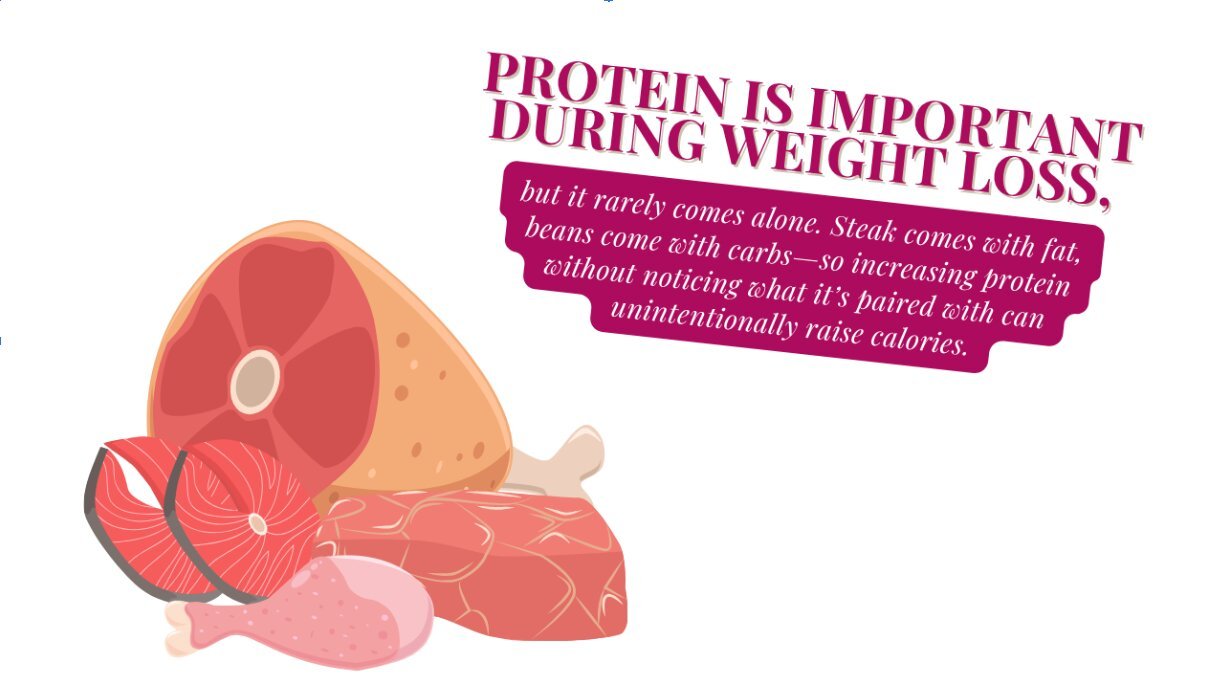
Protein is important, especially during weight loss, but it rarely comes alone. A steak, for example, brings both protein and fat. Plant-based options like beans come with protein and carbs. So increasing protein without paying attention to what comes with it can unintentionally increase calories.
This isn’t about overcomplicating food—it’s just about being a little more aware.
At the end of the day, these medications create a window where things feel easier. Less hunger, fewer cravings, more control. What someone does during that window is what really shapes the outcome.
Tracking Food on GLP-1s: A Simple Habit That Improves Results
Even with newer weight loss medications like GLP-1s, one habit still stands out as one of the most effective tools for long-term success: tracking what you eat.
Many people who start these medications have already spent years trying different approaches—counting calories, tracking macros, starting over, and repeating the cycle. So when GLP-1s like semaglutide or tirzepatide are added, it’s often not their first attempt at structure.
But even with that history, food tracking still has value.
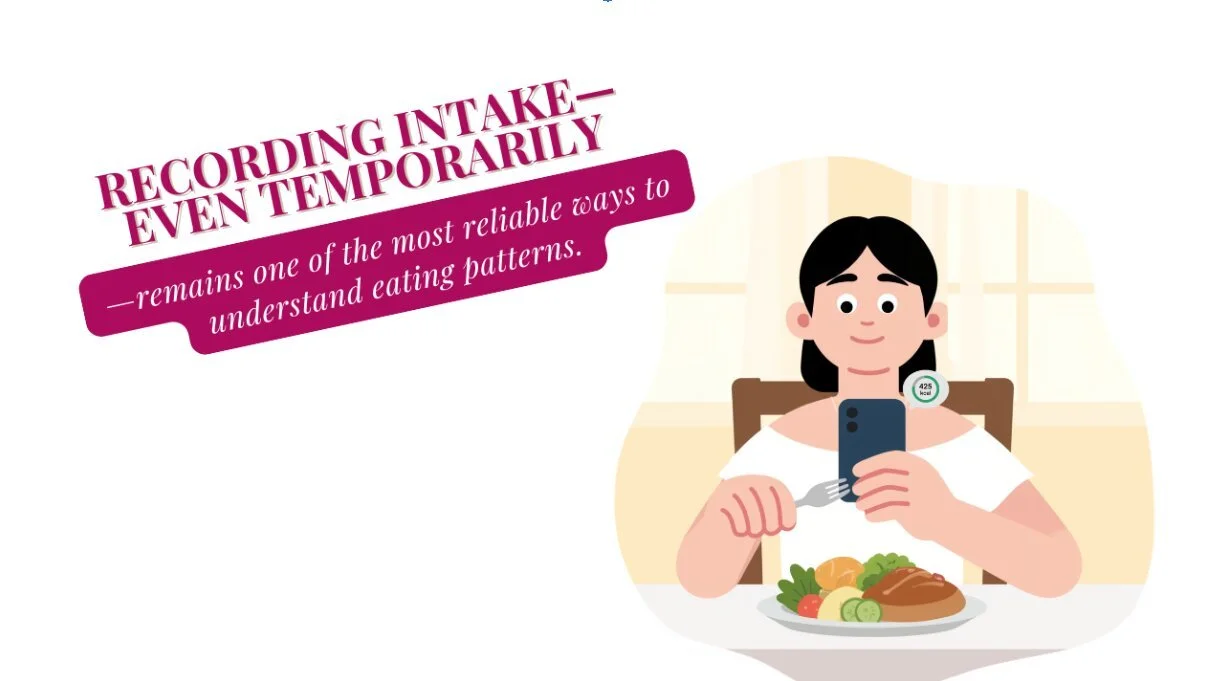
Recording intake—even temporarily—remains one of the most reliable ways to understand eating patterns. It’s not necessarily about strict calorie targets or perfection. Instead, it’s about awareness. People often discover things they didn’t notice before: where their protein is actually coming from, how much fat is sneaking into meals, or whether most of their carbs are simple or more complex.
The goal is learning, not restriction.
When done with the right mindset, tracking becomes more like observation than dieting. It’s a way to gather information about habits without judgment. Approached this way, it can feel less like a punishment and more like a tool—something that helps guide better decisions over time.
This is especially helpful while on GLP-1 medications, when appetite is lower and eating patterns naturally shift. Having a clearer picture of food choices can help ensure that weight loss is coming from a balanced, sustainable approach rather than unintentional under-eating or nutrient gaps.
The most effective use of tracking is simple: treat it like a scientist would. Not to criticize or restrict, but to understand what’s really happening—and use that information to make adjustments that support long-term health.
Strength Training on GLP-1s: Protecting Muscle While Losing Weight
Exercise plays a really important role for anyone taking GLP-1 medications, especially when it comes to protecting long-term health.
While these medications—such as semaglutide and tirzepatide—can lead to meaningful weight loss, that weight loss isn’t made up of fat alone. Some muscle mass is also lost in the process. That’s why movement, especially strength training, becomes such an important part of the overall plan.
At a minimum, resistance training about two to three times per week is often recommended. It doesn’t have to be complicated or intense to start making a difference. The goal is simply to maintain and protect muscle and skeletal strength while the body is losing weight. This can be done with weights, resistance bands, bodyweight exercises, or structured classes—whatever is realistic and sustainable for the individual.
Cardio is also valuable, particularly when it helps raise the heart rate for a sustained period of time. But the combination of both resistance training and cardio tends to be the most effective approach. Circuit-style workouts, where strength exercises are done in sequence with minimal rest, can offer an efficient way to get both benefits at once.
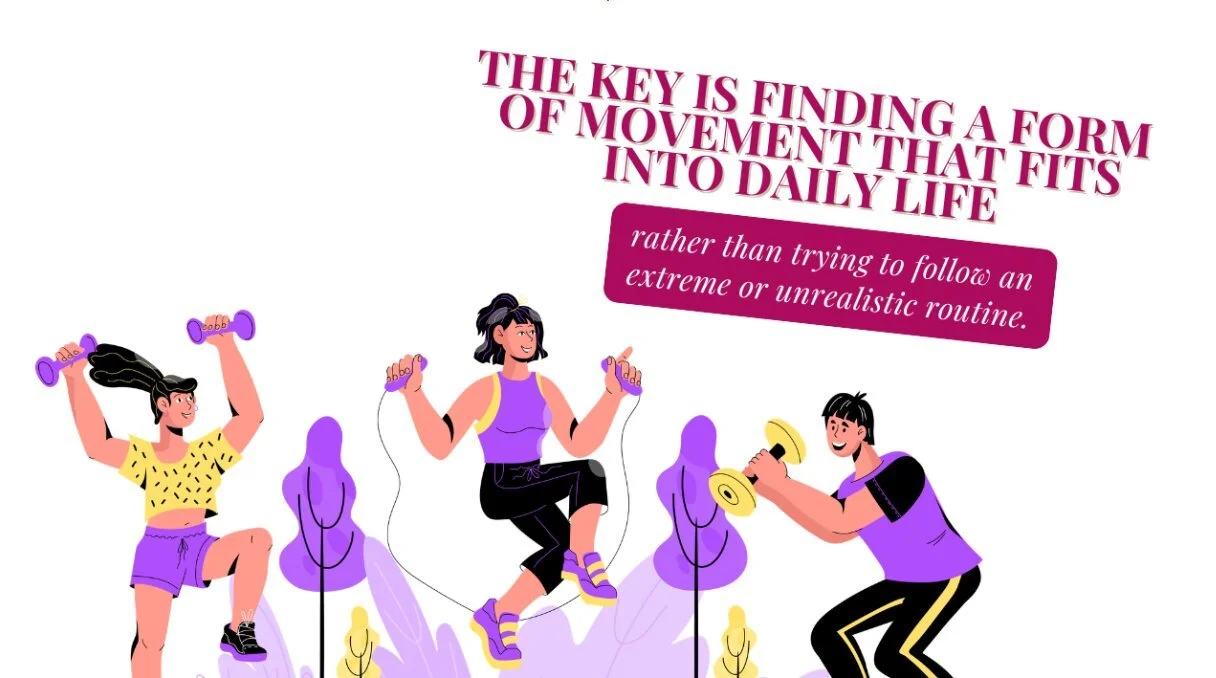
That said, consistency matters more than perfection. Even regular walking or light activity is better than doing nothing, especially when building habits from scratch. The key is finding a form of movement that fits into daily life rather than trying to follow an extreme or unrealistic routine.
As people get older—or for anyone focused on long-term health—strength training becomes even more important. It supports muscle mass, bone health, and overall function. This is particularly relevant as there is ongoing interest in how GLP-1–related weight loss may impact bone density over time. Building and maintaining strength helps offset that risk.
Programs like “GLP Strong” reflect this idea well: keeping exercise simple, accessible, and focused on the basics rather than intensity or appearance. The goal is not to train like an athlete, but to support health in a practical, sustainable way.
Ultimately, exercise on GLP-1s isn’t about doing the most—it’s about doing enough, consistently, to support the body while it changes.

Supplements on GLP-1s: What You Actually Need to Know
When people start GLP-1 medications, one of the most common questions is whether vitamins or supplements are needed alongside them.
With newer and more potent medications like semaglutide and tirzepatide, food intake naturally decreases—sometimes quite significantly. Because of that, nutrient intake can also drop without people realizing it. This is where a few simple supplements can help support overall health.
A basic multivitamin is often recommended as a safety net, especially when overall food volume is reduced. Another key nutrient to pay attention to is calcium. Many people on GLP-1s don’t feel as drawn to traditional calcium-rich foods like dairy, so intake can fall short. In those cases, incorporating calcium through foods like yogurt or through supplementation can help maintain adequate levels. A typical range is around 500 to 1,000 mg per day, depending on individual needs and dietary intake.
Form also matters. Calcium citrate is often preferred because it is better absorbed, especially in people who may have lower stomach acid levels. This becomes even more relevant when considering that medications affecting gut hormones can also influence digestion and absorption.
Another commonly overlooked but very important factor is fiber. While not a vitamin, it functions like a key supplement for digestive health. Most people already fall short of their daily fiber needs, and with GLP-1 medications further reducing overall food intake, that gap can become even larger. Without enough fiber, constipation can become an issue, which can affect comfort and overall well-being.
Previously, higher fiber intake was easier to achieve through larger portions of vegetables, fruits, and whole foods. But since GLP-1 medications reduce appetite and food volume, many people simply cannot eat enough high-fiber foods to meet their needs. In those cases, adding a fiber supplement can help maintain regular digestion.
The goal isn’t to overwhelm the body with supplements, but to support it. A simple approach—ensuring enough micronutrients like calcium, maintaining a baseline multivitamin, and prioritizing fiber—can help make GLP-1 therapy more comfortable and sustainable in the long run.
The Story Behind The GLP-1 Doctor: From Personal Struggles to Medical Breakthroughs
Dr. Ken Fujioka also shares about his upcoming book, The GLP-1 Doctor, which is set to be released this summer. The book brings together both the science of weight loss and his personal experience growing up with obesity—something that deeply shaped his perspective as a physician.
As a child, he struggled with weight and experienced the real-life challenges that come with it, from social bias to the difficulty of trying to lose weight with only diet and exercise. Those early experiences stayed with him and eventually influenced his decision to pursue obesity medicine, long before it was recognized as a formal specialty.
Through the book, he aims to make weight loss easier to understand—not just from a medical standpoint, but from a human one. It’s a reflection of both his clinical work and his own journey, offering insight into how the body works and what people actually go through when trying to lose weight.
GLP-1 medications are clearly reshaping the way we approach weight loss and metabolic health—but as this conversation shows, the medication is only part of the story. How it’s used, who is guiding it, and what habits are built alongside it all play a major role in long-term success. From dosing strategies and muscle protection, to nutrition awareness, tracking, supplements, and strength training, the details really matter when it comes to getting results that are not just effective, but also safe and sustainable.
What stands out most is that there isn’t a single “perfect” approach—there’s a thoughtful, individualized process that balances science, behavior, and realistic expectations. GLP-1s can create a powerful window of opportunity, but what people do within that window is what ultimately shapes their health outcomes. That’s where education, structure, and clinical guidance become essential.
If you want the full picture of how GLP-1 medications are being used in clinical practice today, including both their advantages and the challenges clinicians are seeing, don’t miss the latest episode featuring Dr. Ken Fujioka.
More from The Dr. Francavilla Show:
Subscribe to The Dr. Francavilla Show on