
GLP-1 Meals Made Easy with Dr. Aliza Olive
Why do so many people on GLP-1 medications feel like they’re doing everything right but still feel lost when it comes to food and long-term success?
This week, we’re talking about something many people on GLP-1 medications are navigating right now: how to build sustainable nutrition habits during treatment and what it actually takes to set yourself up for success during treatment and beyond, including if they ever stop using the medication.
We’re joined by Dr. Aliza Olive, a pediatric ICU physician, mom based in Cleveland, and co-founder of GLP-1 Enhanced, a company focused on providing practical, real-world nutrition guidance for people on GLP-1 medications and those transitioning off them. She’s also the author of GLP-1 Meals Made Easy, a cookbook designed to simplify eating and remove the guesswork during treatment.
In this conversation, Dr. Olive shares insights from both clinical experience and real-world practice, highlighting the most common struggles people face, not just with weight loss itself, but with maintaining progress, managing side effects, and feeling confident in their day-to-day nutrition choices.
We also dive into practical strategies that matter most on GLP-1s, including protein, fiber, and simple meal structure, along with what long-term maintenance really requires. A key part of the discussion is why building nutrition habits and support during treatment, not after, is such a critical shift in approach.

What Happens After GLP-1 Medications: Why Guidance Still Matters
GLP-1 Enhanced was built around one simple realization: support for weight loss shouldn’t only show up when someone is trying to come off medication. About a year ago, the program evolved from its original form, Med Free Maintenance, after noticing a recurring pattern. People would come off GLP-1 medications thinking they were ready to manage things on their own, but many eventually found themselves regaining weight and feeling stuck again. It wasn’t a lack of effort—it was a lack of ongoing guidance during the process itself. That shift made it clear that support needs to happen while someone is still on the medication, not only after.
This is what led to the creation of two core programs under GLP-1 Enhanced. The first, the Nutrition Blueprint, focuses on what people need while actively taking GLP-1s. Truly, this is where the foundation really matters—getting enough protein to protect muscle, prioritizing fiber to support digestion and help with common issues like constipation, and making sure overall nutrition still meets the body’s needs even when appetite is lower. It also touches on managing side effects in a practical way and emphasizes strength training, which is honestly a big deal when it comes to maintaining metabolism and long-term results. The goal here is basically to make sure people feel good and stay strong while on the medication, not just see the scale move.
Then there’s Master Your Taper, which is designed for the transition phase—whether someone is lowering their dose or coming off completely. And this part is really important because this is where things can get a little tricky. Instead of stopping suddenly, the approach is gradual, helping people slowly increase calories and adjust their routine so the body can adapt without rapid weight regain. It’s less about restriction and more about strategy and timing. Overall, the idea behind GLP-1 Enhanced is pretty simple: don’t wait until progress is lost to start getting support. Whether someone stays on the medication long term or eventually transitions off, having structure early on makes it way easier to maintain results without feeling like they’re starting over every time something changes.
What Makes the Transition Off GLP-1s So Uncertain
Many people feel hesitant—even a bit scared—when it comes to coming off GLP-1 medications, and honestly, that reaction makes a lot of sense. A lot of individuals on these treatments have been dealing with weight challenges for years, sometimes even decades, and they’ve usually tried everything before getting here—restrictive diets, popular programs, extreme approaches, the whole cycle. And what tends to happen is the same pattern: some initial progress, followed by regain, which can feel really discouraging over time. So when something finally works, it’s only natural that the idea of stopping it feels uncertain or even risky.
There’s also a very real emotional and financial layer to it. These medications often represent a major investment, whether through out-of-pocket costs, compounded versions, or navigating insurance coverage. So the idea of coming off without a clear plan can feel like losing something that’s finally working. On top of that, life circumstances play a big role—some people lose coverage, others can’t sustain the cost, and some simply want to stop injections or are preparing for pregnancy, where discontinuation becomes necessary. So there are absolutely valid and very different reasons people find themselves at this decision point.
The challenge is that many people try to manage this transition alone, often to avoid extra expense or because they assume it should be straightforward. But this is usually where difficulties start to show up. Without proper structure, support, and nutrition strategy in place, the risk of weight regain increases, especially if habits were not fully built during treatment. While some individuals may stay on GLP-1 medications long term, others will eventually come off—and either way, the transition really shouldn’t be left to guesswork. With the right guidance, that shift can feel more stable, more intentional, and a lot more sustainable long term.
Why Hunger Feels Different After GLP-1 Treatment
One of the main reasons people choose to stay on GLP-1 medications is something many describe in different ways but immediately recognize once it’s gone—the return of “food noise.” When the medication is stopped, that constant mental chatter around food can come back pretty quickly. Cravings feel louder, hunger feels more distracting, and thoughts about eating take up more space throughout the day. For people who have lived with that for years, the quiet that GLP-1s provide can feel like a huge relief. So, like, it makes total sense that the idea of losing that calm can feel unsettling.
While on the medication, a lot of the mental effort around eating is significantly reduced. Cravings are less intense, hunger cues are more muted, and decision-making around food feels less overwhelming overall. In a way, the medication helps take on part of the mental load that usually requires constant awareness, planning, and discipline. But that balance starts to shift when someone begins tapering or stopping. Even if hunger returns at a completely normal level, it can feel like a big jump compared to what the body has gotten used to.
That’s where the adjustment period really matters. Without the medication, hunger and cravings naturally come back, and learning how to work with them becomes a key part of maintaining progress. This doesn’t mean ignoring hunger or trying to suppress it—it’s more about building skills to respond to it in a steady, intentional way. Things like navigating social events, travel, or everyday stress eating situations become important moments to practice these habits. The goal isn’t to avoid real life or eliminate hunger altogether, but to feel confident handling it so that normal appetite doesn’t turn into a setback or feel like starting over.
Protecting Muscle During Weight Loss: The Role of Protein
When it comes to GLP-1 medications and weight loss in general, nutrition plays a much bigger role than most people realize—especially protein and fiber. Protein, in particular, is one of the most important nutrients to prioritize during any calorie deficit. That’s because when the body is losing weight, it naturally tends to break down muscle more easily than fat. So even if the scale is going down, the body composition might not be changing in the way someone expects. Clothes might not fit differently, and the overall “look” of fat loss may not be as noticeable if muscle is also being lost along the way.
Protein helps shift that outcome by supporting the preservation of lean muscle mass. And that matters for more than just appearance. Muscle is metabolically active tissue, meaning it helps the body burn more energy even at rest. When muscle mass decreases, metabolism can slow down, which can make long-term weight maintenance more challenging—especially if someone has been in a prolonged or aggressive calorie deficit. This becomes even more important when thinking about the future, like transitioning off GLP-1 medications. Many structured approaches use a gradual increase in calories, sometimes called a reverse diet, to help support the body in returning to maintenance more smoothly. Having more muscle going into that phase can make the process a lot more stable.
Protein also helps with something very practical: appetite control. Even outside of GLP-1s, higher protein intake tends to support satiety, which helps people feel fuller for longer and stay more consistent with their eating patterns. A simple way to think about it is that protein helps the body hold onto what it should keep—muscle—while allowing fat loss to happen more effectively. And over time, that consistency really matters.
There’s also an important lesson from past dieting patterns. In more restrictive or very low-calorie approaches, people often lost weight quickly but also lost a significant amount of muscle. When weight was regained, it was typically regained more as fat than muscle, which gradually made metabolism less efficient and future weight loss harder. Building or regaining muscle, on the other hand, is slow and intentional—it doesn’t happen easily, especially during weight regain. That’s why protecting muscle during weight loss is so important from the very beginning. Ultimately, whether someone is on GLP-1 medications or not, the goal is the same: preserve muscle through adequate protein intake and a thoughtful nutrition strategy so that fat loss is sustainable and long-term metabolic health is supported.
Fiber on GLP-1s: The Simple Habit That Helps with Constipation and Keeps Digestion on Track
Fiber plays a really important role for people on GLP-1 medications, especially because the body is adjusting to changes in appetite and food intake. One of the most common side effects is constipation, which can feel uncomfortable and honestly just annoying day to day. The good news is, this is often something that can be improved with really simple nutrition habits—mainly fiber and water. Staying ahead of it, instead of waiting until it becomes a problem, tends to make a big difference in how people feel overall.
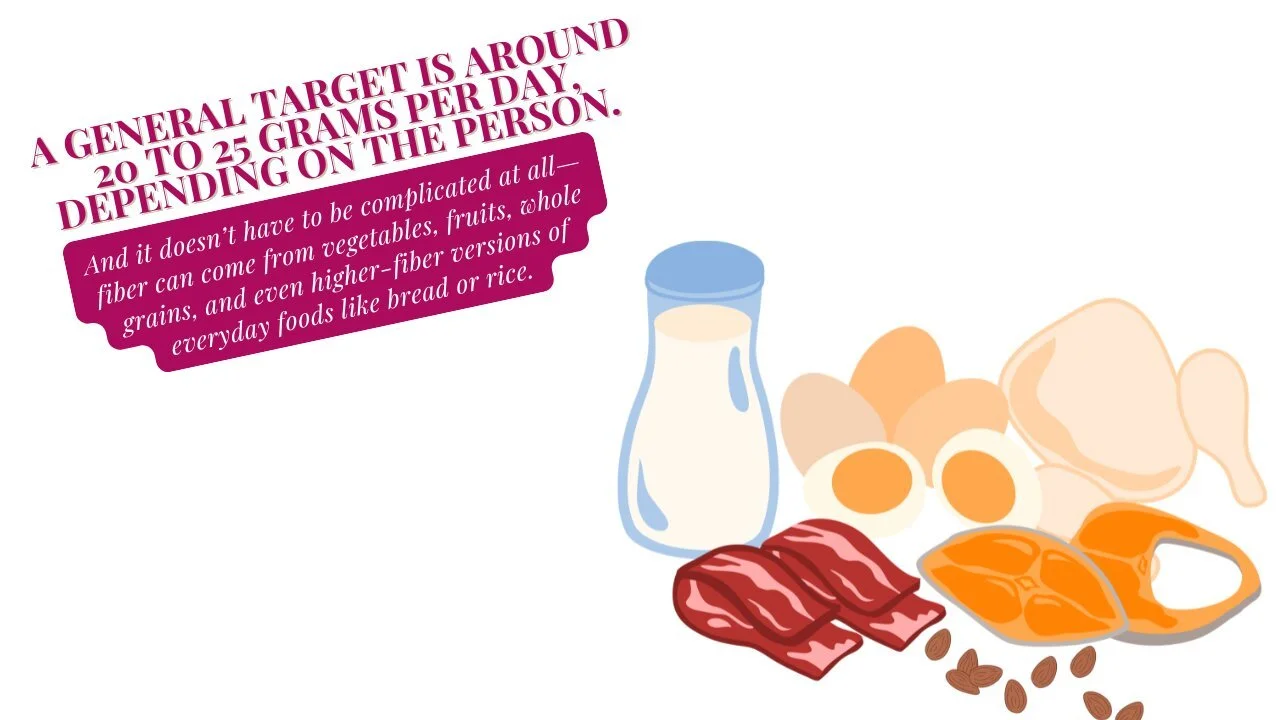
Most of the time, the best way to get fiber is through food rather than relying only on supplements like gummies or laxatives. A general target is around 20 to 25 grams per day, depending on the person. And it doesn’t have to be complicated at all—fiber can come from vegetables, fruits, whole grains, and even higher-fiber versions of everyday foods like bread or rice. The key thing is that there’s no single “perfect” fiber food. It’s more about consistency and choosing options that actually fit someone’s preferences and lifestyle. Like, some people love crunchy veggies and salads, while others get most of their fiber from fruit or cooked meals—and both are totally valid.
So overall, fiber is one of those simple but often overlooked parts of nutrition that can make a real difference for people on GLP-1 medications. It’s not about being perfect or hitting numbers exactly every single day, but more about being consistent and building small habits that support digestion and comfort over time.
When fiber and hydration are in place, many of the common side effects become much easier to manage, and eating starts to feel more balanced instead of restrictive or uncomfortable.
GLP-1 Meals Made Easy: What’s Inside the Book and Why It Was Created
GLP-1 Meals Made Easy was created to address a really common gap people run into when starting GLP-1 medications—there’s often not enough clear, practical guidance on what to actually eat or how to structure meals in a way that feels realistic long term. The book is widely available through major retailers like Amazon, Barnes & Noble, Walmart, and Target, making it easy to access for most readers. The overall goal is simple: keep things practical, approachable, and not overwhelming.
The book begins with a short, easy-to-understand introduction to GLP-1 medications, including how they work, where they came from, and some of the more common side effects people may experience. It also touches on foundational lifestyle habits like movement and regular exercise, since those play an important role in supporting overall health and results during treatment. From there, it transitions into the core focus: nutrition and structure that actually feels doable in real life.
A key feature of the book is the 21-day meal plan designed to take away the guesswork of daily eating. The first week is fully laid out with specific meals and a complete grocery list, so it’s very step-by-step and easy to follow. For weeks two and three, readers are guided on how to build their own version of the plan using the same framework, which helps them develop real, long-term skills instead of relying on something rigid. The recipes themselves are simple, quick, and made with whole ingredients that fit into busy schedules, and many readers appreciate how realistic and approachable they feel. There are also flexible add-ons like smoothies and higher-calorie or higher-protein options, so the plan can be adjusted based on individual needs, appetite, and goals.
Overall, the intention behind the book isn’t just to provide meals—it’s to teach people how to feel more confident with food while on GLP-1 medications. A lot of people don’t receive detailed nutrition support when they start treatment, so this book helps bridge that gap. By combining structure, education, and flexibility, it supports both short-term consistency and long-term habits, helping people feel more grounded in their nutrition whether they stay on the medication or eventually transition off.
More from The Dr. Francavilla Show:
Subscribe to The Dr. Francavilla Show on