
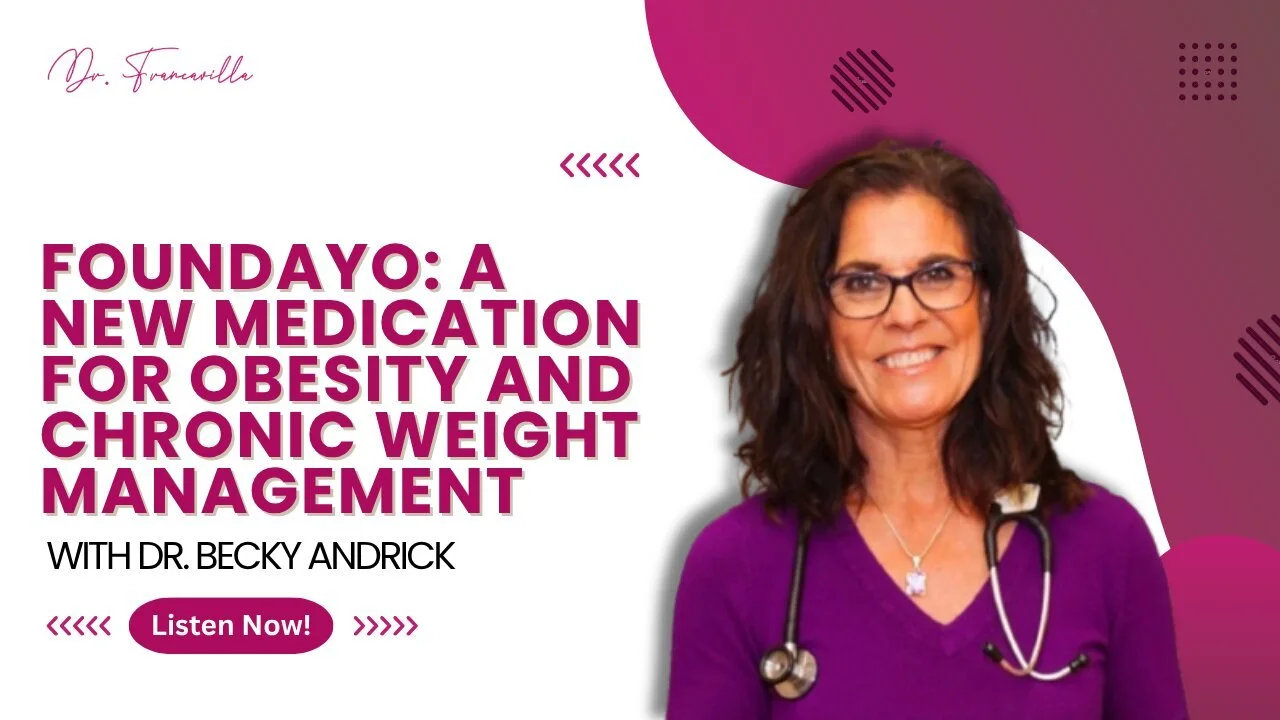
Foundayo: A New Medication for Obesity and Chronic Weight Management with Dr. Becky Andrick
What If You Could Get the Benefits of a GLP-1 — Without the Needle?
That's exactly the question Foundayo is answering — and it's one that a lot of patients have been waiting to ask. For years, one of the biggest barriers to GLP-1 therapy has been the injections. Not everyone is comfortable with self-injecting, not everyone has the time to manage refrigeration and travel logistics, and not everyone needs the most powerful medication on the market. So when a new oral option enters the picture, it's worth paying close attention.
In this episode, Dr. Becky Andrick joins the show to break down everything you need to know about this brand-new medication. Dr. Andrick is a fellow of the Obesity Medicine Association, associate clinical professor at Rocky Vista University, founder of the Colorado Obesity Society, and the founder of Weigh to Wellness, a private practice in Denver. She also happens to be the physician who first inspired our host to pursue obesity medicine — making this conversation as personal as it is clinical. The two experts go way back to residency, back when the entire obesity medicine toolkit was well, basically just phentermine. Watching this field evolve together over the past 14 years gives their conversation a depth and perspective that's hard to find anywhere else.
In this episode, they cover everything — what Foundayo actually is and how it works, who qualifies, what the side effects look like and how to manage them, what the clinical trial data really tells us, and what happens to your results if you transition from an injectable. It's a thorough, honest, and genuinely exciting conversation about a medication that has the potential to make weight loss treatment more accessible for a whole new group of patients.
No matter where you are in your weight loss journey — whether you're brand new to all of this, already on a weight loss medication and wondering what else is out there, or simply trying to make a more informed decision for your health — this conversation was made with you in mind. Scroll down for the full breakdown.

Meet Foundayo: The New Oral Weight Loss Medication You've Been Waiting For
If you've been keeping up with the world of obesity medicine, you've probably heard some buzz about a new medication called Foundayo — and honestly, the excitement is completely warranted. Foundayo's chemical name is orforglipron, and it works as a GLP-1 receptor agonist, the same class as Wegovy and Zepbound. But here's what makes it genuinely different: it's a small molecule, non-peptide drug, which means your body absorbs it so much more easily than anything else currently in this class. The injectable GLP-1s and even the oral Wegovy pill are all peptides — large molecules that are notoriously difficult to absorb through the digestive system, which is like, literally why injections became the standard in the first place. Foundayo sidesteps all of that. You can take it with or without food, at any time of day, no 30-minute fasting window required. It absorbs into the bloodstream and goes straight to work on the GLP-1 receptor — simple, straightforward, and honestly kind of revolutionary for this space.
What's also exciting is who this medication is actually designed for. Foundayo is approved for adults with a BMI of 27 or higher who have at least one weight-related health condition — things like pre-diabetes, high cholesterol, sleep apnea, or joint pain, with waist circumference also factored in when BMI doesn't tell the full story. To put that in perspective, historically most patients haven't started anti-obesity medications until their BMI is closer to 37. Foundayo opens the door earlier, for people who don't necessarily need dramatic weight loss but would benefit enormously from meaningful, targeted metabolic improvements. And the clinical data backs that up — trials showed around 11–12% body weight loss on average. That number is worth pausing on, because research consistently shows that even 5% weight loss starts improving blood sugar, lipids, and joint health. At 10%, the benefits become even more significant — the risk of progressing from pre-diabetes to type 2 diabetes drops dramatically at that threshold. Yes, 11% is lower than Zepbound's 21%, but for many patients — particularly those with a lower starting BMI — that range is exactly what they need. Blood pressure, blood sugar, cholesterol — all showed meaningful improvements in the trials, which is ultimately what we're working toward. And as a bonus, orforglipron is also being studied for type 2 diabetes management, with early data showing more proportional weight loss results in that population than we typically see. That's a really encouraging sign.
So why does all of this matter for patients? One of the biggest barriers to GLP-1 therapy has always been the injections — studies suggest around one in four people are genuinely reluctant to self-inject, and that's not a small number. Many patients currently on injectables have expressed real interest in switching to an oral option if one became available, and Foundayo answers that directly. There's also the flexibility factor: a pill you can take any time, with any meal or no meal, just fits into people's lives more easily than a medication with strict timing requirements. That kind of ease makes a real difference in long-term adherence, which is ultimately what drives results. Cost and insurance coverage remain challenges — as they do across all obesity medications — but as access continues to improve, having a well-tolerated, effective, and genuinely convenient oral option is something worth being excited about. Foundayo isn't trying to replace the injectables. It's expanding what's possible, giving more people a realistic, accessible path to meaningful weight loss and better metabolic health.
Who Should (and Shouldn't) Take Foundayo?
Before starting any new medication, it's worth knowing whether it's actually the right fit for you — and Foundayo is no exception. Eligibility isn't just about BMI, which is something that surprises a lot of people. For women, a waist circumference of 35 inches or more can also qualify you, even if you're not sure you'd meet the BMI threshold. That comes up a lot in clinical practice, and it's worth knowing before you assume you don't qualify. Now, one thing that sets Foundayo apart from the injectable GLP-1s is how it's metabolized — rather than being broken down through a process called proteolysis like Wegovy or Zepbound, Foundayo is processed through the liver. That's an important distinction because several commonly used medications share those same liver pathways, which means there's more potential for drug interactions than we're used to seeing with injectables. The most notable one is simvastatin — not off-limits, but the dose may need to be capped at 20 milligrams. Certain antibiotics like clarithromycin and erythromycin, some antifungals, and select HIV protease inhibitors also warrant a closer look. The bottom line: make sure whoever is prescribing Foundayo has a full picture of every medication you're currently taking, and loop in any other providers you see too. A little communication genuinely goes a long way.
There are also a few specific considerations worth flagging, particularly around contraception and pregnancy. Because GLP-1 medications slow gastric emptying — meaning food and substances move through your stomach more slowly — there's some concern about how well oral contraceptives get absorbed. The recommendation is to use a backup barrier method for the first 30 days of starting Foundayo and for 30 days after each dose increase. It's also worth having a conversation with your provider about whether a non-oral form of contraception might make more sense for you during this time. If you're planning to conceive, the good news is that Foundayo has a relatively short half-life of around 29 to 49 hours, meaning it clears your system in about 10 days — which is like, a significantly shorter washout period compared to injectable GLP-1s, which typically require stopping two months before trying to conceive. That said, don't wait until you're already pregnant to stop. We don't yet have enough data on the risks, so it's not a situation you want to navigate without a plan.
Finally, there are certain people for whom Foundayo simply isn't the right choice — and that's okay, because options exist. Like all GLP-1 medications, Foundayo carries a black box warning for anyone with a personal or family history of medullary thyroid cancer. There's a theoretical risk that this class of medication may increase the likelihood of developing that specific type of thyroid cancer, so anyone with that history should avoid it entirely. If that applies to you, it's genuinely not the end of the road. Other effective weight loss medications — phentermine, Qsymia, Contrave — are available, and a provider who specializes in obesity medicine can help you find what actually works for your situation. The goal is always finding the right tool for the right person, and Foundayo is one of many.

What to Expect: Side Effects of Foundayo (and How to Handle Them)
Side effects are one of the most common reasons people hesitate before starting a new medication — and with Foundayo, it's worth knowing what's actually likely versus what's worth watching for. The most common ones are gastrointestinal: nausea, vomiting, constipation, and diarrhea, with nausea being the most frequently reported. In clinical studies, about a quarter of participants experienced some degree of it. But here's the thing — this is exactly why the dosing starts low and stays there for a full month. The body does adapt, and for most people, these symptoms are mild to moderate and very manageable. Simple strategies make a real difference: eating smaller, more frequent meals, stopping when you feel full, and avoiding high-fat or heavily processed foods. Greasy, heavy meals are not your friend on this medication. For constipation specifically, increasing water intake, adding fiber, and occasionally using a stool softener can help a lot. Most symptoms settle down with time, but if you find yourself unable to keep fluids down for a couple of days, don't just wait it out — that level of dehydration can strain the kidneys and may need medical attention. Staying hydrated is always important, but especially here.
One thing that makes Foundayo a little different from the injectable GLP-1s is how quickly it clears your system. For anyone feeling nervous about starting something new, that shorter window can actually be really reassuring — if something doesn't feel right, there's a relatively quick reset. It also gives a bit more flexibility if you need to adjust your schedule.
Beyond the GI side effects, there are a few less common warnings worth knowing about, but really this applies to any GLP medication. The first is pancreatitis occurring in roughly 0.2% of trial participants. Although rare, the signs are worth recognizing: severe abdominal pain, especially if it radiates to the back. Second is gallbladder issues, including gallstones. People with obesity already carry a higher baseline risk, and significant weight loss itself — regardless of how it's achieved — can increase that risk further. It's something seen after bariatric surgery and with very low-calorie programs too, so it's not unique to this medication.
A couple of additional things are worth flagging for specific groups. Like all GLP-1 medications, Foundayo carries a class-wide warning around medullary thyroid carcinoma — if you have a personal or family history of that, this isn't the right medication for you. And for anyone managing diabetes-related retinopathy, rapid glucose improvement can occasionally cause temporary vision changes. They typically resolve on their own, but any shift in vision is a good reason to check in with your eye doctor. The bigger picture here is that side effects are real, but they're also manageable for the vast majority of people. Starting slow, staying hydrated, being mindful of what you eat, and keeping open communication with your provider goes such a long way. The goal is always to make this process feel as safe and comfortable as possible — and to catch anything unusual early.
How to Get the Most Out of Foundayo — And What the Data Actually Tells Us
When it comes to getting results on Foundayo, the dosing schedule is honestly one of the most important things to get right from the start. The dose increases monthly, and there's genuinely no reason to rush it — going faster doesn't get you better results, it just raises your risk of side effects. Patience here really does pay off. Beyond that, Foundayo works best when it's one part of a bigger picture. Sustainable weight loss comes from what's often called the four pillars: nutrition, physical activity, behavior change, and medical intervention. Foundayo covers that last one — but it works with the others, not instead of them. That means eating balanced meals, moving your body regularly, and ideally working with someone who can help you build a solid plan. If your prescriber isn't offering that kind of support, a registered dietitian is genuinely one of the best resources you can have in your corner. The goal is to layer the medication on top of real lifestyle effort — and when that happens, the results can be pretty impressive.
Clinical trials showed an average of about 11% body weight loss with Foundayo, with participants following a balanced diet and at least 150 minutes of exercise per week. But averages only tell part of the story. Some people see 5% weight loss, while others hit 15–20%. In clinical experience, the people who get the best outcomes are consistently the ones who double down on lifestyle alongside the medication — logging meals, following structured meal plans, and exercising close to an hour a day. When everything works together, that 11% average becomes more of a floor than a ceiling for a lot of patients.
For anyone currently on injectables and wondering what a transition might look like, the ATTAIN-MAINTAIN trial actually has some really reassuring data. It followed people who had already lost significant weight on Wegovy or Zepbound and then switched to Foundayo. At the 52-week mark, the semaglutide group — who had lost an average of about 39 pounds on the injectable — gained back roughly 2 pounds after switching. The tirzepatide group, who had lost around 53 pounds, regained about 11. At first glance, that second number might feel a little concerning, but zoom out: someone who lost 21% of their body weight on Zepbound and then switched to Foundayo for a year ended up with a net weight loss of around 17%. That's still a meaningful, significant result — and for people who are done with injections, that trade-off is, like, absolutely worth considering.
The Real Battle: Keeping the Weight Off
Here's something that doesn't get nearly enough attention — weight loss is actually the easier part. Keeping it off long-term is the real challenge, and it's one that has nothing to do with willpower or discipline. Our bodies are literally wired to resist what they perceive as starvation. When weight drops, the body responds by increasing hunger signals and slowing metabolism — a process called metabolic adaptation. It's real, it's well-documented, and it's why some patients gain weight back even when they're doing everything right. That's physiology, not failure, and it's worth saying that clearly. The good news is that research shows if you maintain even 25% of the weight you've lost, you preserve most of the health benefits — improved blood sugar, cholesterol, and blood pressure. The tipping point comes when regain exceeds 50–75% of total loss, which is when those gains start to meaningfully fade. This is exactly why lifestyle habits — consistent movement, mindful nutrition, behavioral support — aren't just helpful add-ons. They're like, genuinely essential for the long game.
So where does Foundayo fit into all of this? It's a promising oral option, particularly for those transitioning off injectables or who prefer not to use them — but the people who get the most out of it are those who treat it as part of a broader strategy, not a standalone fix. Not every patient needs the most powerful medication available. For someone starting with a BMI of 27, a 21% weight loss from Zepbound could actually be more than their body needs. Some patients are very clear about this: they don't want to lose too much, they don't want to lose muscle. That's a completely valid concern. Foundayo carves out a natural role here — as an entry-level option for those earlier in their journey, or as a maintenance medication for people who've already done the heavy lifting with an injectable and are ready for something less demanding. Convenience plays into this too. An oral medication that can be taken any time of day, with or without food, no refrigeration required, just fits into real life more easily — and that matters more than we sometimes acknowledge clinically.
The bigger picture is this: comparing Foundayo's 11% to oral Wegovy's potential 15%, and then dismissing it misses the point entirely. More tools mean more options, and more options mean better-matched treatment for individual patients. Back in 2012, phentermine was essentially the only medication available for weight management — the landscape today would have been hard to imagine then. Cost and insurance coverage will inevitably shape who has access, as they do across this entire drug class, and that remains a real and ongoing challenge. But the expansion of options itself is worth celebrating. Medicine is always a little bit trial and error — what works beautifully for one person may need adjusting for another. The goal has always been finding the right combination that supports each person's health for the long term, and every new tool makes that a little more possible.
If this breakdown got you thinking, the full conversation between Dr. Francavilla and Dr. Andrick is absolutely worth a listen. They go even deeper into the nuances of Foundayo — the clinical data, the patient conversations, the real-world considerations that don't always make it into a blog post — and honestly, hearing two physicians who have been doing this work together for over a decade talk through a brand-new medication is genuinely refreshing. It's honest, it's thorough, and it's the kind of conversation that makes you feel actually informed rather than overwhelmed. Head over to the full episode to hear it all straight from them — and as always, if any of this resonates with your own health journey, bring it to your provider. That conversation is always worth having.
More from The Dr. Francavilla Show:
Subscribe to The Dr. Francavilla Show on