
Five New Shifts in How Exercise Affects Health
Ever feel like exercise gets treated as this magic weight-loss tool, when really that's not even its main superpower?
Here's the truth: most people don't lose significant weight from exercise alone. Your body is smart (annoyingly so), it adapts, burns fewer calories than you'd expect, and can even nudge you to move less throughout the day or eat a little more to compensate. So if you've ever felt discouraged because the scale didn't move despite all your effort at the gym, you're not doing anything wrong. That's just physiology doing its thing.
But here's the part that matters even more: exercise isn't about the scale, and it never should be. It's genuinely one of the most powerful things you can do for your overall health, no matter your weight. It also plays a major role in maintaining weight loss once you've achieved it, arguably a bigger win than losing the weight itself. Exercise was never meant to be a punishment for how you look, it's a tool for feeling stronger, sleeping better, and building a body that can support you for the long run.
With that mindset shift in place, let's get into five new conversations we should all be having about exercise, from the real sweet spot for strength training to the surprising ways your muscles work behind the scenes.
The Sweet Spot for Strength Training, According to Research
Strength training is having a well-deserved moment right now, recommended for everything from healthy aging to menopause to supporting people on GLP-1 meds. But a 2026 study in the British Journal of Sports Medicine, which tracked exercise habits over 30 years, found a bit of a relief: when it comes to living longer, more isn't always better. Researchers found that 90 to 120 minutes of strength training per week seemed to be the sweet spot for long-term health benefits. Going beyond that isn't harmful, it just doesn't move the needle much further on longevity.
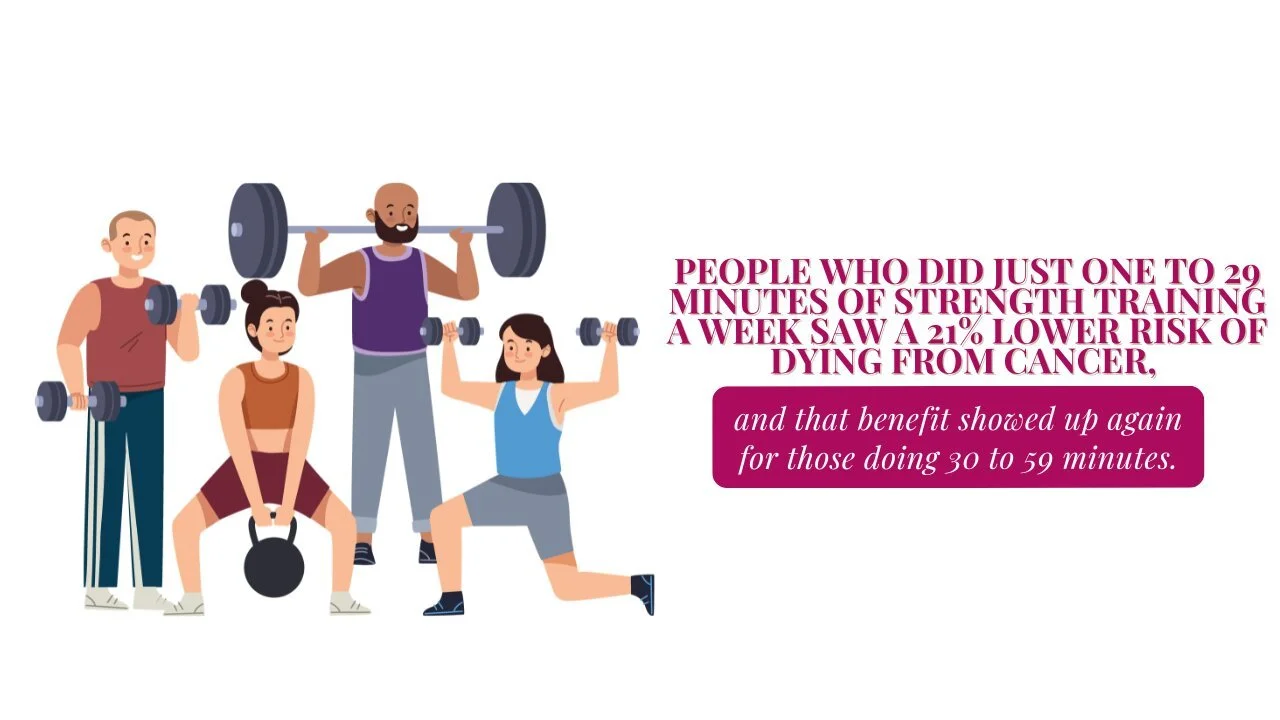
Even small amounts made a real difference. People who did just one to 29 minutes of strength training a week saw a 21% lower risk of dying from cancer, a benefit that held steady for those doing 30 to 59 minutes. Meanwhile, those hitting 90 to 119 minutes saw a 19% lower risk of cardiovascular death and a 27% lower risk of death from neurologic disease.
Cardio told a different story. Aerobic exercise kept showing added longevity benefits the more people did, with those exceeding 150 minutes a week seeing a 26% to 43% lower risk of death overall. The biggest win came from combining both: people doing 60 to 120 minutes of strength training alongside 150+ minutes of aerobic exercise had a 45% lower risk of death compared to less active folks. Strength keeps your muscles, bones, and balance solid; cardio has the bigger longevity payoff. Together, they cover all your bases.
The Case for Mixing Up Your Workouts
Another compelling idea comes from a 2026 study in BMJ Medicine, where Harvard researchers explored the impact of exercise variety. What they found was striking: people who regularly engaged in a wide range of physical activities, think swimming, yoga, gardening, strength training, or jujitsu, had a 19% lower risk of premature death compared to those who stuck to just one type of exercise.
This makes intuitive sense when you think about it. Tennis challenges the body differently than gardening, which is different from walking, which is different from a deadlift. Each activity stresses your muscles, joints, and cardiovascular system in unique ways. The more variety you bring into your routine, the more you're strengthening different systems in your body, challenging yourself in new ways, and working across different heart rate zones. All of that adds up to better overall health and a lower risk of early death.
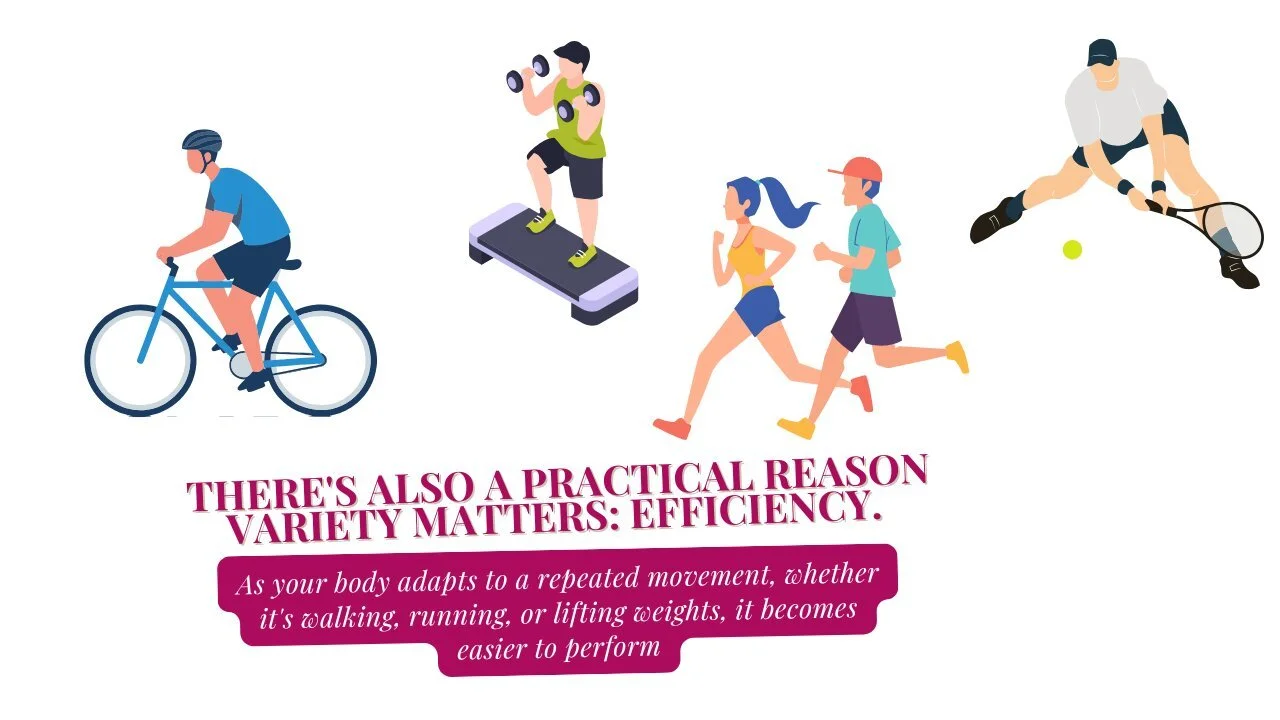
There's also a practical reason variety matters: efficiency. As your body adapts to a repeated movement, whether it's walking, running, or lifting weights, it becomes easier to perform. That's a sign of progress, but it also means you're burning fewer calories and putting in less cardiovascular effort than you once were. Pushing yourself out of that comfort zone, whether through a new activity, added intensity, longer duration, or a different muscle group, creates fresh challenges that come with their own unique health benefits.
None of this changes the core message: the best exercise is the one you'll actually do, and walking remains one of the most accessible and effective options for most people. But if you can layer in variety, a little yoga here, some Pilates there, or simply playing in the pool with your kids, those small additions can meaningfully support a longer, healthier life, regardless of your weight.
Muscle Mass vs. Muscle Function: What Actually Matters on GLP-1s
For anyone taking a GLP-1 medication, exercise isn't just a nice-to-have, it's actually part of the plan. All of these medications recommend around 150 minutes of exercise a week when used for weight management, which, honestly, is the same number we'd recommend for pretty much everyone. It fits into that classic "move more, eat less" idea, except we now know that's not the whole story. These meds help reduce appetite, and as the weight comes off, moving tends to get easier too, so the two kind of work together nicely.
Here's where it gets interesting, though: rapid weight loss almost always comes with some muscle loss, and that's totally normal. Clinical studies show the muscle loss on these medications generally stays within a safe range, but in the real world, some people do lose more than expected, and it's usually because they're not eating enough, not hitting their protein goals, or not staying active. If those basics are covered, significant muscle loss is pretty unlikely. But here's the real plot twist: the amount of muscle you have matters way less than how well that muscle actually works. Can you get up off the floor without help? Carry your groceries in one trip? Get into a squat without your knees staging a protest? Those functional wins are what really count.
Think about it like this: a tiny Cirque du Soleil performer might weigh like 90 pounds soaking wet, but they can hold a handstand for days because their muscle function is incredible. Meanwhile, someone with way more muscle mass might not be able to do a single squat. So yes, it's totally possible to lose muscle on a GLP-1 and still come out more functional, especially if you're pairing it with movement and strength training. The goal isn't chasing a muscle number, it's building strength you can actually use: getting up easily, feeling steady, having good energy. That's why in clinic, function often matters more than the scale or the muscle mass reading, things like grip strength, how easily someone rises from a chair, and how they feel moving through daily life.
The Minimum Effective Dose: How Little Exercise Actually Counts?
The fourth shift in how we're talking about exercise is all about the minimum effective dose, basically, what's the smallest amount of movement that still gives you a real health benefit? This isn't a new idea, exercise snacks (small bursts of movement spread throughout the day) have been part of the conversation for a while now, but there's more research backing it up than ever, and more people are genuinely curious about it.
One study that really drives this home came out in 2022 in JAMA Internal Medicine. Researchers found that if adults over 40 did just 10 minutes of exercise a day, consistently, we could prevent more than 100,000 premature deaths every single year. That's from something as simple as a 10-minute walk around the block. It's honestly a huge payoff for such a small time investment, and it lines up with one of the core messages in current exercise guidelines: just move more. So if 150 minutes a week feels like too much right now, start with 70 minutes a week, which breaks down to just 10 minutes a day. And if even that feels out of reach, start with one minute and build from there. Even in the one-to-29-minute range, we're seeing real benefits show up, like reduced cancer risk in certain study groups. Small amounts, done consistently, genuinely move the needle.
So the takeaway here is simple: something is always better than nothing. I think about patients who travel a lot for work, walking all day but not doing any intentional movement. In those cases, we'll talk about squeezing in 10 minutes of strength training in a hotel room, maybe Pilates, yoga, or a quick YouTube workout. If they want to push it to 20 minutes, something like GLP Strong workouts work great too, since you don't need much space or equipment to make it count. These small efforts add up in a real way over time.
You don't need a 30 or 60-minute walk to see benefits, those are great and offer additional perks, but a 10-minute walk or a few minutes of yoga can absolutely make a difference for your long-term health. There's really no amount too small to matter. Sure, it'd be amazing to hit 150 minutes a week, even better to hit 300, but if that's not realistic right now, start with one minute a day and build up to 10. Even if that's as far as you go, it can have a major impact on how long you live and how you feel as you age.
The Endocrine Organ You Didn't Know You Had
The fifth shift in this whole exercise conversation is starting to think about muscle as an endocrine organ, meaning it actually produces hormones. These are chemicals that travel through the body and have complex effects, often in more than one place at once. It turns out exercise influences a bunch of appetite-related hormones, like ghrelin, GLP-1, PYY, and leptin, and it also triggers the release of myokines, signaling molecules that come directly from skeletal muscle. These myokines communicate with your brain, liver, fat tissue, and gut, and they may play a role in appetite and even the food choices we make. It's still an emerging area of research, but the big idea is clear: muscle isn't just something we strengthen or shape through training, it's actively talking to the rest of the body.
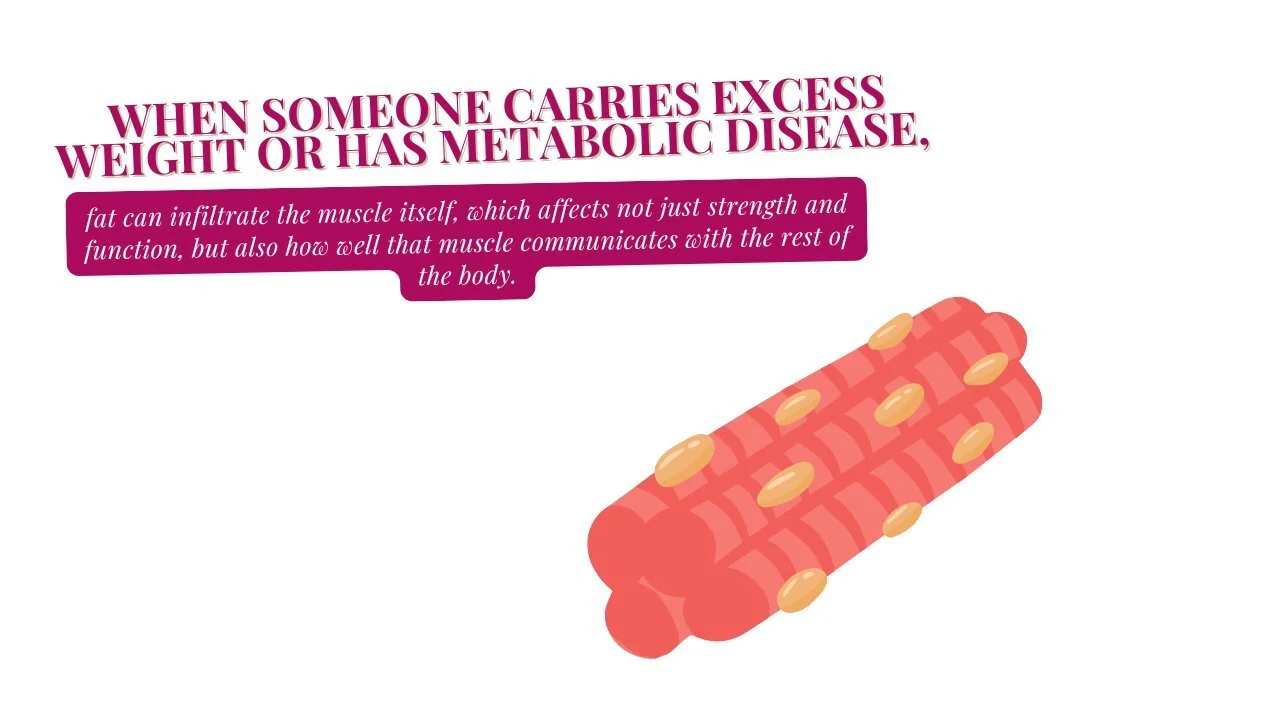
This is exactly why muscle health matters so much. When someone carries excess weight or has metabolic disease, fat can infiltrate the muscle itself, which affects not just strength and function, but also how well that muscle communicates with the rest of the body. As weight comes off, muscle tends to have less fat infiltration and becomes healthier, which may allow it to release these signaling molecules more effectively. This could help explain why people often feel a genuine sense of well-being after exercising, why sleep tends to improve, and why appetite regulation seems to get better too. So instead of thinking of muscle as just, like, tissue attached to your bones that helps you move, it's worth reframing it as an active, hormone-producing part of your body that's deeply connected to your overall health, including your risk for cardiovascular disease, cancer, and neurodegenerative disease, regardless of your weight.
In clinic, exercise comes up with basically every patient, at least once a year during a wellness visit, and even more often when weight is part of the conversation. The goal is never to overhaul someone's entire routine overnight, it's to nudge things forward just a little. If someone isn't moving much, we start small. If they're already walking, we might add a bit of strength training, whether that's yoga, Pilates, weights, bodyweight exercises, or even Tai Chi. If someone's already hitting 300 minutes a week, we shift the focus to something like zone two training or finding more movement throughout the day, standing more, using a walking pad, or just setting a timer to get up and move.
That's the shift: exercise isn't about chasing a number on the scale, it's about building a body that's stronger, healthier, and built to last. Whether that means adjusting your strength training, adding a bit of variety, focusing on muscle function over muscle mass, or simply moving for a few minutes a day, every step forward counts.
Press play on this week's episode for the full breakdown, along with practical ways to nudge your own routine forward, no matter where you're starting from.
More from The Dr. Francavilla Show:
Subscribe to The Dr. Francavilla Show on