
Nutrition Made Simple in 30 Minutes
Do you know what happens in your body when you eat a meal—or did you, like so many of us, make it to adulthood without ever getting the basics of nutrition explained to you?
If that question made you pause, you're not alone. Most of us pick up "healthy eating" advice in fragments—a rule from a diet trend here, a warning about carbs there—without ever getting the full picture of how food actually works in the body.
Protein, carbs, fat, vitamins, minerals, phytonutrients—these aren't competing categories to master one at a time. They're a system, and once you understand how the pieces fit together, meal planning stops feeling like guesswork. This breakdown covers exactly that: what each macronutrient is actually doing for you, why micronutrients matter even in small amounts, and how to build a plate that supports your body without obsessing over any single food or number.
No fad diets, no miracle foods—just the fundamentals, explained clearly. Ready to actually understand what's on your plate? Let's break it down.
The Role of Macronutrients in a Balanced Diet
Macronutrients are worth understanding well, because once this clicks, meal planning suddenly makes so much more sense. Basically, your body needs three main players to function: protein, carbs, and fat, and no, this isn't about cutting any of them out dramatically like some diets suggest. Protein is honestly the star of the show here. It's literally what your body uses to build and repair muscle, skin, hair, and even hormones and immune cells. If you're trying to lose weight, protein is your bestie because it keeps you fuller longer, helps stabilize blood sugar, and protects your muscle mass while you're in a calorie deficit. The tricky part is that protein doesn't just sneak into your day the way carbs and fat tend to—you kind of have to be intentional about it.
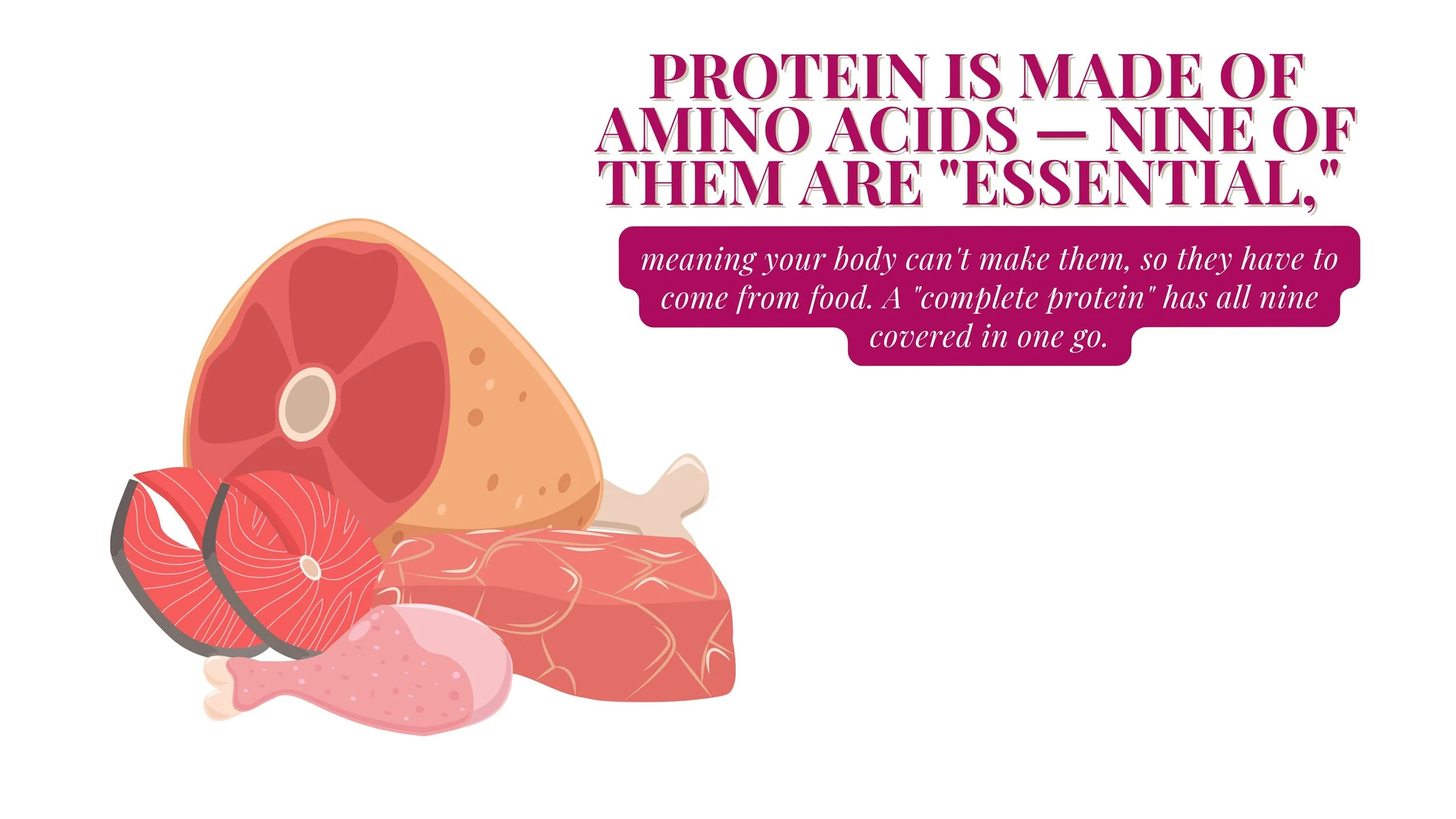
Here's where it gets a little sciencey, but stay with me: protein is made of amino acids, and there are nine "essential" ones your body can't make on its own, so you have to get them from food. A "complete protein" has all nine, which makes life easy. Animal foods like eggs, chicken, fish, and dairy are naturally complete, but so are some awesome plant-based options like tofu, tempeh, edamame, quinoa, and hemp seeds—so plant-based eaters, you're covered too. Other plant foods like beans, lentils, nuts, and grains are considered "incomplete" on their own, but that's not a big deal at all, because eating a variety of them throughout the day fills in the gaps. It's basically why beans and rice became a thing in so many cultures—together they make a complete amino acid team.
The vibe is: variety is everything. Whether you're an omnivore or fully plant-based, mixing up your protein sources (and honestly your food in general) is the easiest way to make sure your body's getting what it needs to repair itself, stay strong, and keep your energy up. No need to stress or overthink it—just aim for balance, throw in some complete proteins like eggs or quinoa when you can, and let the variety do the heavy lifting.
Carbs: Choosing Better Fuel
Carbohydrates deserve way more credit than they usually get, because honestly, they're not the villain so many diets make them out to be. Your body actually runs on carbs first—they're the go-to energy source, especially when you're active. That's literally why runners are chugging sports drinks and ripping open energy gels mid-race; their bodies need that fast fuel immediately, and carbs deliver. For most of us though, the issue isn't getting enough carbs, it's picking better ones, since they're hiding in everything from bread and pasta to beans, fruit, and starchy veggies like sweet potatoes.
This is where the difference between simple and complex carbohydrates comes in, and it's actually pretty easy to understand. Simple carbs—like soda, candy, white bread, and fruit juice—are digested quickly, causing a rapid spike in blood sugar that's often followed by a crash. They're not completely off-limits; they can be useful during intense exercise or when you're sick and need quick, easily digestible energy. But for everyday nutrition, they shouldn't be your primary source of carbohydrates.
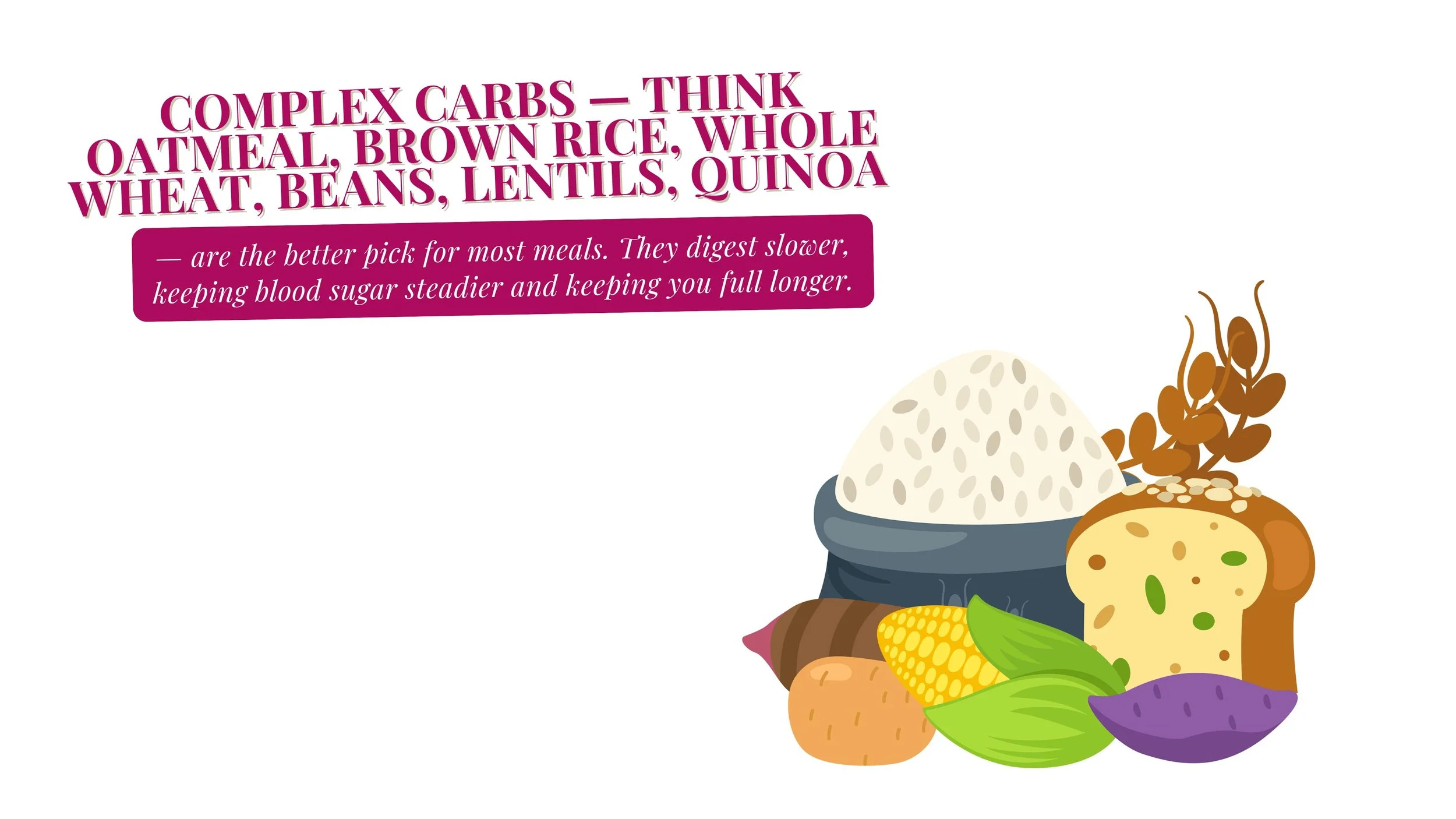
Complex carbs—such as oatmeal, brown rice, whole wheat, beans, lentils, and quinoa—are a better choice for most meals. They digest more slowly, helping keep blood sugar levels steadier while keeping you full for longer. They also provide fiber, which is something most people don't get enough of. Fiber plays an important role in supporting digestion, promoting healthy blood sugar levels, and improving heart health. Aim for at least 25 grams of fiber per day, though some guidelines suggest that 40 to 50 grams may provide additional health benefits.
The takeaway here isn't to fear carbs or cut them out—it's to get intentional about which ones make up most of your plate. Leaning into whole grains, fruits, veggies, beans, and legumes while keeping the pastries and sugary drinks more occasional lets you get all the energy perks of carbs without the blood sugar rollercoaster. Carbs aren't working against you, they're working for you, as long as you're choosing the ones that actually stick around and support your body long-term.
Dietary Fat: Friend or Foe?
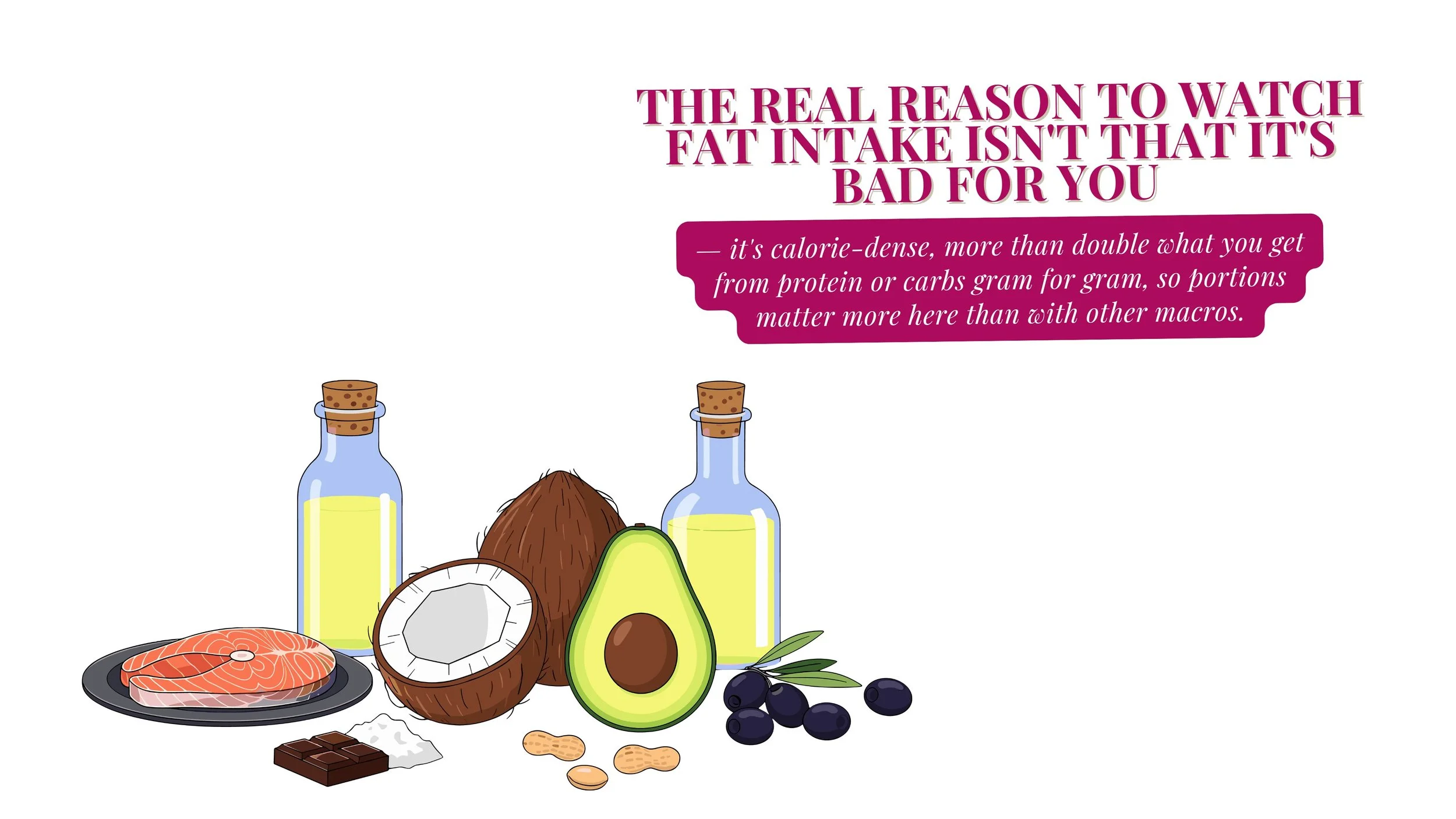
Fat has kind of a bad rap, and it's honestly time to clear that up, because eating fat does not automatically translate to gaining fat—your body can store extra calories from any macronutrient, carbs and protein included, so it's way more nuanced than "fat makes you fat." Actually, when low-fat everything took over grocery stores back in the 80s and 90s, obesity rates kept climbing anyway, which really says a lot about how no single nutrient deserves all the blame. What fat brings to the table is serious staying power—it slows digestion and makes meals genuinely satisfying, so when you're enjoying something creamy or loaded with avocado or nuts, that full, content feeling afterward? That's fat doing its job. The main reason people are told to watch their fat intake isn't because it's bad for you, it's because it's calorie-dense—more than double what you get from protein or carbs gram for gram—so portions matter more here than with other macros.
Fat shows up in a ton of different foods, and knowing the sources helps you make smarter choices without overthinking it. Animal products like beef and pork naturally carry fat—that's literally the grease you see when you're browning ground beef, or the marbling on a ribeye compared to a lean chicken breast. It's also in butter, oils, egg yolks, cream, and full-fat dairy, which is basically the whole difference between whole milk and skim. On the plant side, avocados, olives, olive oil, nuts, seeds, and coconut bring healthy fats plus a bonus of other nutrients, making them an easy win for your meals. Beyond flavor and fullness, fat is doing serious behind-the-scenes work too—it's essential for hormone production, brain function, and absorbing vitamins A, D, E, and K, which your body literally cannot access without enough fat around.
Not every fat behaves the same way, so it helps to know the difference. Unsaturated fats—found in things like olive oil, avocados, nuts, and seeds—are the heart-friendly favorites you want to lean into, while saturated fats from butter, full-fat dairy, and red meat are better enjoyed in moderation rather than cut out entirely. Fatty fish like salmon, trout, and sardines are worth a special shoutout too, since they're packed with omega-3s that support your heart, brain, and help lower inflammation. At the end of the day, fat isn't something to dodge—it's a nutrient your body genuinely relies on, so the real move is choosing quality sources, keeping portions in check, and trusting that balance beats restriction every single time.
The Impact of Caloric Density
Calories tend to get a lot of unnecessary drama attached to them, but really, they're just a way of measuring the energy your food provides—nothing to spiral over. If you've never tracked what you eat before, spending a week or two logging meals can actually be pretty eye-opening, not as a way to slap "good" or "bad" labels on foods, but just to notice patterns and get a clearer picture of what's actually going into your day. This is where caloric density comes in, which is basically how many calories a food packs relative to its weight. Protein and carbs both clock in around four calories per gram, while fat comes in at nine—more than double—so foods higher in fat naturally carry more calories in a smaller amount, which matters mostly for portion awareness, not as a reason to avoid fat altogether.
A great way to picture this is comparing a filet to a ribeye. Both are totally solid choices, but a ribeye has way more marbling, that streaky fat woven through the meat that gives it its rich flavor and tenderness. That same marbling, though, means it packs noticeably more calories than a leaner cut like filet. The same logic applies across the board—extra cheese, creamy sauces, a heavy pour of oil, or picking a fattier cut of meat can quietly stack up calories fast. If someone's working toward a calorie deficit for weight management, paying attention to these little additions and adjusting portions can genuinely move the needle without requiring some drastic diet overhaul.
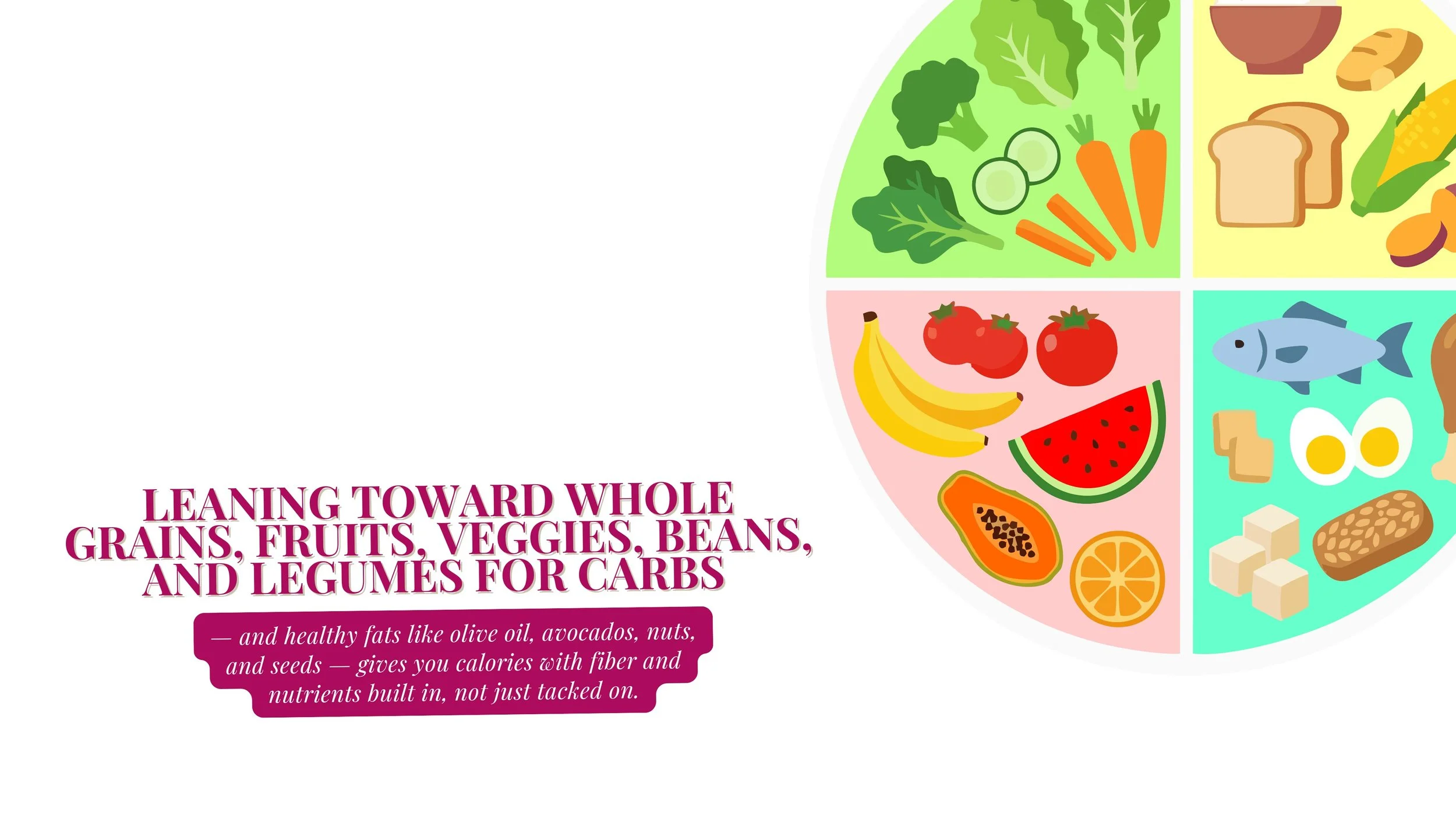
None of this means fat—or any macro—needs to be avoided or feared. A solid, balanced diet still includes protein, carbs, and fat working together; it's really about being intentional with where those calories are coming from. Leaning toward whole grains, fruits, veggies, beans, and legumes for carbs, and healthy fats like olive oil, avocados, nuts, and seeds, gives you calories that come with a bonus of fiber and nutrients attached.Rather than focusing on perfection, think of caloric density as another tool that helps you stay aware, make balanced choices, and build healthy eating habits for the long term.
The Small Nutrients That Make a Big Impact
Macronutrients — protein, carbs, and fat — get most of the attention, but micronutrients are just as essential. These are the vitamins, minerals, and plant compounds we get from food, and even though we only need them in small amounts, they power thousands of processes: energy production, immune function, brain health, bone strength, and more. A varied diet covers most people's needs, but absorption issues, restrictive eating, pregnancy, or certain medical conditions can raise the risk of deficiency.
Vitamins
Vitamins fall into two groups based on how the body absorbs and stores them.
Fat-soluble (A, D, E, K): These require dietary fat for absorption and are stored in body tissue, which means it's possible (though uncommon on a balanced diet) to get too much. Vitamin A supports vision and immunity, D supports bone health and immune regulation, E acts as an antioxidant, and K helps with blood clotting and bone health.
Water-soluble (B vitamins, C): The body doesn't store these in large amounts — excess is flushed out through urine — so consistent intake matters. They support brain and nerve function, red blood cell production, energy metabolism, and wound healing.
Minerals
Major minerals (calcium, magnesium, potassium, sodium, phosphorus): Calcium and phosphorus build strong bones and teeth; magnesium and potassium drive muscle contraction, including the heart; and together these minerals regulate blood pressure, nerve signaling, and fluid balance.
Trace minerals (iron, zinc, selenium, copper, iodine): Needed in tiny amounts, but still essential for proper function.
Minerals require careful regulation, so supplementing isn't automatically harmless — too much calcium can raise kidney stone risk, and potassium levels need close monitoring, especially with certain medications or conditions. This is why healthcare providers track electrolyte and mineral levels closely in hospitalized patients or those managing medical conditions.
Phytonutrients
Phytonutrients are plant compounds found in fruits, vegetables, beans, legumes, herbs, and nuts. Isolating a single nutrient — like vitamin C from fruit — doesn't replicate the benefit of eating the whole food, because plants contain hundreds (possibly thousands) of compounds like lycopene, beta-carotene, sulforaphane, and flavonoids working together. These have been linked to heart health, reduced inflammation, and cell protection — benefits whole foods deliver that supplements alone can't fully reproduce.
Who Might Need a Multivitamin
Most people eating a balanced diet don't need one. Supplementation may help those with significant food restrictions, very low-calorie diets, bariatric surgery history, absorption-affecting conditions (like celiac or Crohn's), or pregnancy. Supplements are a tool for filling specific gaps — not a replacement for real food.
Eat the Rainbow
Different colored plant foods carry different beneficial compounds:
Red (tomatoes, watermelon, strawberries): lycopene and antioxidants
Orange (carrots, sweet potatoes, peppers): beta-carotene
Yellow (squash): unique plant compounds
Green (spinach, broccoli, Brussels sprouts): a range of nutrients
Blue/purple (blueberries, blackberries, eggplant): protective compounds
White (garlic, onions, mushrooms, cauliflower): valuable phytonutrients
A simple target: 30 different plant foods a week — herbs, spices, nuts, seeds, grains, and legumes all count, not just fruits and veggies. Small additions (garlic, cilantro, a mixed grain, a handful of berries) add up fast.
Why Food Is More Than Just Macronutrients
Food is honestly way more layered than the simple protein-carb-fat labels we tend to slap on it, because most of what you eat is actually a mashup of all three macronutrients at once, plus a whole cast of vitamins, minerals, fiber, and plant compounds working in the background. Take yogurt, for instance—people file it under "protein," but it's also carrying fat from the dairy and carbs from lactose, not to mention any added sugar or fruit mixed in. It's never really just one thing. Nuts follow the same pattern: everyone thinks fat first, but they're quietly bringing protein, carbs, fiber, and a bunch of vitamins and minerals to the party too. Beans and legumes are the same story, showing up with fiber, carbs, and protein all bundled together, which is exactly why they're such nutritional overachievers.
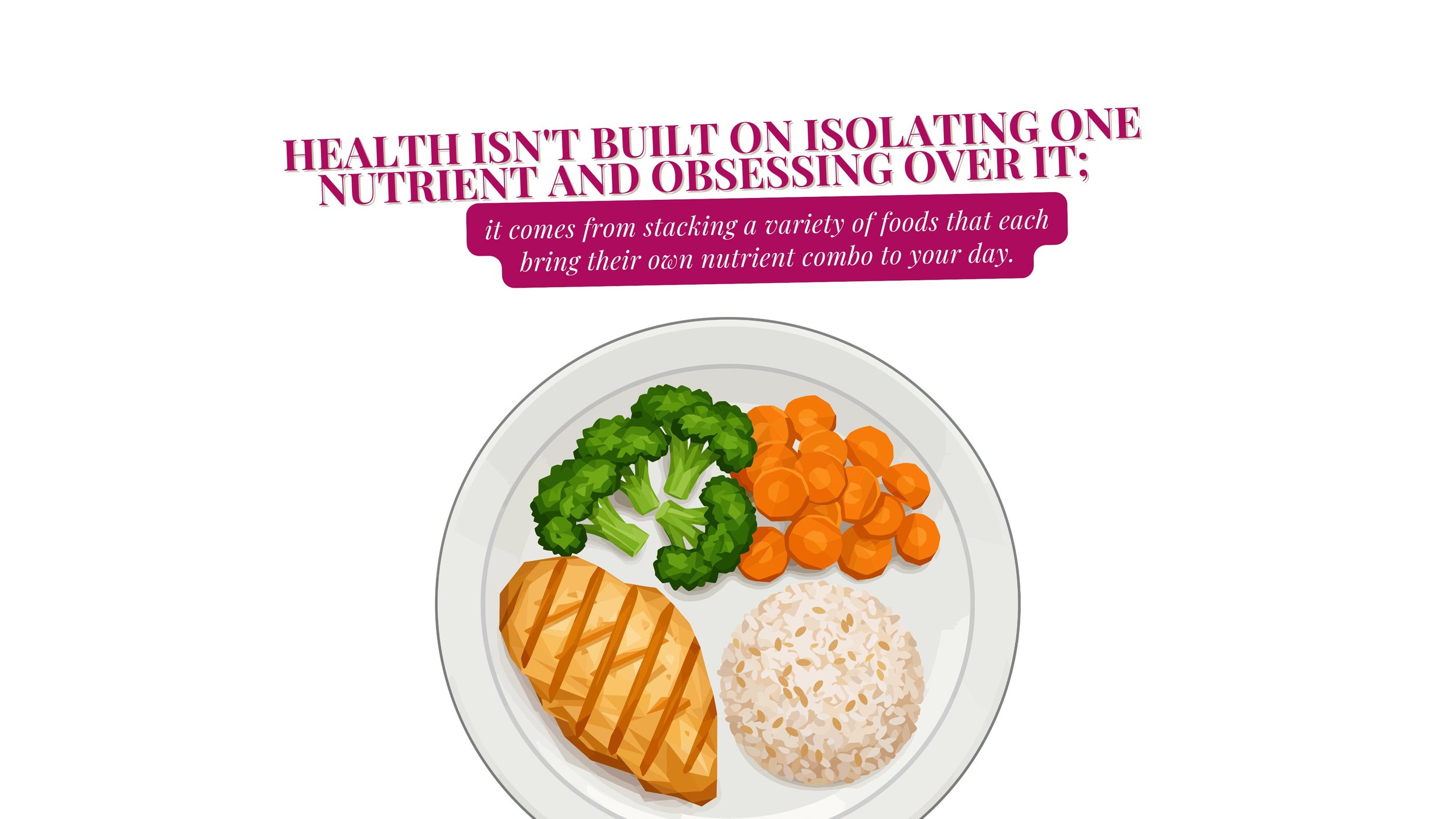
Even how you cook something changes the nutrient lineup. Toss your veggies, grains, or beans in olive oil, and suddenly that meal picked up an extra layer of healthy fat and flavor it didn't have before. This is basically the whole reason nutrition experts don't love it when people mentally sort foods into strict "protein," "carb," or "fat" boxes—real food doesn't play by those rules, and neither should your mindset around it. Health isn't built on isolating one nutrient and obsessing over it; it comes from stacking a variety of foods that each bring their own nutrient combo to your day.
This is also where micronutrients sneak in—vitamins, minerals, and phytonutrients show up in small doses across tons of different foods, so the more variety you're rotating through, the better your odds of covering all your bases. Nutrition isn't about finding one magic food or nutrient to obsess over; it's about the full pattern—what you're eating across your meals, your days, your week—all working together. Diversity on your plate isn't just a nice bonus, it's genuinely one of the simplest ways to make sure your body's getting what it actually needs.
Building a Balanced Diet: Simple Tips for Healthy Eating
Building a balanced diet doesn't require chasing some mythical "perfect" way of eating, because honestly, that doesn't exist for anyone. What actually works is variety, balance, and consistency, showing up meal after meal without needing to be flawless every time. A good framework here is the 80/20 approach—roughly 80% of your choices are focused on nourishing your body, while the other 20% is just for pure enjoyment, no guilt attached. That means pizza night, a scoop of ice cream, or your favorite dessert absolutely still has a seat at the table, because food isn't only about nutrients, it's tied to culture, celebration, and just genuinely feeling good.
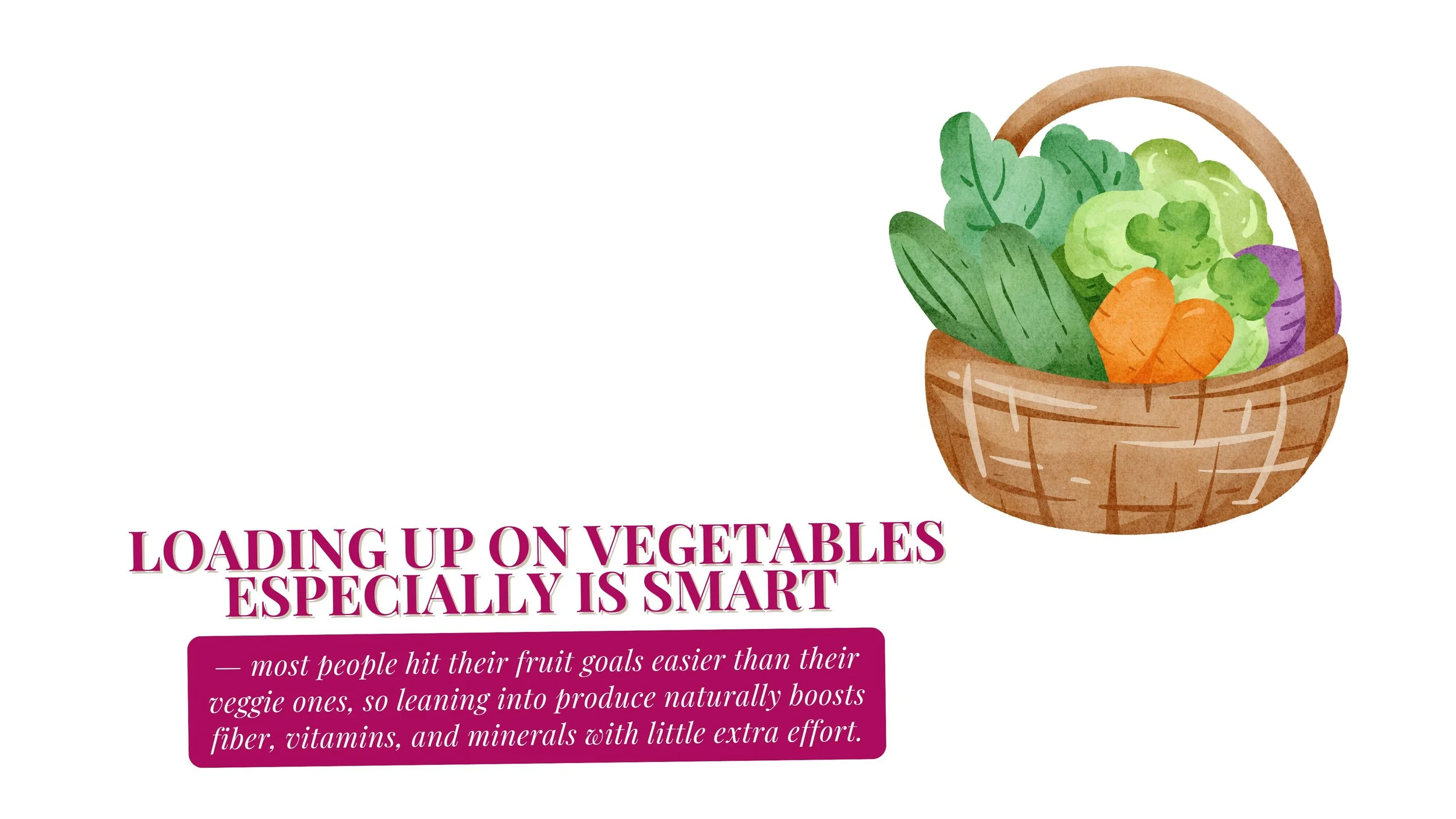
When it comes to actually building your plate, the healthy plate method makes this ridiculously simple to visualize: half your plate goes to veggies and produce, a quarter to protein, and the last quarter splits between healthy fats and quality carbs like whole grains. Since veggies technically count as carbs too, this isn't some low-carb setup—it's more about being intentional with which carbs are taking up space on your plate. Loading up on vegetables especially is a smart move since most people find it way easier to hit their fruit goals than their veggie ones, so leaning into that produce half naturally boosts your fiber, vitamins, and minerals without much extra effort. Round things out with lean proteins, nuts, seeds, olive oil, avocado, beans, or whole grains, and you've basically built a meal that's covering all your nutritional bases.
At the end of the day, your plate doesn't need to look Pinterest-perfect every single time—some meals are just gonna be a cheeseburger and a brownie, and that's completely fine. What actually moves the needle is what you're doing consistently, not what happens on any one random Tuesday. Keep building balanced meals most of the time, give yourself room to enjoy the foods you love, and trust that sustainable, flexible habits will always beat rigid perfection in the long run.
One of the Easiest Nutrition Changes: Reducing Added Sugar
Cutting back on added sugar is honestly one of the easiest wins you can score for your health, and the good news is it usually doesn't require some big complicated overhaul. For most people, the sneakiest source of added sugar isn't even food, it's what's in the cup—soda, sweet tea, juice, lemonade, fancy lattes, and those blended coffee drinks are all quietly loading up on sugar and calories while giving you basically nothing in return nutrition-wise. The tricky part is that liquid calories just don't fill you up the way real food does, so you can knock back a ton of sugar in one drink and still feel hungry twenty minutes later, which makes it way too easy to overdo it without even realizing.
A solid first move is shifting sugary drinks from an everyday habit into more of an occasional thing—maybe once a week, maybe just for special occasions, whatever fits your life. Swap them out with something that still feels refreshing but skips the sugar crash: water is always the MVP, and if plain water feels kind of boring, tossing in some lemon, lime, berries, mint, or cucumber makes it way more exciting without adding sugar. Sparkling water, unsweetened tea, and plain coffee are all solid go-tos too. If going cold turkey feels rough, easing into it gradually works just as well, and some people even use artificially sweetened drinks as a bridge, though those aren't required for healthy eating by any means.
The real goal over time is training your taste buds to actually prefer less-sweet drinks, and that shift happens more easily than people expect once you start making the swap consistently. It's such a small change on paper, but cutting back on sugary beverages can genuinely move the needle on your overall nutrition, making it one of the simplest, lowest-effort upgrades you can make to how you eat day to day.
Increase Your Protein Intake for Better Nutrition and Fullness
Bumping up your protein intake is genuinely one of the most underrated nutrition upgrades you can make, especially since protein is doing so much heavy lifting for your body—supporting your muscles, keeping your structure strong, and making meals actually feel satisfying instead of leaving you hunting for a snack twenty minutes later. Out of the three macros, protein tends to be the one people fall short on, mostly because carbs and fat have a way of showing up in meals without much effort, while protein usually takes a little more planning to hit consistently.
The move here is pretty simple: try to work a protein source into every meal and snack when you can. Doing this helps keep your energy steadier throughout the day, curbs hunger before it spirals, and makes it way easier to stick to a balanced way of eating without white-knuckling it. Easy go-tos include cottage cheese, Greek yogurt, chicken, tuna, egg whites, tofu, beans, and lentils—all things you can toss into a meal without much fuss.
The bigger payoff is that when protein is doing its job, you naturally end up more satisfied, which means you're less likely to reach for less nutritious stuff just because you're still hungry. It's a small shift with a pretty big ripple effect, and honestly one of the easiest ways to make your plate feel more balanced without overthinking every single meal.
Focus on Adding Healthy Foods, Not Just Avoiding Foods
Shifting your mindset from restriction to addition might be one of the most underrated nutrition hacks out there, and it's honestly such a simple reframe. Instead of running through a mental list of "I shouldn't eat this, I shouldn't eat that," try flipping the script and asking what you could be adding to your plate instead. Skipping pasta or swearing off bread tends to feel like punishment, but building meals around nourishing foods feels a lot more sustainable, and it doesn't require you to villainize anything.
This looks different depending on what part of your diet you're working on. On the carb side, it's less about cutting them and more about leaning toward the good stuff—oatmeal, brown rice, quinoa, corn, whatever nutrient-dense options you actually enjoy eating. Same goes for produce: can you sneak in an extra piece of fruit, or work more veggies into lunch and dinner? Beans and lentils are an easy add too, bringing fiber and nutrients along with them, and nuts or seeds are a solid way to work in some healthy fats without overthinking it. Protein deserves a spot on this list as well—cottage cheese, yogurt, tuna, whatever's convenient for you—since it's usually the macro people struggle to get enough of anyway.
Here's the cool part: when you're intentional about adding these foods in, there's naturally less room left on your plate for stuff that isn't really doing much for you. It's not about willpower or restriction at all—it's just crowding your day with things that actually fuel you, which makes healthy eating feel way less like a chore and way more like something that just happens to leave you feeling satisfied.
Healthy eating doesn't have to be complicated. By focusing on balance, variety, and adding more nutrient-rich foods to your plate, you can build habits that support your health for years to come.
To continue the conversation, explore the full episode for a closer look at the science behind nutrition and the everyday choices that can support better health.
More from The Dr. Francavilla Show:
Subscribe to The Dr. Francavilla Show on