
Insomnia with Dr. Muhammad Usama
Do you actually know the difference between a rough night's sleep and a real sleep disorder?
Most people use the word "insomnia" for both, but the line between them is a lot more specific than it sounds — and knowing where that line sits can change how someone approaches their own sleep struggles entirely.
That's exactly what this episode digs into, with Dr. Muhammad Usama returning to the show after a prior conversation on Zepbound and sleep apnea just earlier this year. He's triple board-certified in sleep and obesity medicine, practices at MultiCare Health System in the greater Seattle area, and serves as an adjunct clinical professor of medicine at A.T. Still University School of Osteopathic Medicine. His clinical and research work centers on the intersection of obstructive sleep apnea, obesity, and cardiometabolic health, with a particular focus on GLP-1 therapies like tirzepatide.
This time, the conversation turns to insomnia itself: what actually qualifies as chronic insomnia, why it happens, and what treatment options genuinely move the needle versus which ones just create the illusion of help.
Insomnia is far more common, and far more treatable, than most people realize. Between understanding the difference between acute and chronic, recognizing the habits that quietly turn one into the other, and knowing which treatments actually hold up under research, there's a lot here that can change how someone approaches their own sleep for good. And the biggest takeaway stands on its own: if sleep has been a struggle for months, it's worth getting evaluated rather than just living with it.
When Does Insomnia Stop Being Normal?
Insomnia gets tossed around a lot, but there's actually a clear clinical line between what's normal and what isn't. Sleep specialists split it into two categories: acute and chronic. Acute insomnia is incredibly common — up to 60% of American adults deal with it at some point — and it's really just the body doing what it was built to do. When something stressful is happening, whether it's a big life event or an acute stressor, the nervous system responds by keeping you alert instead of letting you drift off. That's evolution at work: if a bear is coming for you, the last thing your body wants is for you to be asleep. It wants you up, alert, and using every bit of capacity you have to get to safety.
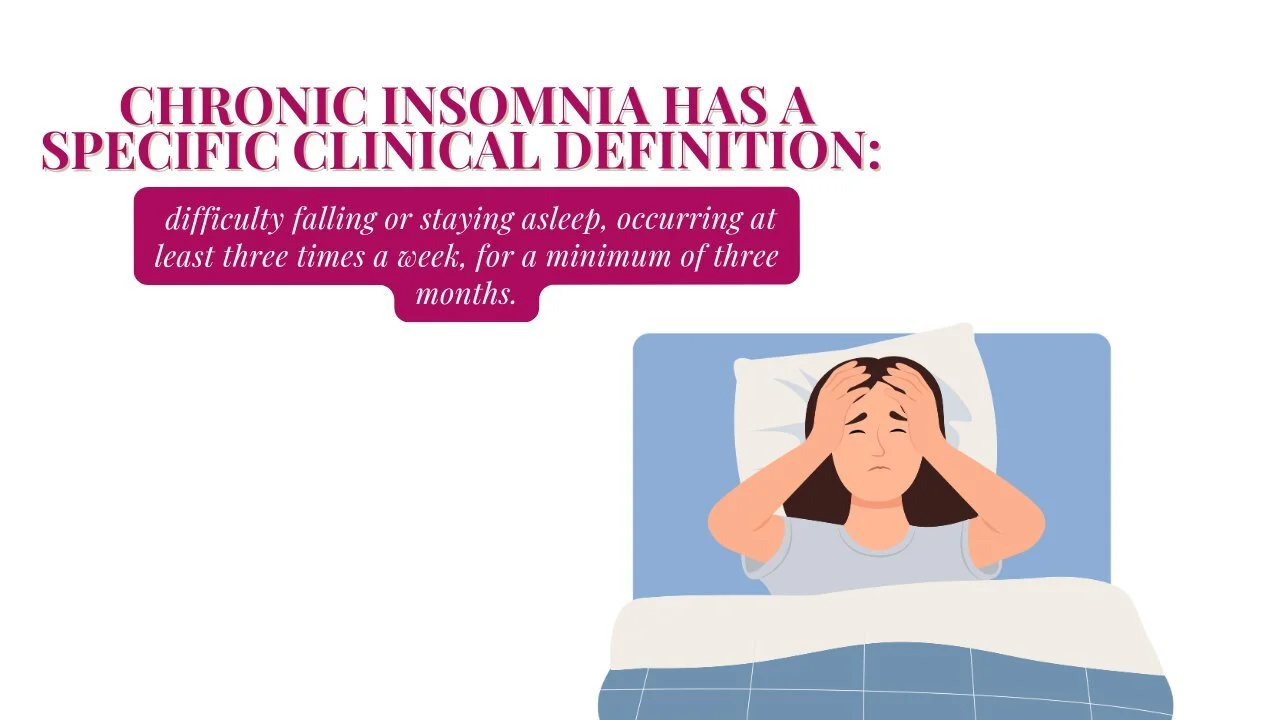
The problem starts when that short-term response doesn't resolve and turns into something ongoing. Chronic insomnia has a specific clinical definition: difficulty falling or staying asleep, occurring at least three times a week, for a minimum of three months. It affects somewhere between 8 and 12% of people, which puts it in the range of about one in ten adults. That prevalence helps explain why it comes up so often in clinical conversations — it's not a niche complaint, it's a condition a meaningful share of the population is quietly living with.
The distinction matters because acute and chronic insomnia call for different mindsets. Acute insomnia is often the body's appropriate, if uncomfortable, response to a stressor — sleep isn't the priority when something urgent needs to be dealt with. Chronic insomnia is a different animal entirely, one defined by frequency and duration rather than circumstance, and it's the version worth paying closer clinical attention to.
The Switch That Turns Short-Term Insomnia Into Chronic Insomnia
Short-term insomnia doesn't automatically become chronic — something has to flip the switch, and there's a model for exactly how that happens. Dr. Spielman's three-P model breaks the process down into predisposing, precipitating, and perpetuating factors. Predisposing factors are the traits someone brings to the table, like a Type A personality or a family history of insomnia. Precipitating factors are the triggers, things like a death in the family or a stressful stretch at work, which is what kicks off that initial bout of acute insomnia. But the real switch, the one that flips acute into chronic, is the third P: perpetuating factors.
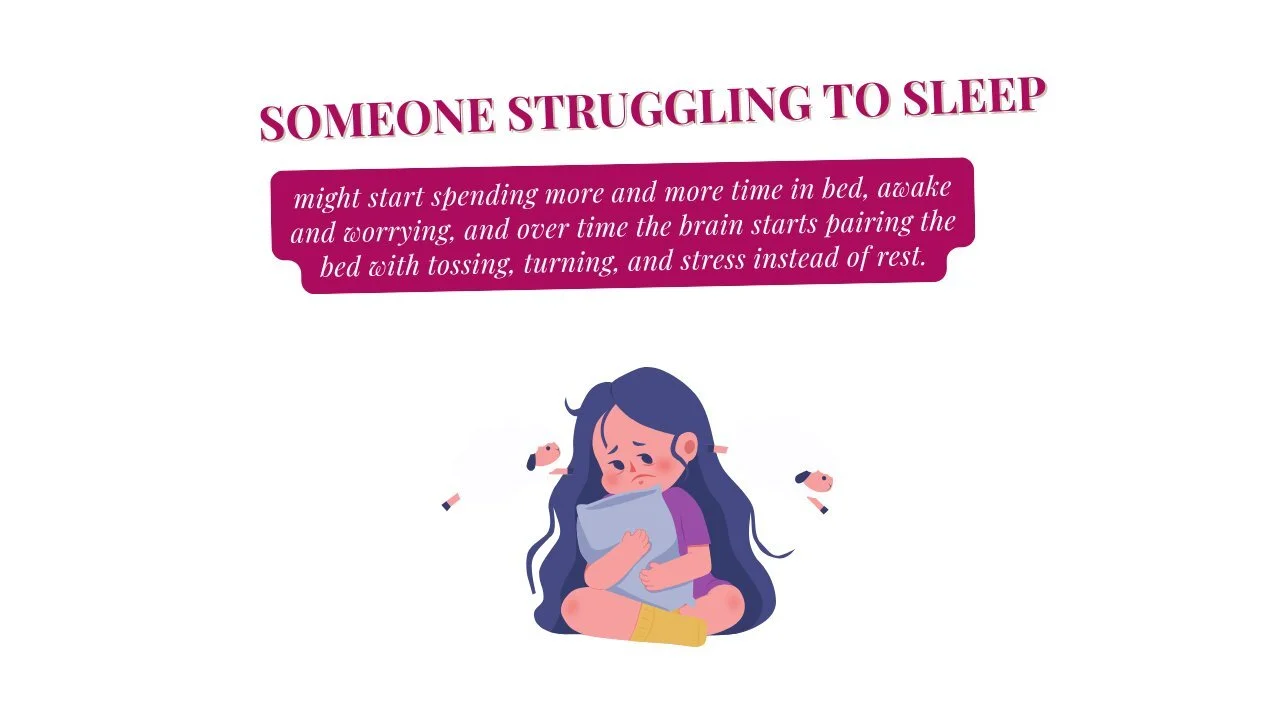
That switch usually comes down to well-intentioned habits that quietly backfire. Someone struggling to sleep might start spending more and more time in bed, awake and worrying, and over time the brain starts pairing the bed with tossing, turning, and stress instead of rest. That's called conditioned arousal, and it's the mechanism that turns bed into a predictably stressful place rather than a restful one. It shows up constantly in practice — people who say they've come to hate their own bed, whose minds start racing the second they lie down, even when they were sleepy just moments before.
The encouraging part is that sleep is a learned behavior, and like any learned behavior, it can be relearned. Kids build a strong bed-sleep association almost by default: they go to bed tired, fall asleep quickly, and wake up eager to get moving. Chronic insomnia erodes that same pairing in adults, but it isn't permanent — the association between bed and sleep can be rebuilt with the right approach.
Is Insomnia Genetic? The Nature vs. Nurture Answer
Family history of insomnia comes up a lot, and it turns out there's real substance behind that pattern. Genetics do play a role in who's more likely to struggle with sleep. Someone with a parent who dealt with chronic insomnia isn't imagining a connection — there's a legitimate genetic predisposition at work.
Genetics is only half the story, though. Environment matters just as much, and it often travels through families right alongside biology. Bedtime habits and routines get passed down the same way other behaviors do, so a household without strong sleep habits tends to produce kids who carry that same pattern into adulthood.
Put together, it's a classic nature-and-nurture situation. Genetic predisposition and environmental habits both feed into who ends up dealing with chronic insomnia, which means family history is worth paying attention to on both fronts, not just one.
Chronic Insomnia: Why CBT-i, Not Sleep Hygiene, Is the First-Line Treatment
Before jumping to treatment, the first step with chronic insomnia is ruling out an underlying cause that might be driving it. Pain, restless leg syndrome, and obstructive sleep apnea can all show up disguised as insomnia. That last one deserves extra attention in female patients specifically, since OSA tends to present very differently in women than in men. Instead of the classic loud snoring and witnessed apnea most studies were built around, women are more likely to show up with sleep maintenance insomnia, a racing heart on waking, and daytime fatigue, which means the condition gets missed if a clinician is only looking for the textbook male presentation. Anxiety and depression get checked for too, since heightened arousal during the day carries straight through into the night and makes it harder to fall or stay asleep.
Once those underlying issues are ruled out and treated, the real first-line therapy for insomnia comes into play: cognitive behavioral therapy for insomnia, or CBT-i. It's worth separating from two things people usually lump it in with. It's not sleep hygiene, and by the time most people seek help, they've already tried the dark-room, no-noise, cool-temperature advice without much success — chronic insomnia doesn't respond to sleep hygiene any more than an active infection responds to hand washing. It's also not traditional talk therapy; there's no couch, no unpacking family history. CBT-i is narrowly focused on bedtime behavior and rebuilding the bed's association with sleep by breaking the conditioned arousal that's keeping the cycle going.
That cycle is worth naming directly: lying awake, getting frustrated, spiraling into anxious thoughts, maybe reaching for the phone to scroll, all of which activates the brain further and makes sleep even less likely. No medication has managed to interrupt that pattern, but CBT-i does, and the research backs it up. Multiple meta-analyses show it outperforms sleeping pills and sleep aids on both safety and effectiveness, and unlike medication, its benefits tend to stick around after treatment ends rather than fading once the pills stop.
How to Actually Access CBT-i (No Therapist Couch Required)
A common hesitation with CBT-i is the assumption it means sitting across from a therapist, which isn't quite the reality. There are several ways to actually access it. Sleep doctors and sleep psychologists offer it directly, either through telehealth or in person, though availability can be limited since there simply aren't that many specialists in the field. The Society of Behavioral Sleep Medicine keeps a state-by-state list of providers for anyone looking to find one. For a more self-directed route, Say Good Night to Insomnia by Harvard sleep psychologist Dr. Greg Jacobs walks patients through the full CBT-i program in book form, and there's also a growing set of apps and online programs built around the same protocol.
What stands out across all of these options is how consistently the results hold up once people actually commit. Patients tend to be genuinely surprised at how well it works, even though getting them to start the program in the first place can be a real hurdle. That resistance makes sense — someone dealing with insomnia is often running on limited bandwidth already, worn down by poor sleep, which makes committing to a structured behavioral program feel like one more thing on an already overwhelming plate.
Still, the case for CBT-i holds up on every front that matters. It's backed by strong research, it's safe with no side effects, and compared to ongoing prescriptions, the cost is minimal, whether that's a one-time book purchase or an app subscription. The main investment isn't money, it's time, and it consistently pays off.
Do Sleep Medications Actually Work? The Research Says Not Much
People ask about sleep medications a lot, but when researchers compare them directly to CBT-i, CBT-i wins pretty clearly. Take Trazodone, one of the most commonly prescribed sleep drugs — studies show it only helps people fall asleep about four minutes faster and adds around five extra minutes of total sleep. That's a grand total of nine extra minutes, which isn't much to show for it, especially when you factor in the grogginess and next-day drowsiness that often come with it. Zolpidem (commonly known as Ambien) does a bit better, cutting the time it takes to fall asleep by about 10 minutes and reducing time spent lying awake by another 10 minutes, adding up to about 20 extra minutes of sleep overall. Whether that's actually meaningful is up for debate, but there's a bigger issue lurking underneath these numbers.
Most of the research on these drugs only looks at short-term use, so nobody really knows what happens with long-term use, especially for newer sleep drugs like zolpidem and eszopiclone (Lunesta). The official prescribing information already warns about side effects like sleepwalking and even sleep-eating, along with feeling drowsy the next day. More recently, there's growing concern that these drugs may affect memory. That makes sense when you think about how memory works: you have to be paying attention to something for it to stick in your memory. If a drug is making someone groggy and less alert during the day, they're also paying less attention, which means less is actually getting stored in memory in the first place.
Add it all up, and the small sleep improvements these medications offer just don't outweigh the side effects and unknown long-term risks. That also lines up with what shows up in real life, where a lot of patients have already tried several of these medications and still aren't sleeping well.
Acute Insomnia: How Early Intervention Prevents It From Becoming Chronic
Sleep medications aren't entirely without a role — the key is confining that role to the short term. Used briefly during an acute stressor, they can offer some relief, but the way they're prescribed matters as much as whether they're prescribed at all. Being upfront about the process, and explicit that this is a short-term bridge rather than a long-term fix, makes a real difference in whether acute insomnia stays acute.
That distinction connects directly back to the perpetuating factors that turn short-term sleep trouble into something chronic. Most people don't seek help during the acute phase, which means the window to intervene early often passes unaddressed. Getting support sooner, before conditioned arousal has a chance to set in, changes the trajectory significantly.
The practical takeaway is timing: don't wait until insomnia has been going on for months to take it seriously. Solid sleep hygiene habits, paired with early access to CBT-i resources, give acute insomnia the best chance of staying exactly that, acute, rather than sliding into a pattern that's much harder to unwind later.
Does Melatonin Actually Help With Sleep? What It's Really For
Melatonin gets treated like a cure-all, but its actual role is a lot narrower than the way most people use it. It's not a strong sleep aid on its own — the sedating, or soporific, effect is fairly weak, and a good chunk of what people feel from it is likely placebo. Where melatonin genuinely earns its keep is with circadian rhythm disorders: shift work, delayed sleep phase syndrome, jet lag. In those cases, it's addressing a timing problem rather than an insomnia problem, which is a meaningful distinction, since it does nothing for chronic insomnia on its own.
Dosing adds another layer of complication, since melatonin isn't FDA-regulated the way prescription medications are. One study found actual dosage in over-the-counter bottles varying anywhere from 100% under to 300% over what the label claimed. Most research on melatonin uses doses around 0.3 to 3 milligrams, yet store shelves are stocked with 6, 10, even higher milligram options, often with no clear sense of what's actually in the bottle. Timing matters just as much as dose. Someone with delayed sleep phase syndrome, essentially a night owl, needs a low dose taken five to six hours before their intended bedtime, not right at bedtime. Taken too late, the body is already producing its own melatonin by then, so the added dose just lingers until receptors clear enough to absorb it, which is part of why so many people wake up groggy. Pediatric cases have seen a rise in poison control calls tied to melatonin overdose, which underscores how casually it tends to get used.
For people dealing with genuine circadian misalignment, like frequent jet lag or an entrenched night-owl schedule, melatonin does have a real place, but even then, timing needs to be calculated carefully, often based on core body temperature minimum, since taking it at the wrong time can actually worsen the problem it's meant to fix. For straightforward insomnia without a circadian component, though, it's not doing much heavy lifting, and anyone considering it is better off getting guidance on dose and timing rather than grabbing whatever's on the shelf.
Do Sleep Supplements Like Magnesium Actually Work?
Beyond melatonin, the supplement aisle doesn't offer much when it comes to chronic insomnia. There's no supplement that stands out as genuinely treating it, and there's an added risk factor worth flagging: many supplements contain ingredients not listed on the label, or doses that don't match what's printed on the bottle. That lack of oversight is reason enough to be cautious, even when something seems harmless on the surface.
Magnesium, particularly magnesium glycinate, comes up constantly, often through products like Calm that are sold nearly everywhere. The research on it is mixed at best. A handful of small studies with limited sample sizes have shown some benefit, while others have found none at all, which leaves the overall picture pretty murky.
None of this means supplements are strictly off-limits. If someone's already using one and feels like it's helping, there's no strong reason to stop. But going in expecting magnesium or any other supplement to resolve chronic insomnia isn't realistic based on what the data actually shows.
Alcohol and Marijuana for Sleep: Do They Actually Help—or Hurt?
Alcohol and marijuana come up constantly as sleep aids, and both deserve a closer look, starting with alcohol. It can genuinely help people fall asleep faster, working through the GABAergic pathway to produce that sedating effect. The trouble starts once it begins metabolizing. That's when it disrupts sleep architecture significantly, triggering REM rebound, nightmares, and frequent arousals throughout the night. The result is waking up groggier and more fatigued than before, which tends to feed right back into the same cycle. There's no safe dose or timing in the evening that avoids this effect — even having a drink with dinner still ends up disrupting sleep later that night.
Marijuana is a murkier picture, largely because regulatory barriers have kept it from being studied as thoroughly as alcohol. Whether it's THC or CBD matters too, and the effects aren't uniform across either. Beyond the lack of solid data, there are legitimate concerns around mental health and dependence that make it hard to recommend with any confidence right now. In practice, a lot of people report that marijuana helps with sleep or anxiety, yet they're still bringing up sleep or anxiety complaints regularly, which suggests the perceived benefit may not match what's actually happening physiologically.
Both substances share a common thread: they create the feeling of helping while quietly working against the goal. Alcohol trades a faster sleep onset for wrecked sleep quality later in the night, and marijuana's benefits remain largely unproven despite how commonly people reach for it. Neither one solves the underlying problem, and in alcohol's case specifically, it actively makes it worse.
Chronic Insomnia: When to Get Evaluated and What Actually Works
The biggest takeaway on chronic insomnia comes down to one thing: get evaluated. Non-restorative sleep and difficulty falling or staying asleep aren't something to just live with, and they're not automatically explained away by other factors. This comes up especially often in women approaching menopause, where sleep issues get chalked up to menopause by default rather than getting a proper evaluation. Chronic insomnia deserves the same workup regardless of what else is going on, to rule out any underlying cause before assuming it's just a phase to push through.
Once an underlying cause has been ruled out and the diagnosis points to psychophysiologic insomnia, the evidence consistently points to one treatment: cognitive behavioral therapy for insomnia. It's backed by extensive research, and it's genuinely accessible — not some complicated, specialist-only process. Plenty of people can work through it on their own using books or apps built around the protocol.
For those who need more fine-tuning or aren't seeing results on their own, that's where sleep doctors and sleep psychologists come in, offering more personalized guidance to get the process working. Either way, the path forward is the same: insomnia is treatable, and effective help is more accessible than most people realize.
That's a wrap on insomnia, and honestly, there's a lot here worth sitting with. From the acute-versus-chronic distinction to the three-P model that quietly turns short-term sleep trouble into a long-term pattern, to why CBT-i keeps outperforming pills, patches, and supplements across the board — this conversation covers a lot of ground that most people never get walked through by a specialist.
A huge thank you to Dr. Muhammad Usama for coming back on the show and breaking all of this down with so much clarity. If sleep has been a struggle for a while now, hopefully this gave a clearer sense of what's actually going on and what's worth trying next. For the full conversation, be sure to check out this week's episode.
More from The Dr. Francavilla Show:
Subscribe to The Dr. Francavilla Show on