
Menopause and Weight Essentials with Dr. Raina Patel
Ever feel like your body just decided to rewrite the rules overnight — same workouts, same diet, but suddenly the scale (and your waistline) tell a totally different story?
If you're in perimenopause or menopause and feeling blindsided by these changes, you're definitely not alone, and there's actually a clear, physiological explanation behind it. To break it all down, we sat down with Dr. Raina Patel, a primary care physician at the University of Chicago whose practice sits right at the intersection of her two biggest passions in medicine: menopause care and weight management. She's also the host of her own podcast, Finally with Dr. Raina Patel.
In this conversation, Dr. Patel walks through exactly why weight gain happens during menopause, what's going on with muscle mass and bone health, where hormone therapy actually fits into the picture (and where it doesn't), and the other medical interventions worth having on your radar. Keep reading to get the full, science-backed breakdown — plus some genuinely reassuring perspective on a transition every woman eventually goes through.
Why Weight Gain Happens During Menopause
Here's the thing about menopause weight gain — it's genuinely not a willpower issue, and honestly, more women deserve to hear that. The whole process comes down to hormones, specifically estradiol, which works alongside progesterone to regulate your cycle from puberty all the way through to menopause. Once menopause hits, estradiol levels drop, and because your body has estrogen receptors basically everywhere, that decline shows up in ways that go way beyond hot flashes.
One of the biggest, and most frustrating, changes is where your body decides to store fat. Before menopause, weight tends to settle in the hips and thighs, but as estradiol drops, there's a shift toward central, abdominal fat storage — which is why a lot of women notice their waist circumference creeping up even when nothing else about their routine has changed. On top of that redistribution, it's totally normal to gain somewhere between one and two pounds a year during this transition, which adds up fast and explains why so many women feel blindsided by the scale.
So if you're doing the same workouts and eating the same way you always have and still seeing changes, that's not a sign you're doing something wrong — it's your physiology adjusting to a new hormonal reality. Naming that shift is honestly half the battle, because it takes the shame out of the equation and opens the door to figuring out what your body actually needs now.
Small Shifts That Actually Move the Needle
Once you understand the "why," the "what now" becomes a lot less overwhelming — and it really does start with small, targeted adjustments rather than an entire lifestyle overhaul. Protein is a big one: aiming for roughly 30 grams per meal, from sources like salmon, chicken, tofu, legumes, or seitan, makes a real difference, especially when it's paired with swapping in lower-glycemic carbs like brown rice or quinoa instead of more refined options. It's not that your old way of eating was wrong; it just may not serve your body the same way anymore, kind of like how a growing kid needs a different nutritional balance than an adult does.
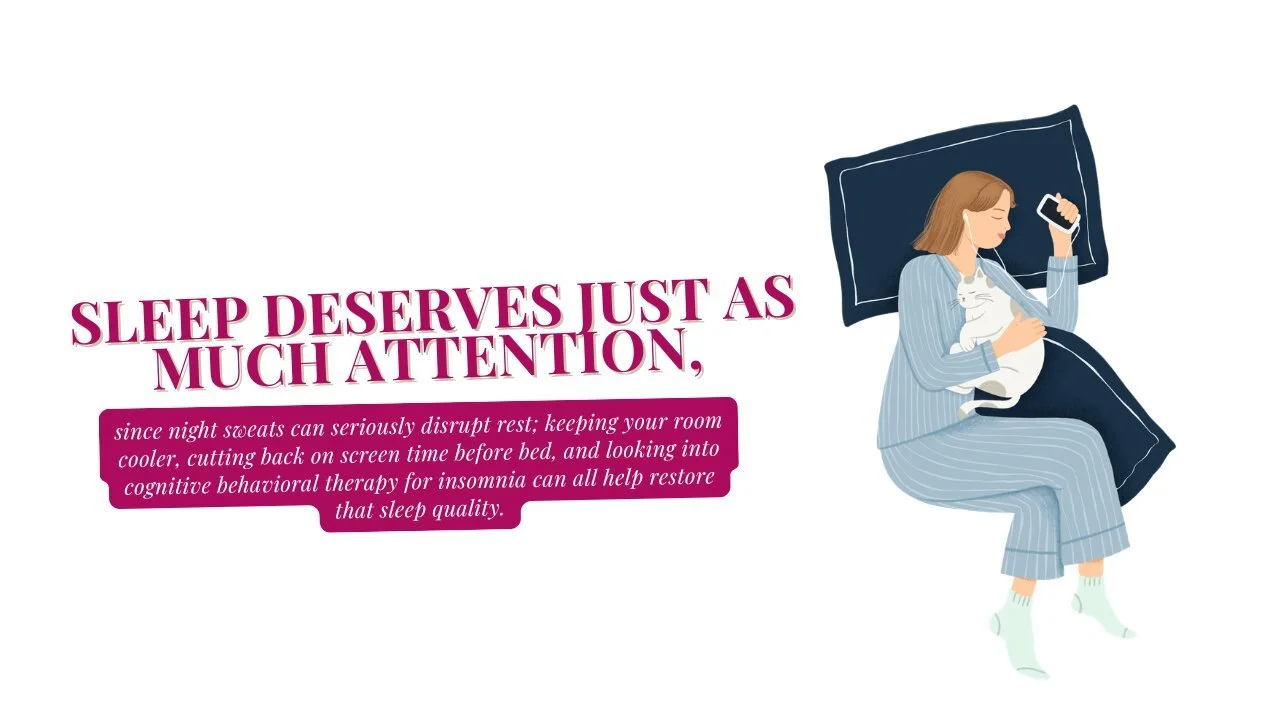
Movement matters too, but it doesn't have to mean carving out a rigid 30-minute block every day. Working resistance training into everyday moments — squats while you brush your teeth, that kind of thing — makes the 150-minutes-a-week goal feel a lot more doable for anyone juggling work, caregiving, or just a packed schedule. Sleep deserves just as much attention, since night sweats can seriously disrupt rest; keeping your room cooler, cutting back on screen time before bed, and looking into cognitive behavioral therapy for insomnia can all help restore that sleep quality.
And then there's stress, which honestly touches everything else. Whether it's a few minutes of mindfulness, yoga, or a free app like Insight Timer, finding a manageable way to manage stress can support the whole picture. None of this requires perfection — it's about meeting yourself where you are during a transition that's already asking a lot of you, and making small, sustainable shifts that actually fit your life.
Muscle Mass and Menopause: Why It Deserves Your Attention
Muscle mass is one of those topics that comes up constantly in the menopause conversation, and honestly, it deserves the attention. Starting in our 30s, we naturally lose somewhere between 3 to 8% of muscle mass per decade, and once menopause hits, that decline speeds up. This matters more than people realize, because muscle isn't just about strength — it's metabolically active tissue that helps with weight management even at rest, and it plays a huge role in protecting us if a fall happens. There's also something called musculoskeletal syndrome of menopause, which covers the whole picture of estrogen decline leading to lean muscle loss, lower bone density, and a higher risk of fractures, ligament, and tendon injuries. It affects up to 70% of women during this transition, so it's really not a minor detail.
Given how common this is, screening and prevention become key. A DEXA scan, which measures bone mineral density, is generally recommended for women over 65, or earlier for anyone at higher fracture risk or who experienced early menopause — so it's worth checking whether you fit that criteria. From there, small additions like upping calcium and vitamin D3 intake can support both bone density and muscle mass, especially alongside resistance training. And resistance training itself might need a refresh during this phase; things like aquatic exercise, yoga, or Pilates can feel a lot better on the body than what might have worked in your 30s or 40s.
That said, jumping into heavy weightlifting for the first time in your 50s or 60s isn't necessarily the best starting point, since ligaments and tendons can be more injury-prone after menopause. Working with a physical therapist or personal trainer can make a real difference here — some patients even qualify for Medicare-covered PT sessions, which is worth looking into. If professional support isn't accessible, free resources like YouTube can still be a solid starting point too. The bigger takeaway is simple: movement matters more than the specific type, so find something sustainable and consistent, because doing nothing is really the only wrong option here.
Hormone Therapy and Weight: Setting Realistic Expectations
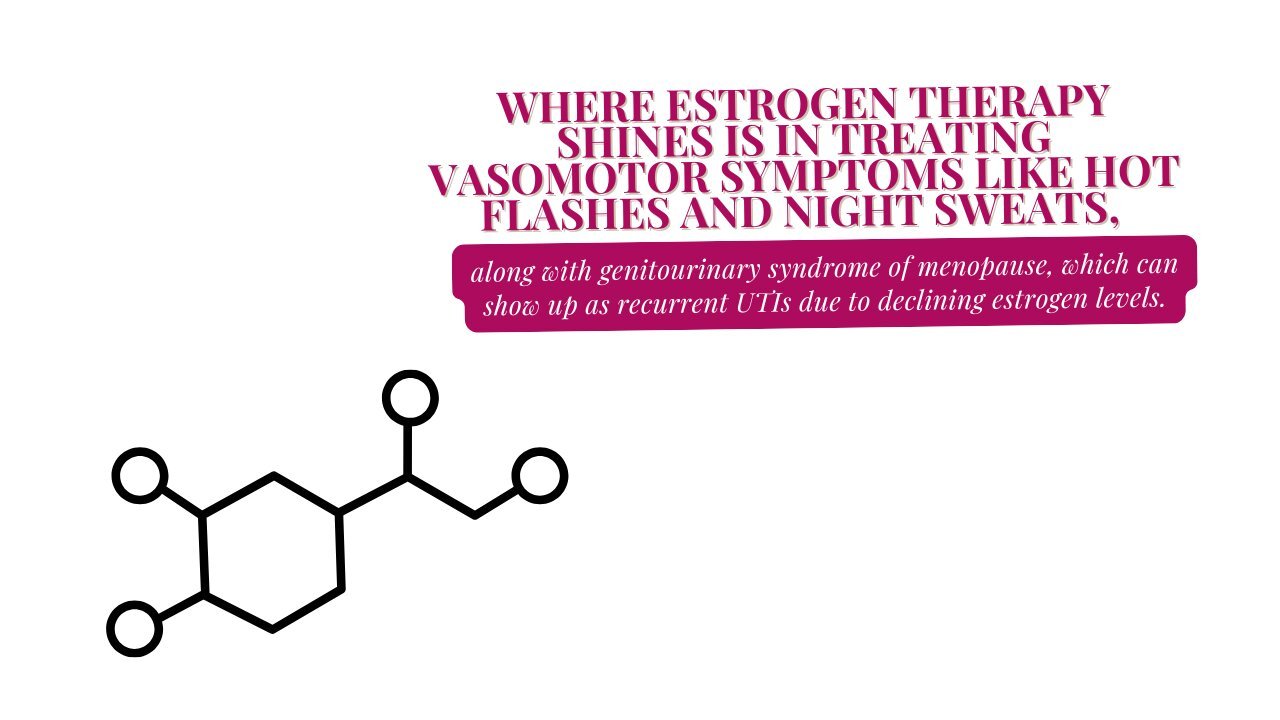
Hormone therapy comes up a lot when people talk about menopause, so it's worth being clear on what it actually does. It typically involves estrogen paired with progesterone, since progesterone protects the uterine lining from what's called unopposed estrogen exposure. Estrogen itself comes in a few forms — patch, topical, oral — and whether it's the right fit depends on individual health history, so that's really a conversation to have with your doctor. Where estrogen therapy shines is in treating vasomotor symptoms like hot flashes and night sweats, along with genitourinary syndrome of menopause, which can show up as recurrent UTIs due to declining estrogen levels.
Here's the part that surprises people: hormone therapy isn't actually indicated for weight. The data on weight is modest at best. That said, it can have an indirect effect — if it's helping you sleep better and easing other symptoms, some women do see a positive shift in body composition as a result. But on its own, it's rarely going to prevent the weight gain that comes with menopause, and for most women, it's just not a weight-loss solution. Interestingly, there is solid data showing that women who combine hormone therapy with GLP-1 medications tend to lose more weight than those on a GLP-1 alone — though it's not entirely clear why, it may come down to better sleep, feeling better overall, and more balanced body composition working together.
A real-world example drives this home: a highly active woman, training around 10 hours a week with consistently healthy nutrition and habits, still gained about 10 pounds during perimenopause even while on hormone supplementation. If someone that dialed-in still experienced this shift, it says a lot about how universal and physiological this process really is. So if you're on hormone therapy and still noticing changes in your body composition, that doesn't mean something's wrong or that you're not doing enough — it's simply confirmation that this transition is hormonal at its core.
Other Medical Interventions Worth Knowing About
Hormone therapy isn't the only tool available, and honestly, that's kind of the point — menopause weight gain deserves a more well-rounded approach. Anti-obesity medications like Wegovy and Zepbound, along with older options like Contrave and Qsymia, can be genuinely helpful, though each comes with its own set of indications your doctor will walk you through. Beyond medication, screening plays a big role too. Sleep apnea, for instance, is worth checking for using tools like the STOP-Bang questionnaire, especially if you're snoring, feeling more fatigued, or dealing with a higher BMI or hypertension. A simple thyroid check, like a TSH test, is also worth ruling out, since thyroid issues can sometimes masquerade as menopause-related weight gain.
It's also worth taking a closer look at your current medications, since some — like beta blockers or antipsychotics — can contribute to weight gain as a side effect. This doesn't mean stopping anything on your own; it just means having an honest conversation with your prescribing doctor or psychiatrist to see if there's a better-fitting option. And for some women, bariatric surgery, whether that's gastric bypass or sleeve gastrectomy, is a legitimate and appropriate path worth discussing with a specialist. The bigger idea here is that no single intervention tends to be the whole answer.
That's really the takeaway: menopause-related weight gain is rarely a one-fix situation, and treating it well usually means a multidisciplinary approach rather than jumping straight to hormones or medication alone. With so many online clinics popping up that focus solely on menopause treatment, it's worth remembering that any solution should fit into the bigger picture of your overall health and life circumstances, not exist in isolation. Talking things through with your doctor, factoring in your full medical history, and building a plan that considers everything going on in your life is what actually leads to sustainable results.
Wrapping Up the Menopause Conversation
If there's one thing worth carrying away from this whole conversation, it's that menopause is inevitable, universal, and honestly, nothing to feel embarrassed about. Every woman with a uterus goes through it, whether that happens on the typical timeline or earlier due to something like a hysterectomy. And while the hormonal and physical shifts are real, one of the most underrated tools during this transition is community. Finding friends going through the same thing, building that sense of accountability, and just having people who get it can make a genuine difference in how manageable this period feels.
It also really helps to lean on the medical support that's available. If it's been a year or more since you've seen your primary care doctor, that's a great place to start, since they can help guide you through what's actually going on and what steps make sense. For more specialized support, the Menopause Society's website lets you search for certified providers — physicians, NPs, and PAs — who specialize specifically in menopause care, which can be a game changer if you want someone who really understands this transition inside and out.
More than anything, this doesn't need to be a quiet or isolating experience. There's more visibility around women's health and menopause now than ever, and that shift matters — it means more women are getting real answers and real support during their 40s, 50s, and beyond. So if you're in the middle of this transition, know that it's normal, it's not something to hide, and you genuinely don't have to navigate it alone.
At the end of the day, the more we talk and normalize conversations around menopause, the easier it gets for every woman coming up behind us. If this conversation resonated with you, catch the full episode with Dr. Raina Patel wherever you listen to podcasts, and follow along for more honest, evidence-based conversations on women's health.
More from The Dr. Francavilla Show:
Subscribe to The Dr. Francavilla Show on