
Celebrating Your Way to Health Goals
When was the last time you actually stopped to celebrate yourself — not a big milestone, not some perfect finish line, but just a small win from today?
If you're drawing a blank, you're definitely not alone, and that's exactly what this episode is about. This one happens to land on a milestone of its own: episode 200. That number deserves a pause, not just for the celebration content ahead, but because it represents two hundred conversations aimed at putting real, trustworthy medical information out into a world that's currently flooded with misinformation.
So today, before diving into the nuts and bolts of how to become your own cheerleader, there's a real thank-you owed to everyone who's shown up for this podcast along the way, whether that's tuning in every week, sharing an episode with a friend, or leaving a five-star review that helps this information reach more people who need it. Two hundred episodes in, the goal of five hundred doesn't feel far-fetched at all — and that's a milestone worth celebrating too. So let's get into it: why celebrating yourself matters, how to actually do it, and how to make it a habit that sticks.
Be Your Own Cheerleader
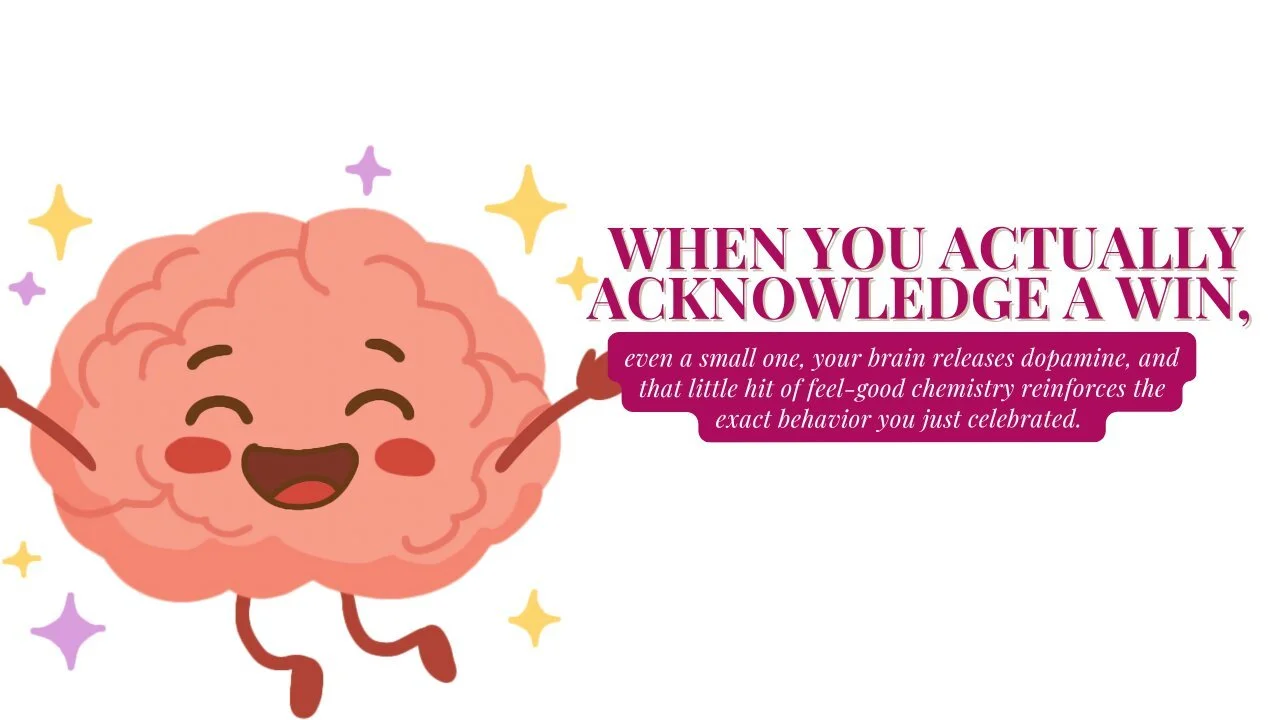
There's something fascinating happening in your brain when you celebrate yourself, and it's worth understanding why. When you actually acknowledge a win, even a small one, your brain releases dopamine, and that little hit of feel-good chemistry reinforces the exact behavior you just celebrated. It's basically training your own brain to want to keep doing the good thing. And the flip side is real too — when we lean into guilt or shame instead, we tend to avoid the very behavior we're ashamed of, which, if you think about it, works against you. Behavior design researcher BJ Fogg, who founded Stanford's Behavior Design Lab, has talked about how the emotion you feel right after a behavior is what actually cements it into a habit. So if you drink your water and just move on with zero acknowledgment, you're missing a real opportunity to lock that habit in.
Here's the part that's a little tricky but also kind of freeing — you cannot outsource this. It would be amazing if everyone had a partner, a parent, a best friend, or a coworker who clapped every time we drank our water or took a five-minute walk, but that's just not realistic for most people, and it's definitely not sustainable to wait around for it. Even seeing your doctor once a month for support and encouragement only covers, well, once a month — the other twenty-nine or thirty days are on you. That's actually good news once it sinks in, because it means you have full control over how consistently you get to feel good about your progress.
So if you're someone who reads that and thinks, "I don't even know how to celebrate myself, that feels foreign to me" — that's such a normal place to start from, and it's a skill, not a personality trait, which means it's absolutely learnable. It starts small: noticing the win, pausing for even three seconds, and letting yourself actually feel good about it instead of rushing past it toward the next goal. The more you practice that pause, the more natural it becomes, and over time it turns into an internal cheerleader that's with you every single day, not just once a month.
Skip the Finish Line: Why Celebrating Small Victories Builds Bigger Habits
Think about how you talk to your dog when it finally goes potty outside, or how you gush over your best friend's tiny win, or how instinctively encouraging you are with your own kid. There's this over-the-top, "good job, good girl" energy we bring to the people and pets we love most, and it's honestly pretty sweet how naturally it comes out. The thing is, that same energy rarely gets pointed inward. If you've noticed a habit of being harder on yourself than you'd ever be with someone you care about, that's actually useful to notice, because it means the skill is already in you — you're just not aiming it at yourself yet.
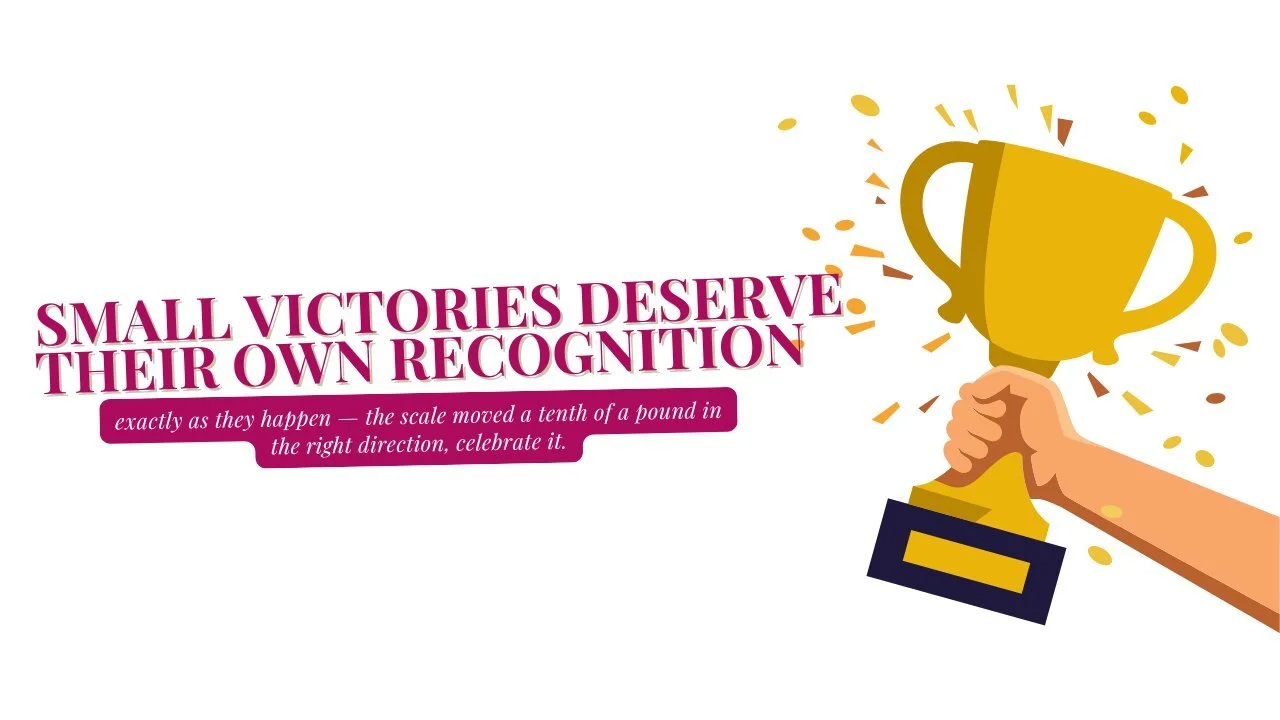
The biggest trap to watch for is waiting for some big finish line before you let yourself celebrate. You don't need to hit your goal weight, exercise every single day, run a 5K, or pay off all your debt before a win counts as a win. Small victories deserve their own recognition exactly as they happen — the scale moved a tenth of a pound in the right direction, celebrate it. You didn't gain this week, celebrate it. You went on your first walk in years, celebrate it. You strung together three days of movement for the first time in ages, celebrate it. You ate a vegetable, or hit five servings in one day for the first time ever, celebrate it, whether or not you repeat it tomorrow.
Whether you repeat it tomorrow matters less than it feels like it should, because the point right now isn't consistency, it's wiring in that first spark of reward. Celebrating something once still builds a reinforcement loop, and that loop is what makes you more likely to reach for the behavior again next time the opportunity shows up. So the goal isn't some distant destination, it's asking yourself daily, "what's one thing I can celebrate today that keeps me moving forward?" Ask that enough times, and small moments start turning into lasting habits.
Celebrate the Behavior, Not Just the Outcome
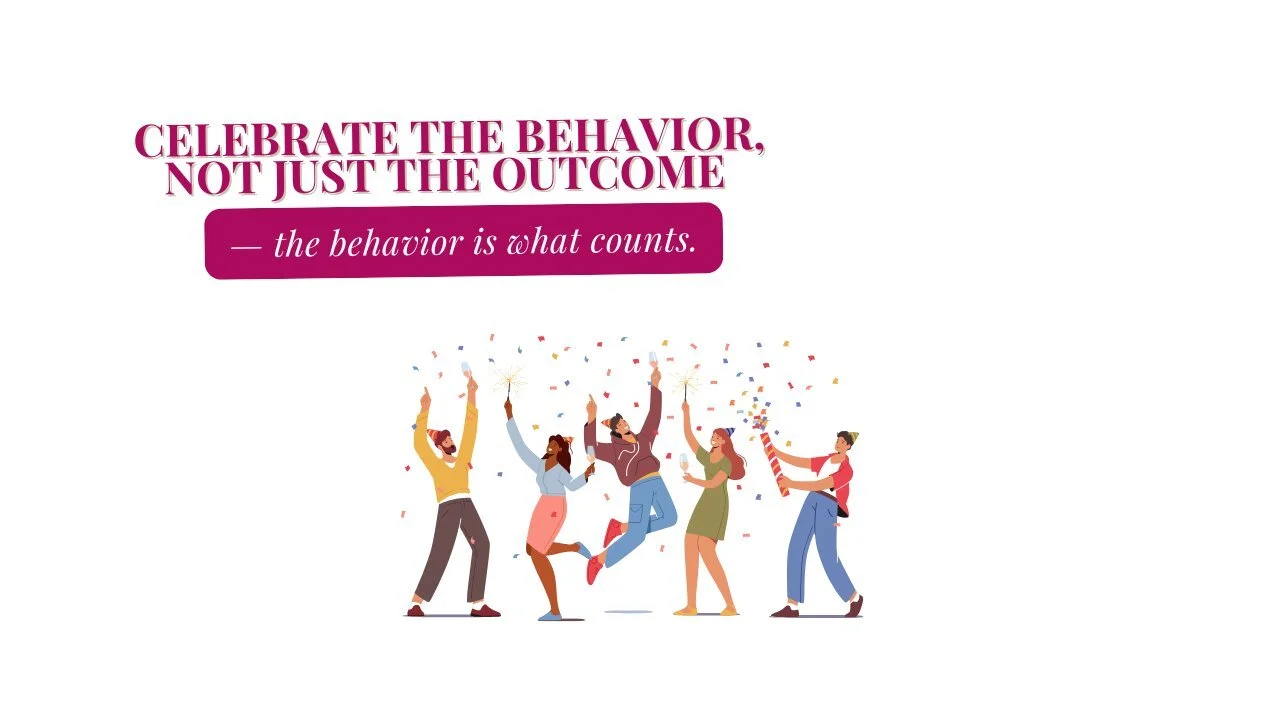
One of the most useful shifts you can make is learning to celebrate the behavior itself, not just the outcome you're hoping it eventually leads to. Packing a lunch, taking a walk regardless of how short it was, going to bed on time, cooking your own dinner, drinking any water at all if you're someone who normally skips it entirely, skipping the soda, showing up to a therapy appointment, tracking your food for the day — these are all things you can acknowledge on their own, separate from whether they've produced a visible result yet. The scale hasn't necessarily moved, the blood work hasn't necessarily changed, but the behavior still counts, and celebrating it reinforces it, which makes it easier and easier to keep doing over time.
Zooming out, celebration doesn't always need to attach to a specific action either — it can extend to something bigger picture about what your body has been through. Maybe that's honoring what your body did during pregnancy, recognizing recovery after surgery, or acknowledging that you made it through chemotherapy. Maybe it's noticing that you tried running again after a long break, even if it only lasted ten seconds, and celebrating that your body still has that capability in it. Maybe it's simply celebrating that you've started prioritizing sleep and it's genuinely helping you feel better. This kind of celebration overlaps a lot with gratitude, and gratitude has its own well-documented benefits for brain chemistry, so the two really do work as two sides of the same coin.
At the end of the day, this comes down to a simple but real shift: stop defaulting to criticism, and start defaulting to celebration. You don't need a finished outcome to justify feeling good about something — a behavior alone, or even just gratitude for what your body has carried you through, is more than enough reason to acknowledge yourself. Practiced consistently, that shift is what actually keeps you moving forward.
Stop Comparing Yourself to Yesterday
It's easy to fall into the trap of measuring yourself against a younger version of you — the version with faster times, thinner build, clearer skin, more energy. But holding yourself to a standard set decades ago isn't a fair comparison, and it sets you up to feel like you're failing at something that was never realistic to begin with. It's not reasonable to expect the same energy at forty-five that you had at twenty-two, and treating that expectation as the bar you need to clear is a recipe for constant disappointment rather than real progress.
Instead of looking backward, the more useful comparison is to yourself from a few weeks ago. Does your energy feel a little better than it did last week? Are you sleeping more than you were a month ago? Do you feel stronger than you did recently, or has your blood pressure improved since your last appointment? Those are far more meaningful metrics than trying to measure up to a decade-old version of yourself, especially because so much can change a body in between — having children, going through trauma, working longer hours, recovering from cancer or another chronic illness, or simply aging. This shows up constantly with fitness goals: someone who used to run a seven-minute mile is now running a ten or fifteen-minute mile, and waiting to celebrate until they're back to that old pace is basically waiting for something that may never happen again.
The healthier approach is celebrating that you ran at all, regardless of the pace, because showing up for your body is worth recognizing on its own terms. Getting comfortable celebrating things that might feel small, or even a little silly, genuinely benefits your brain chemistry and makes it easier to keep choosing those healthy behaviors going forward. Letting go of the comparison to who you used to be frees you up to actually notice and appreciate who you are right now.
Non-Scale Victories
Getting overly fixated on the scale can cause you to miss out on some of the most meaningful progress you're making. Non-scale victories matter just as much — things like improving blood sugar or A1C, lower blood pressure, needing fewer medications, better mobility, being able to play with your grandkids or your pet without getting winded, going on a hike without stopping, sleeping through the night, or just noticing your mood has lifted. These are real, measurable signs that your health is moving in the right direction, and they're worth pursuing and celebrating whether or not the scale is cooperating.
One practical way to make these celebrations stick is writing them down, whether that's a dedicated victory journal or folded into a gratitude practice you're already doing. Something as simple as noting "I ate a vegetable today," "I parked farther away and got extra steps in," or "I asked someone for help" gives your brain that little dopamine boost tied to actually accomplishing something. Some people also like writing small daily goals and checking them off or crossing them out, which taps into that same reward system. And yes, it might feel a little silly to applaud yourself for something as basic as drinking water — but if that's genuinely been hard for you, or it was the one thing you managed to do for yourself on a rough day, it absolutely counts, and it doesn't mean you're settling for less than you're capable of.
Ultimately, this all builds toward something bigger than any single behavior: celebrating the person you're becoming. That might look like noticing you're more positive about your body, that you're choosing more nourishing foods without overthinking it, that you're moving more, valuing sleep, or generally showing up for yourself in ways you didn't before. There's no such thing as a perfect person or a perfect set of behaviors, so the goal isn't perfection, it's honoring the intentional, ongoing work of caring for yourself. Whether that celebration is a quiet "good job" in your head, an out-loud cheer, a journal entry, or a little reward, the point is the same — you're building a version of yourself who knows how to keep going.
Rewards That Aren't Food
When it comes time to celebrate a milestone, food is often the automatic go-to reward, but it's not actually the reward that best supports the habits you're trying to build. There are plenty of other satisfying ways to mark an accomplishment. Fresh flowers are an easy one — we buy them for other people constantly, so why not treat yourself the same way and get to enjoy them for days afterward. A dedicated hour with a good book in your favorite chair, a massage, a leisurely walk somewhere beautiful you don't usually make time for, or new workout clothes after hitting a fitness goal all work just as well, and can feel like a bigger treat than most food rewards ever do.
Some of the best celebrations double as investments in the goals you're already working toward. A new water bottle, a walking pad for your workspace, or a simple activity tracker can support the behaviors you're proud of while also functioning as the reward itself. Scheduling a coffee date or a museum trip with a friend, taking a full PTO day just to relax, or pausing to watch a sunset are all meaningful, low-effort ways to acknowledge progress without reaching for food as the default.
None of this means food doesn't belong in celebration — birthdays, weddings, anniversaries, and other meaningful life events absolutely call for good food, and that's worth enjoying fully. The distinction is between celebrating life with food versus using food as a reward for health behaviors specifically, because that second habit tends to create a "cheat day" mentality where doing well becomes an excuse to stop taking care of yourself. That's not a reward — that's self-sabotage wearing a disguise. Enjoying food at meaningful moments is one thing; leaning on it to reinforce a health habit is a completely different dynamic, and it's one worth steering clear of on purpose.
Find Something to Celebrate Today
Here's a simple assignment to close things out — find one thing to celebrate today. It doesn't need to be some major milestone; it can absolutely be something small, and the point is really just to start building the habit of acknowledging yourself on a regular basis. So much of life gets spent chasing the next milestone, holding off on pride and celebration until some future finish line is crossed, but that mindset skips over all the meaningful progress happening along the way.
The truth is, plenty of victories happen on the road to a goal, and sometimes that finish line shifts or never quite gets reached at all, which means waiting to celebrate until you get there can mean missing out on the actual work you put in. Celebrating yourself isn't about ego or self-indulgence — it's about reinforcing the behaviors that matter, helping your brain feel comfortable with the changes you're making, and creating a response that makes it easier to keep showing up for your health long-term.
So take a beat today and notice something worth celebrating, whether it's big or small, and let that be where a new habit takes root. Be your own cheerleader, not just on the days something huge happens, but consistently — because that consistency is what actually makes it last.
More from The Dr. Francavilla Show:
Subscribe to The Dr. Francavilla Show on