
GLP and Obesity Treatment Coverage with Dr. Doug Maready

Why Is "Too Expensive" the Answer for a Disease Costing Us Billions?
That's the question at the heart of this episode. And Dr. Doug Maready has spent almost twenty years answering it from the exam room, not a spreadsheet. He's an internal medicine and obesity medicine physician in Mesa, Arizona, and the founder of Maready Medical, now part of Forte Wellbeing. His whole approach comes down to one simple idea: obesity is a disease, it's treatable, and not treating it is actually the expensive choice. That's made him a go-to voice on obesity policy in Arizona — he's president of the Arizona Obesity Organization, active with the Obesity Medicine Association, and shows up often in Arizona media talking about coverage and access.
In this episode, we get into what obesity really costs states and the healthcare system, why getting GLP-1 medications covered is still such a fight across Medicare, Medicaid, and private insurance, and why there's such a gap between calling obesity a disease and actually treating it like one. Dr. Maready brings both sides of it, like, the policy piece and what he's seeing with real patients, so the numbers actually mean something.
By the end, you'll walk away with practical ideas, whether you're trying to make the case to your own HR department or push for change at the policy level. Want more from Dr. Maready in between episodes? Check out his newsletter dougmareadymd linked in the show notes.

The $11 Billion Question: What Obesity Really Costs Us
The numbers on obesity are, like, hard to fully wrap your head around. Recent statistical estimates put the total economic impact in just Arizona at $11.1 billion — roughly 1.8% of the state's entire GDP. And that figure covers more than hospital bills. It includes lost productivity, absenteeism, and the strain on social systems.
Narrow it down to direct healthcare spending, and cardiovascular disease alone accounts for about $2.45 billion in Arizona. Colorado, which has one of the lowest obesity rates in the country, still sees just over $2 billion in obesity-related costs. That's kind of the whole point: even the states with lower obesity rates are carrying a massive financial burden. Arizona sits somewhere in the middle of the pack nationally, so the picture in states with higher obesity rates is almost certainly even larger.
So why does one condition move numbers that big? Scale, mostly.
In most states, roughly 30 to 35% of adults have obesity, and another 35% or so are in the overweight category. That puts about 70% of adults somewhere on that spectrum.
Obesity sits upstream of an enormous amount of what fills clinic schedules — knee and back pain, surgical complications, heart attacks, strokes — and it's frequently described as one of the biggest drivers of chronic disease in the country. Patients don't always connect the dots themselves. They come in for the knee, not the weight. Meanwhile, the healthcare system spends billions treating those downstream conditions without ever really addressing what's feeding them.
Which brings up the part that frustrates clinicians most.
Between bariatric surgery and the GLP-1 class of medications, Dr. Doug Maready estimates that something like 90% of obesity is treatable with tools that already exist today. The treatments work. The argument against them is almost always price — patients hear it, and so do the physicians writing the prescriptions.
But when a single state is absorbing an $11.1 billion economic hit, "too expensive" starts to sound less like a simple economic conclusion and more like a question about which costs we've decided to count.
The Real Math Behind GLP-1 Coverage
Here's the part that feels kind of maddening: obesity's price tag is huge, yet the treatments that work are often labeled too expensive.
In Arizona, preliminary Medicaid analysis estimates that covering GLP-1s would cost $7 million in year one and roughly $20 million by year five. That sounds like a lot, but it's small compared with the $2.45 billion the state already spends on obesity-related cardiovascular disease alone. New federal cost concessions on diabetes-related GLP-1 coverage are also projected to save Arizona around $8 million — enough to cover that first-year cost.
So why does the math still break insurers and state programs?
Volume.
Obesity affects such a large share of the population that even a relatively modest monthly cost adds up quickly. That's what happened in California, where demand for GLP-1 coverage outpaced what the program could sustain, contributing to the state rescinding coverage amid budget overruns.
The issue isn't necessarily whether the medications work. It's whether healthcare systems can afford to provide them at the scale of the need.
And medication isn't the whole answer. Lifestyle, fitness, and dietary support still matter for long-term metabolic health, but diet and exercise alone don't work for everyone. That's why access to GLP-1s, combined with lifestyle support, is becoming an important part of the conversation around treating obesity.
One Program, Fifty Realities: Medicare's Win and Medicaid's Uphill Battle
After eleven or twelve years of advocating for Medicare access to obesity medications, Medicare patients finally have it. The GLP-1 Bridge Program launched July 1st, and so far, the process has been surprisingly straightforward. When patients meet the criteria, pharmacies can submit the authorization and often get approval almost immediately.
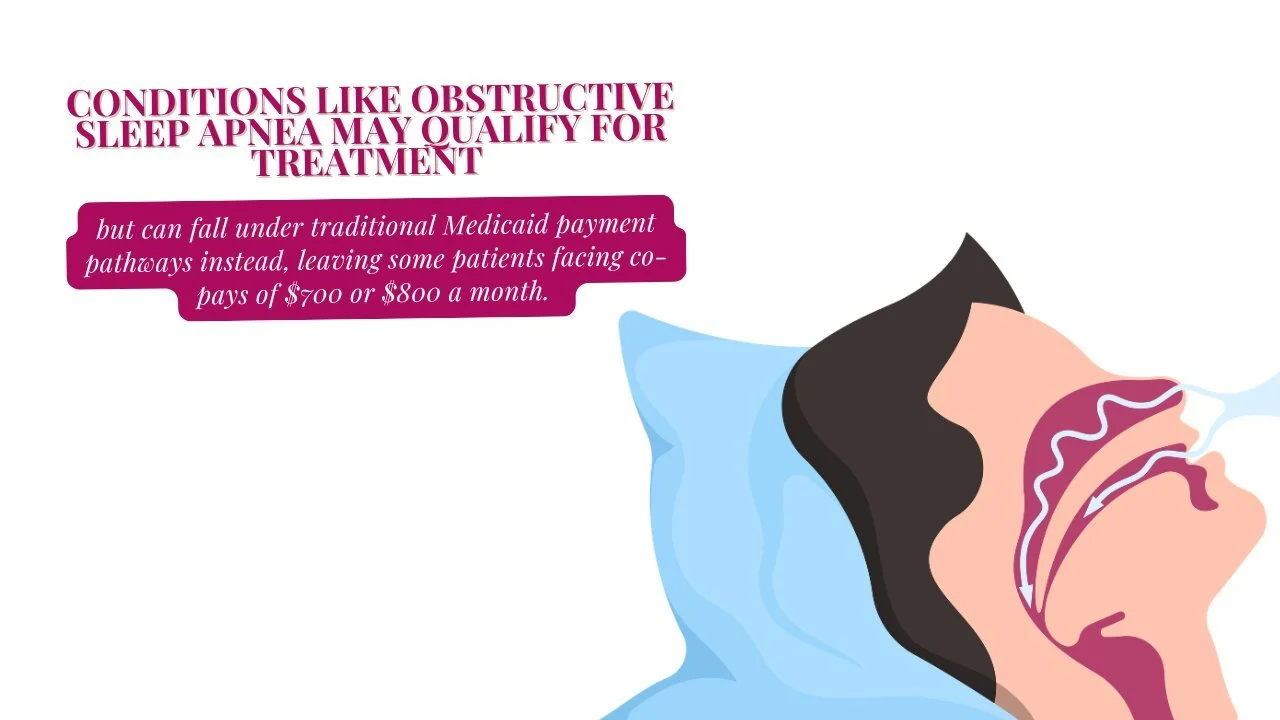
There are still some gaps. Conditions like obstructive sleep apnea may qualify for treatment but can fall under traditional payment pathways instead, leaving some patients facing co-pays of $700 or $800 a month. Still, the program's early results could help make the case for broader coverage.
Unlike Medicare, Medicaid is more complicated because it's administered at the state level and funded by both state and federal dollars. That means coverage and costs vary significantly from one state to another, making it difficult to talk about "Medicaid coverage" as if it's one system.
Arizona is a useful example of that challenge. The contrast between Medicare's relatively straightforward rollout and Medicaid's state-by-state approach highlights the bigger issue: coverage decisions aren't just about whether a treatment works. They're also about who pays for it and whether the budget can absorb the cost.

Why Treating Obesity Shouldn't Need an ROI
The “return on investment” argument for treating obesity doesn't really work, and it's worth saying that plainly. Coverage costs money upfront, while the potential payoff — fewer heart attacks, strokes, and other complications — may not show up for years.
A more immediate argument is to look at what obesity-related care already costs: $2.45 billion in cardiovascular spending in Arizona and $2 billion in Colorado. Compared with those numbers, the cost of treatment starts to look very different.
One patient's story puts that into perspective. A 47-year-old man came in worried about his heart attack risk because his father and brother had both had heart attacks at 48. His BMI was only 29, but his blood pressure was high, his triglycerides were over 700, and a calcium scan showed early plaque buildup. After treatment with a GLP-1, along with diet and exercise changes, his triglycerides fell below 100, his blood pressure normalized, and his weight reached a healthy range.
You can't say for certain that treatment prevented a heart attack, but treating patients like him can reduce the risk of serious complications down the road.
And there's another part of this conversation that often gets overlooked: quality of life. Patients who receive effective obesity treatment report less pain, better mobility, improved sleep, more energy, and being able to do everyday things they couldn't before — from traveling comfortably to playing with their grandchildren.
Those outcomes are difficult to put a dollar value on, but they're often the reason treatment matters most. The cost conversation with legislators and insurers is still important, but so is recognizing obesity as a condition that deserves treatment, not simply a risk factor to monitor.
The HRA Loophole and Other Ways to Fight for GLP-1 Coverage
Private insurance is where the least progress is happening, and it's worth naming directly. Pepsi and Starbucks have both recently pulled GLP-1 coverage from their employee plans, and the broader private-sector trend hasn't shown much sign of reversing.
There is one underused option, though: a Health Reimbursement Arrangement, or HRA. Employers can use an HRA to reimburse certain healthcare expenses outside their standard insurance plan, potentially allowing them to cover GLP-1 treatment for employees without changing the entire health plan. It's an option worth asking HR or benefits administrators about.
Employee advocacy can also matter. Some workers are choosing jobs based on whether GLP-1 coverage is included in their benefits, while cuts to that coverage can affect employee satisfaction and retention. Asking HR to explore options like an HRA, or simply explaining how the loss of coverage affects employees, can help keep the issue on the table.
The bigger issue now is making sure coverage decisions keep pace with the growing demand for effective obesity treatment. Expanding access will require continued pressure from patients, employees, and clinicians — not just because of individual health outcomes, but because treating obesity can also have broader economic benefits.
Write-Off Your Weight Loss: The Tax Perk Nobody's Talking About
There's a tax benefit hiding in plain sight that's worth knowing about: expenses related to a documented obesity diagnosis, including certain gym memberships and weight-loss programs, may qualify for tax-free reimbursement through the IRS. For people paying these costs out of pocket, that can provide some relief, so it's worth keeping receipts and checking whether those expenses qualify.
The important part is documentation. Patients typically need a letter from their physician confirming the obesity diagnosis and explaining that the expense is related to treatment. In that context, a gym membership isn't simply a lifestyle expense — it can be part of a broader treatment plan for obesity.
This is a relatively small piece of the larger coverage puzzle compared with Medicare, Medicaid, and private insurance, but it's an option many patients may not know exists. As more people take a closer look at the cost of obesity treatment, understanding every available way to reduce those out-of-pocket expenses becomes increasingly important.

Starting From Common Ground: Why "Obesity Is a Disease" Has to Come First
Getting to real coverage is still going to take time, and that's worth acknowledging as this conversation wraps up. Advocacy work is underway in Arizona to develop a more detailed economic analysis of what expanding obesity coverage would actually cost the state. There's also strong interest in tracking the Bridge Program over time, but one year isn't enough to measure its broader impact. A meaningful assessment will likely require three to five years of data.
At the heart of the issue is the gap between recognizing obesity as a disease and consistently treating it that way through insurance coverage. Until legislators, employers, and insurers approach obesity as a condition that warrants treatment, rather than simply a risk factor to manage, the cost conversation will continue to be difficult.
The good news is that some pieces are already moving. The Bridge Program provides a new model for Medicare coverage, Arizona is building the economic case for expanded access, and tools like HRAs and potential tax benefits give patients and employers options in the meantime.
The numbers are staggering — billions in healthcare spending and lost productivity — but the larger takeaway is that obesity is treatable with tools that already exist. The remaining challenge is finding sustainable ways to make those treatments accessible to the people who need them.
If this conversation gave you something to bring to your own HR department, your own doctor's appointment, or simply a better understanding of what's driving healthcare costs in this country, that's the point.
Thanks so much to Dr. Doug Maready for joining and for the work he's doing both in his practice and in Arizona policy circles. For the full conversation and a deeper look at the economics, coverage, and access to obesity treatment, check out the full episode.
More from The Dr. Francavilla Show:
Subscribe to The Dr. Francavilla Show on