
Obesity Medication Essentials: Zepbound, Wegovy, Foundayo, Phentermine, Contrave
Which Weight Loss Medication Fits You? Zepbound, Wegovy, Foundayo, Phentermine, Contrave, and More
How do you choose between a weekly shot, a daily pill, and options that have been around for decades? With names like Zepbound, Wegovy, Foundayo, Phentermine, and Contrave all floating around, it’s totally normal to feel a little overwhelmed before you’ve even asked your first question. This guide is here to make that choice feel a lot clearer.
It covers every anti-obesity medication available as of October 2026, plus the adjunct medications that are often used alongside them. Medications are an important tool for many people, and the goal here is to help you understand your options so you can take charge of your health and, at the heart of it, live longer and live better.
The date matters, because this field moves fast. A lot has changed in the last four years, with new medications, new formulations, and new doses, and even more are slated for the coming year. So here’s the full picture from start to finish: how each option works, the pros and cons, and who it tends to be a good fit for, from the old-school stimulants to the newest GLP-1 pill.
You don’t need any background to follow along, because this guide is built to stand on its own. We’ll start with the question underneath every single option: why would anyone use medication to lose weight? Keep reading.
Why Willpower Alone Isn’t Always Enough: The Case for Weight Loss Medication
Before I get into any specific medication, I want to explain why anyone would need one. The assumption I hear most is that medication is the easy way out, and I’d like to challenge that. Picture someone who tracks every calorie, preps meals on Sundays, and walks every morning. They lose about 10% of their body weight in a few months, then the scale stalls. They’re hungrier than ever, and slowly the weight creeps back. They decide they failed, when really their body did exactly what it was built to do.
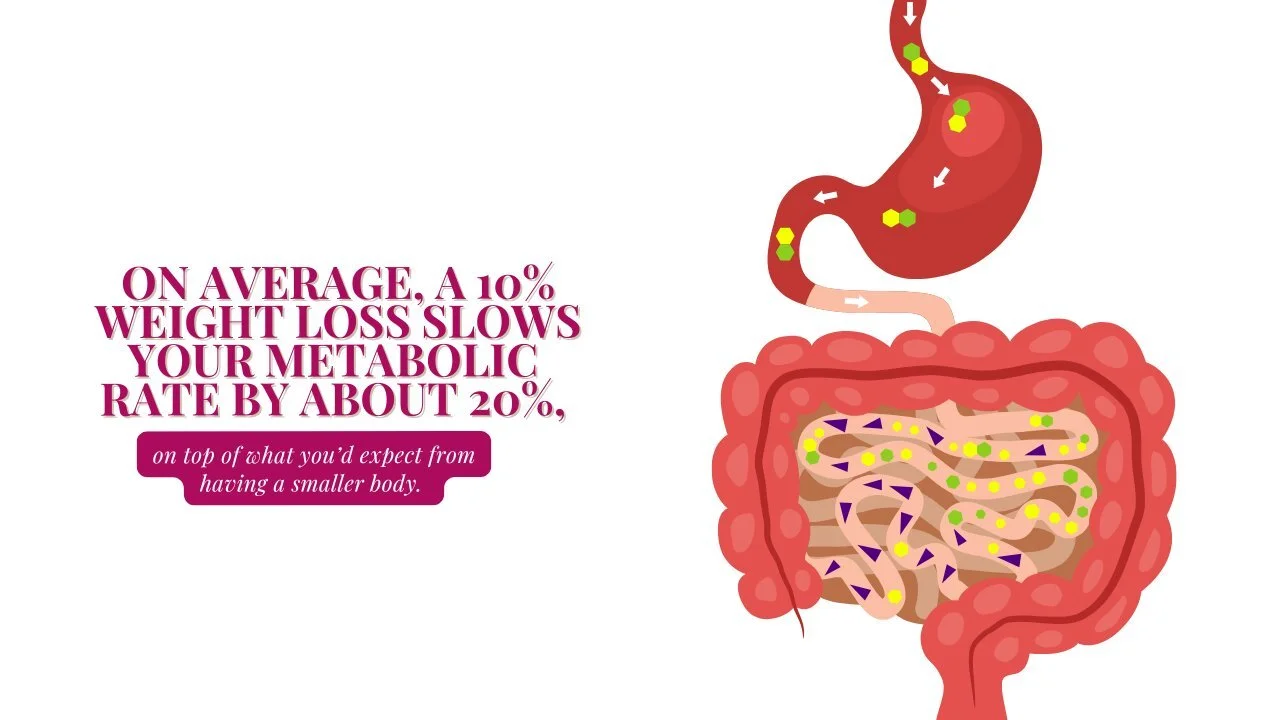
There are two biological reasons for this. The first is metabolic adaptation. When you start losing weight, your body reads it as a possible famine and conserves energy, so you burn fewer calories than before, even after you stop dieting. On average, a 10% weight loss slows your metabolic rate by about 20%, on top of what you’d expect from having a smaller body. The second is appetite adaptation. Ghrelin, the main hunger hormone, rises, while the hormones that make you feel full and satisfied (GLP-1, amylin, PYY, CCK, and leptin) fall. You end up both burning less and wanting more.
For most people to succeed, something has to interrupt that pushback. Some lifestyle strategies work for some people, but the options with the strongest evidence are metabolic and bariatric surgery or medications that quiet those hunger signals, so you can keep following a healthy eating plan. So here’s something to ponder: if the body fights this hard against weight loss, is it fair to call needing help a lack of willpower?
Who Actually Qualifies for Weight Loss Medication
Knowing whether you qualify before you walk into an appointment saves a lot of guessing. Every medication I’ll cover is meant to be used with a structured way of eating, meaning some attention to calories and nutrition, plus more physical activity. Medicine is a tool that makes those habits sustainable, not a replacement for them.
You can qualify in a few ways. One is obesity, which can be diagnosed by a BMI of 30 or higher, by body fat percentage (roughly 25% or more for men and 33% or more for women, though there’s nuance), or by waist circumference above 40 inches for men or 35 inches for women. The waist measurement is the easiest to do at home. The other route is being overweight, with a BMI of 27 or higher, and having a weight-related condition such as cardiovascular disease, high cholesterol, sleep apnea, or PCOS. BMI is only one piece of the picture, so it’s worth asking your provider which path fits you.
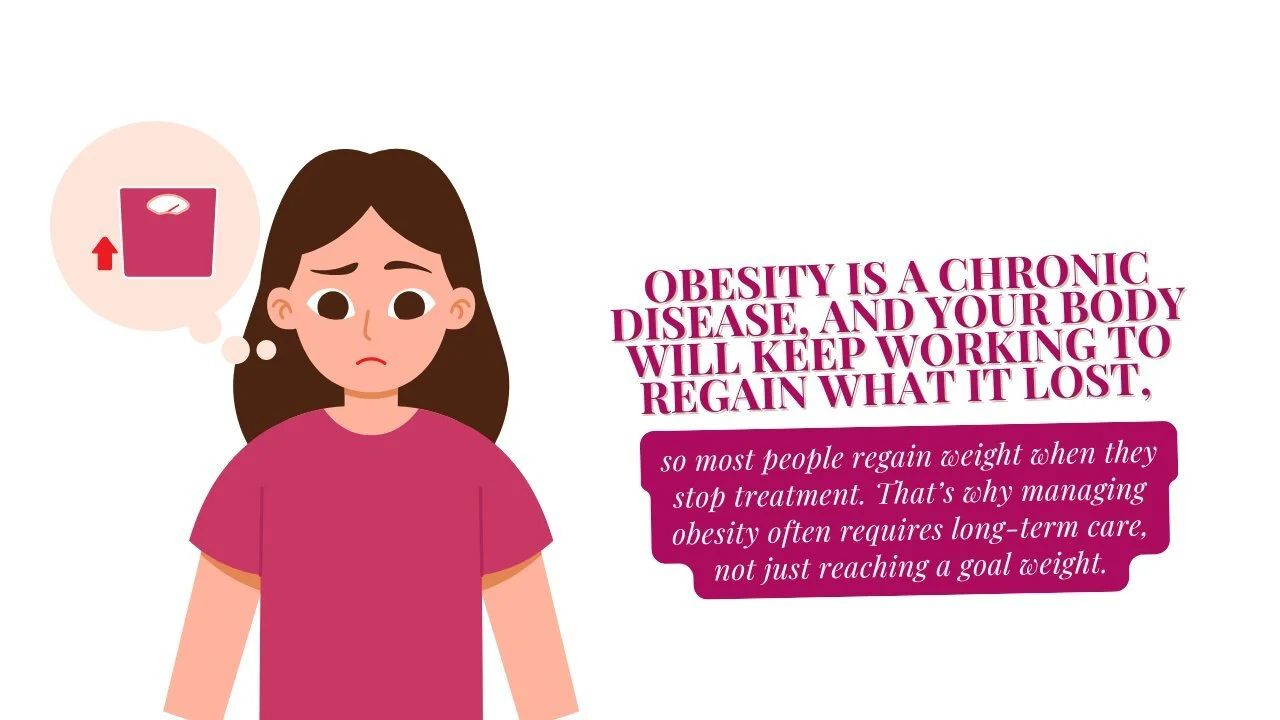
Whatever you do to lose weight, you’ll probably need to keep doing it, whether that’s a specific diet, fasting, keto, or medication. Obesity is a chronic disease, and your body will keep working to regain what it lost, so most people regain weight when they stop. Some can move to lower or less frequent doses, but I’d go in expecting long-term treatment, maybe indefinitely. Think of it the way we think about blood pressure medication: when the numbers improve, it’s because the treatment is working, not because the condition is gone.
The Throwback Options: Orlistat and Phentermine
Before the shots and the headlines, a couple of old workhorses did the job for years. Orlistat works by blocking lipase, the enzyme your body uses to break down and absorb fat, so some of the fat you eat passes straight through you. That can mean oily spotting or leakage, which is as glamorous as it sounds. It was one of the few approved options 15-plus years ago, but I only prescribe it when insurance requires a trial first. A low-dose version is sold over the counter as Alli, usually paired with a low-fat diet. Because it limits fat absorption, it’s a poor fit if you already have trouble absorbing nutrients, such as a vitamin D deficiency.
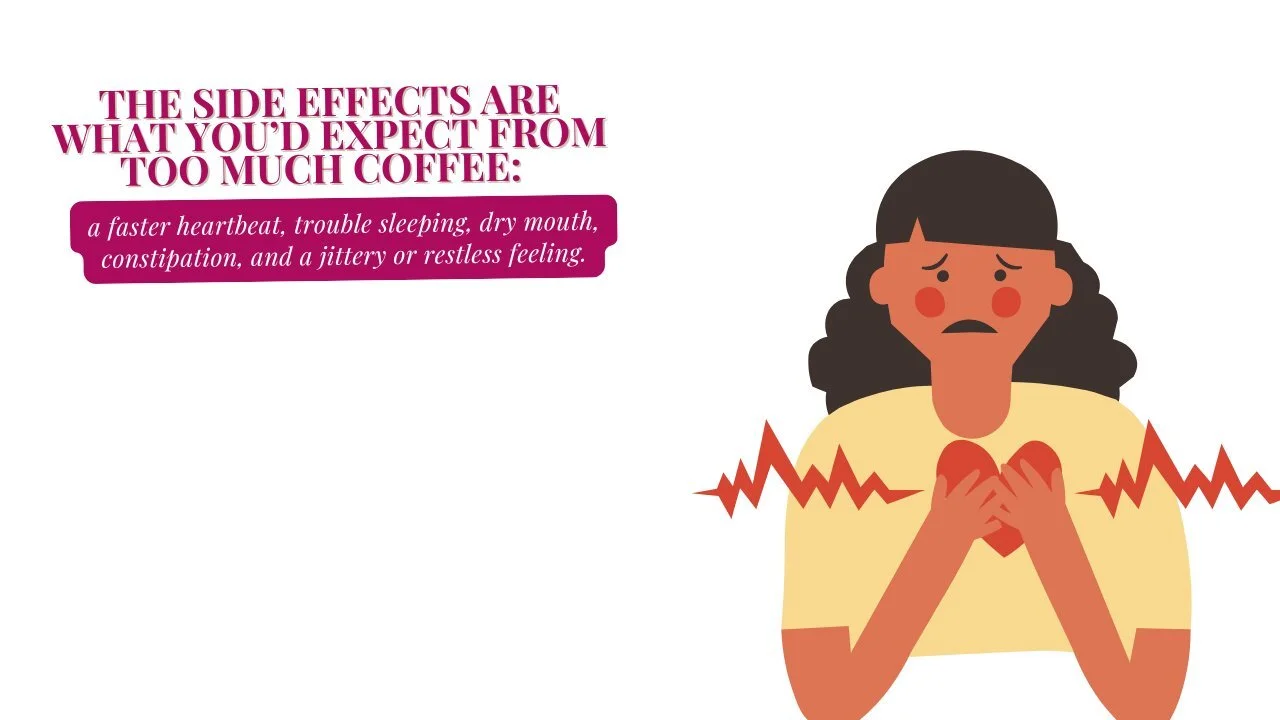
Phentermine is the one I leaned on most when I started treating obesity 15 years ago. It belongs to a group called sympathomimetic amines, which is a fancy way of saying stimulants. They rev up your body’s alertness signals, and a side effect of that is that you think about food less. It’s been around for more than 65 years, so we know its safety profile well. It comes as a 37.5 mg dose once a day, usually in the morning, or as an 8 mg dose (sold as Lomaira) that can be taken up to three times daily, though many of my patients take it once or twice. The side effects are what you’d expect from too much coffee: a faster heartbeat, trouble sleeping, dry mouth, constipation, and a jittery or restless feeling. Blood pressure can rise in some people, though for most it improves as the weight comes off, so it’s worth monitoring. If caffeine doesn’t agree with you, this may not either.
The practical side is where phentermine shines. It’s very affordable, it only lasts the day you take it, so you can try it for a few days and see how you feel, and I sometimes pair it with newer medications. It’s a controlled substance, which makes prescribing a bit more complicated, though there’s no evidence of dependency. The average weight loss is around 8%. We used to treat 5% as the benchmark for clinically meaningful loss, so 8% is a result that can make a real difference in many people’s health, and sometimes the older, simpler option is all it takes.
Phentermine’s Relatives: Three Similar Options
If phentermine isn’t a great match, there are three medications from the same family. Think of them as relatives of one morning-coffee-style stimulant, each with a slightly different personality. Their names are diethylpropion, benzphetamine, and phendimetrazine. All of them work the same basic way: they gently stimulate the body and turn down the urge to eat.
Diethylpropion is the one I use quite a bit in my clinic. I find it’s just as well tolerated as phentermine, sometimes better, and it’s another affordable choice. Benzphetamine and phendimetrazine are a bit stronger and not widely prescribed, but some clinicians have used them for years and are very comfortable with them, so being offered one isn’t a red flag.
Everything I said about phentermine applies here: similar results, the same stimulant-type side effects, and a few medication interactions, so give your doctor your full medication list. Not tolerating one stimulant doesn’t mean you won’t tolerate another, and having options is the whole point.
Qsymia: Phentermine With a Partner
Qsymia pairs phentermine with a second medicine, topiramate, in a once-daily capsule, and the combination is stronger than phentermine alone. Before Wegovy arrived, it was the most powerful weight loss medication we had, with an average loss of about 10%. It’s available as a generic for around $50 a month, depending on coverage and where you fill it. You increase the dose gradually over time. It’s also approved for kids 12 and up and works well for them, so if you’re nervous about a GLP-1 for your child, it’s an option with a longer track record.
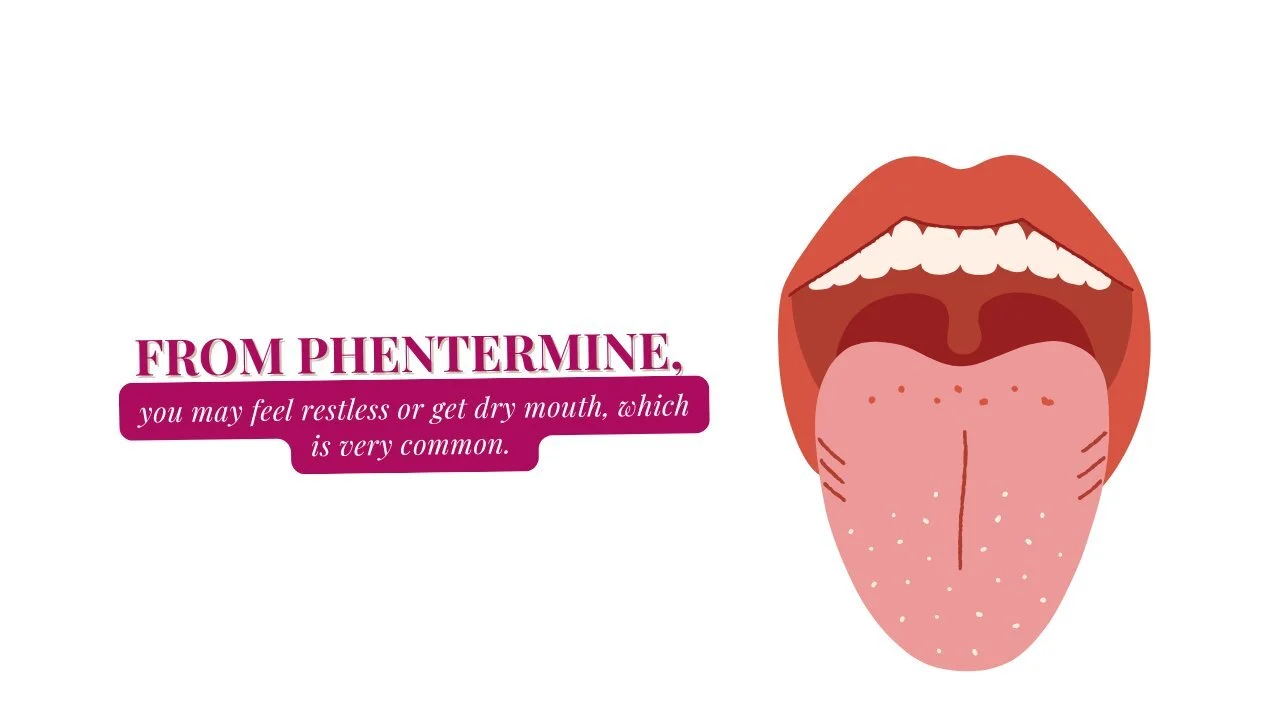
The side effects come from both ingredients. From phentermine, you may feel restless or get dry mouth, which is very common. Topiramate adds its own: a taste change, where carbonated drinks taste flat (great if you’re quitting soda, less great if sparkling water is your thing), and tingling or numbness, usually in the fingers, which is often what makes people stop. Some people feel foggy or fuzzy. Topiramate can also raise the risk of kidney stones, so if you’ve had them, I’d steer you away from it, because they’re about the most painful thing a person can go through.
The most important safety point is that topiramate can cause birth defects, which is why you need very reliable birth control and often 2 forms (like birth control pills and a barrier method). Because it contains phentermine, it’s a controlled substance with tighter prescribing rules, which is also why you rarely see it offered through telehealth, and blood pressure should be monitored. It’s an oldie but goodie, but one that rewards careful screening.
Contrave: The Craving-Quieting Combo
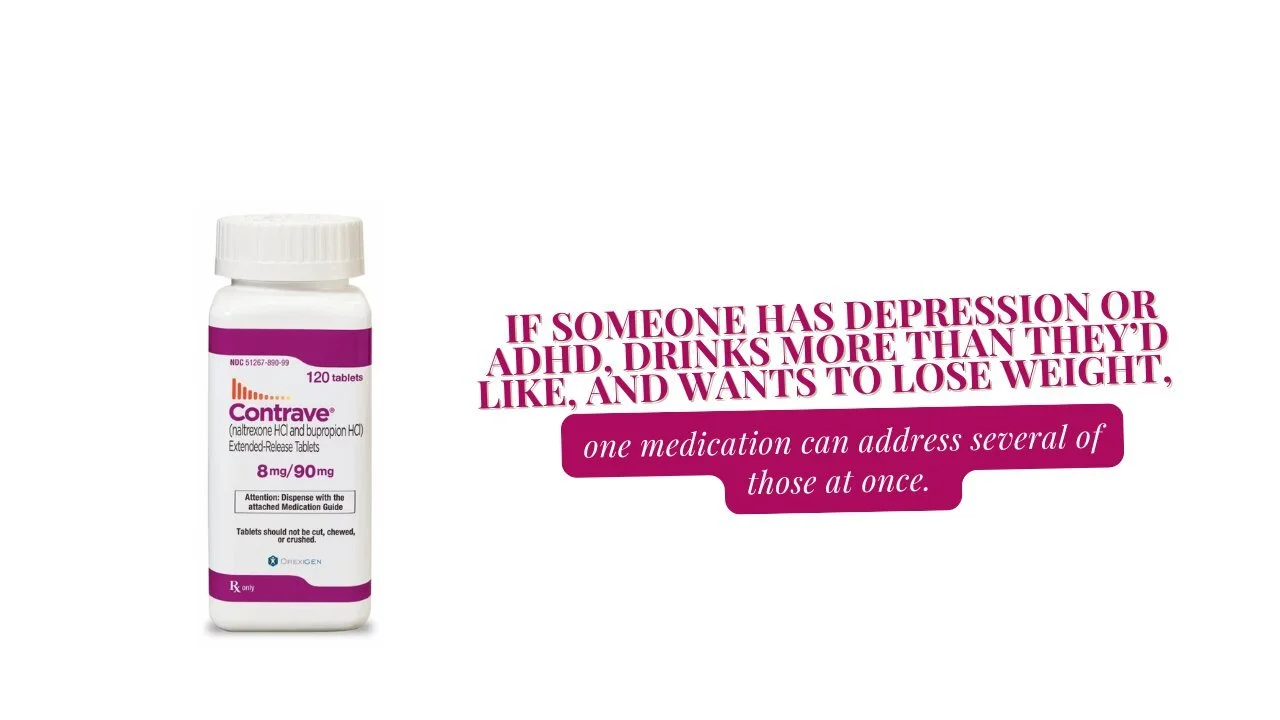
Contrave combines two medications you may already know. Bupropion (Wellbutrin) is an antidepressant that’s long been known to reduce appetite. Naltrexone is used for alcohol and opioid addiction, and adding it strengthens bupropion’s appetite effect without strengthening its other effects. Together they act on POMC neurons, brain cells that help signal fullness. Some people think naltrexone may also help with food addiction, since it works on the brain’s reward system.
This one works best for people with lots of cravings, like the true foodies who think about the next meal all day and get a lot of pleasure from eating. It tends to make food feel more neutral. It’s also a medication where people either respond very well or barely at all, so fit matters. The multi-tasking is a bonus. Bupropion treats depression, helps with smoking cessation, and is a second-line ADHD option (stimulants like Adderall and Vyvanse are still first). Naltrexone helps with cutting back on alcohol or opioids. If someone has depression or ADHD, drinks more than they’d like, and wants to lose weight, one medication can address several of those at once. Both ingredients have been around for a long time, so we know a lot about their safety. I find the brand name works a little better, though your doctor may prescribe the two generics together if cost is an issue.
Some people shouldn’t take it. Bupropion can raise seizure risk, so it’s generally off the table if you’ve ever had a seizure, and also if you currently have bulimia or anorexia, since those raise that risk. It can occasionally raise blood pressure, which is worth monitoring, and it interacts with some medications, so your prescriber needs your full list. That covers the key medications available before 2021, and the next ones work in a very different way.
How GLP-1 Medications Work: A Quick Primer
Now we get to the medications most of you probably came for. To see why they changed this field, it helps to understand the hormone behind them. Incretins are hormones your gut releases when you eat, a bit like a text message from your digestive system telling the rest of your body that food has arrived. GLP-1 is one of those messages, and it’s made in your gut.
That message does different jobs in different places. In the gut, it slows digestion and helps you feel full and satisfied sooner, so smaller portions feel like enough.
In the brain, it turns down the volume of thoughts about food.
In the pancreas, it prompts the release of insulin when blood sugar rises, which is why these medications were first developed for type 2 diabetes.
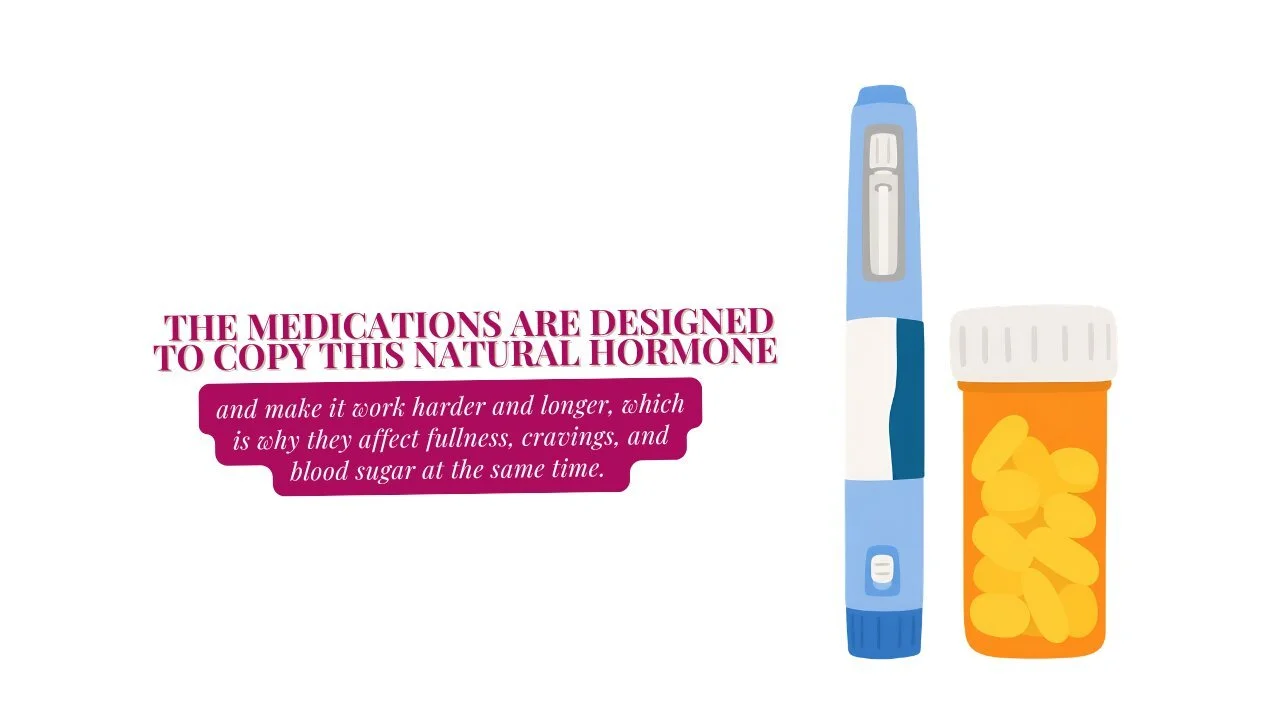
The medications are designed to copy this natural hormone and make it work harder and longer, which is why they affect fullness, cravings, and blood sugar at the same time. GLP-1 isn’t the only hormone worth targeting, though, and the next one explains why some medications work even better.
GIP and Zepbound: Adding a Second Hormone
Zepbound (tirzepatide) works on GLP-1 and a second incretin hormone called GIP. GIP is also made in the small intestine, and it acts on the brain, the pancreas (helping with blood sugar), and fat tissue, meaning the fat cells themselves. Both hormones are naturally short-lived, lasting only seconds to a couple of minutes, so these medications are engineered to stay in your bloodstream much longer. That’s how you get lasting fullness instead of a brief blip.
In real life, people feel full sooner and find it effortless to eat smaller portions. Some of my patients tell me they eat about a third of what they used to. The medications also slow stomach emptying, though that usually settles over time. On the blood sugar side, they increase insulin and block glucagon, a hormone that raises blood sugar, which is why they help people with diabetes, and why those two effects matter more for blood sugar than for weight.
The effect people talk about most is the quieting of food noise, that constant chatter that goes beyond cravings: “I shouldn’t have eaten that,” “I’ve had too much today,” “I have a trip this week, how will I eat the way I’m supposed to?” I have a whole episode on food noise if you want more. More medications in this class are coming, and since I’m recording in October 2026, a new one will probably be announced the minute this goes live, so I’ll stick to what’s available now.
Semaglutide and Wegovy: The Medication That Changed the Conversation
If you’ve heard of one weight loss medication, it’s probably semaglutide. It comes as Ozempic, which is used for type 2 diabetes, and Wegovy, which is used for chronic weight management. I only recommend the real, approved brand-name drugs, not compounded versions, which aren’t regulated no matter what anyone tells you. The brand names have become more affordable, so I hope you can find a clinician who’ll work with you on your budget. The Wegovy injection is a weekly shot you give yourself, increased every four weeks: 0.25 mg, then usually 0.5 mg, 1 mg, 1.7 mg, and 2.4 mg. The 2.4 mg dose is the most studied and averages about 15% weight loss. But 1.7 mg works well for some people, and some do great on even lower doses. Lower doesn’t mean worse, and higher doesn’t mean better. In 2026 a 7.2 mg high dose arrived. It looks like a big jump from 2.4 mg, but it’s been studied, people tolerate it, and it brings average loss closer to 20%.
The injection is approved for adults and kids 12 and up, and it does more than reduce weight. In people at high cardiovascular risk (those who’ve had a heart attack or stroke, or have peripheral artery disease), it lowers the risk of major cardiovascular events by about 20%. It also has a preliminary approval for fatty liver disease with scarring, regardless of weight. The Wegovy pill delivers the same medicine in a different way. A special technology called SNAC lets it absorb through the gut, so you take it first thing in the morning on an empty stomach with up to four ounces of water, then wait at least 30 minutes before eating or taking other medications. Once absorbed, it behaves like the shot, with the same side effects and similar results.
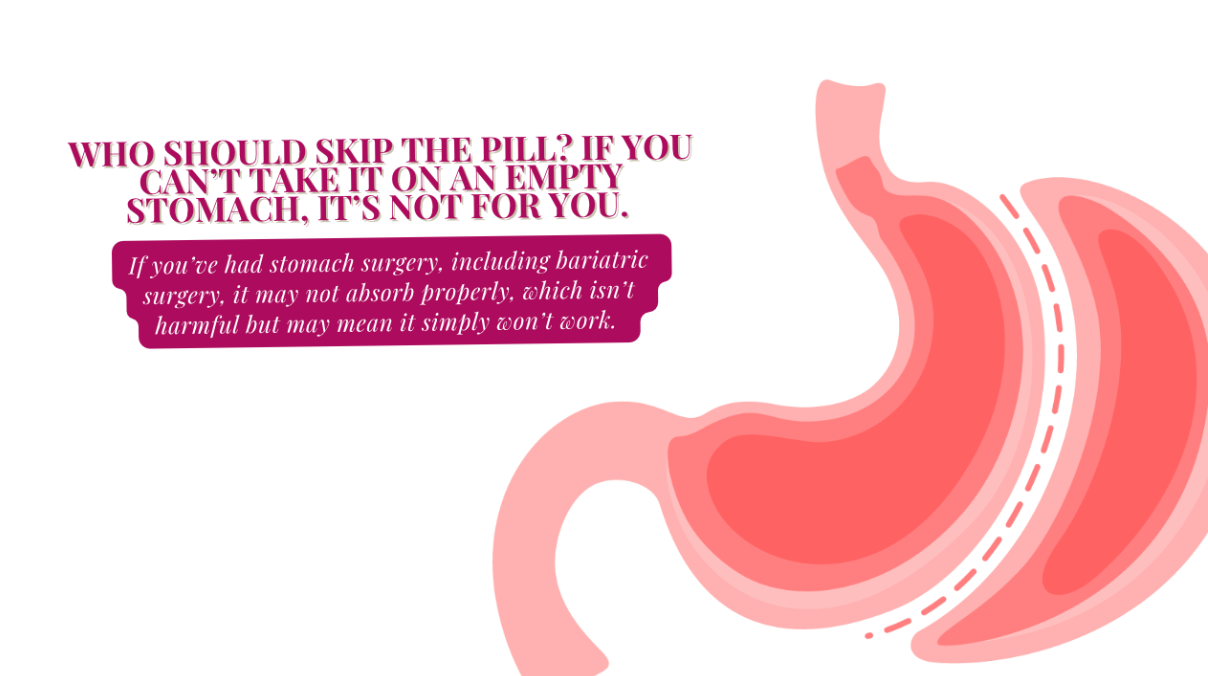
Who should skip the pill? If you can’t take it on an empty stomach, it’s not for you. If you’ve had stomach surgery, including bariatric surgery, it may not absorb properly, which isn’t harmful but may mean it simply won’t work. The pill is approved for weight management and cardiovascular risk reduction in adults, but not yet for kids or the liver indication. Its top dose is 25 mg, equivalent to the 2.4 mg injection, with about 15% average weight loss. The biggest barrier is cost. If it weren’t for that, I believe half the world would be on these medications, and I think we’ll get there in my lifetime.
What to Expect: Side Effects of GLP-1 Medications
Every effective medication has trade-offs, and knowing them ahead of time makes it much easier to work through them. These hormones act on your gut and slow digestion, which is why the most common side effects are digestive: nausea, diarrhea or constipation, occasional vomiting, and an upset stomach. Some people also get headaches or fatigue. That slower stomach emptying matters if you’re having surgery or a procedure. Tell your surgical team, because you’ll need to stop the medication for at least a week (some places want two or three) and may need to stay on clear liquids longer beforehand. This lowers the risk of aspiration, which is when stomach contents come back up into your lungs, a serious problem.
The rare but serious risk is pancreatitis, severe inflammation of the pancreas that can require hospitalization and, rarely, can be fatal. This is not a “my tummy hurts a little” situation. It’s intense pain, often on the left side of the abdomen, and people usually go straight to the emergency room. Other drugs, gallstones, and plain bad luck can cause it too, but this class carries a slight added risk.
The only people who truly can’t take these medications are those with a personal or family history of medullary thyroid cancer (a rare type of thyroid cancer) or multiple endocrine neoplasia type 2, an inherited condition that causes tumors in several hormone glands. In animal studies, this class caused thyroid tumors in rodents, but there’s no evidence of that in humans. Unless that history is yours, you probably don’t need to weigh it heavily. Knowing the warning signs is what lets you take these medications with confidence.

Zepbound (Tirzepatide): The Next-Level Weekly Shot
We thought Wegovy changed the world, and then Zepbound arrived and raised the bar again. Tirzepatide is sold as Zepbound for weight management or sleep apnea and as Mounjaro for type 2 diabetes. It works on both GLP-1 and GIP and comes as a weekly injection. There is no pill version and none on the horizon. If you see an ad in 2026 or 2027 for a tirzepatide pill, it’s a scam, so please don’t take it. Patients have actually asked me about this.
Dosing starts at 2.5 mg for a month, then 5 mg, which is a true treatment dose, so you can stay there if it’s right for you. If you need more, you step up every four weeks to 7.5 mg, 10 mg, 12.5 mg, and finally 15 mg. Average weight loss is about 15% at 5 mg, 19% at 10 mg, and a little over 20% at 15 mg. Which dose is right depends on your side effects and your goals. The best dose is the one that works for you.
The side effects are the gut-related ones from the previous section. In the trials only about 5% of people stopped because of them. Going slowly helps, and a clinician you can reach can suggest dietary strategies, medications, or supplements to manage them. They’re fairly common, especially nausea, but they tend to improve with time and are usually solvable. Zepbound’s results are strong, and most people can get through the adjustment period.
Dysesthesia, Sleep Apnea, and Other Things to Know About GLP-1 Medications
Dysesthesia is a newer side effect that involves nerve symptoms or pain. It can happen with any medication in this class, but it was rare at lower doses, so early studies missed it. It became far more noticeable with high-dose Wegovy, where up to about one in five people may have it. People describe it as a patch of skin that feels sunburned, like shingles, or just unusually sensitive, and it can show up anywhere: thighs, back, hands. The good news is that it’s reversible. Lowering the dose almost always makes it go away, and sometimes you can return to the higher dose without it coming back. It’s rarely severe enough to make people stop, but it’s often a reason to drop the dose for a while.
Zepbound is also approved for obstructive sleep apnea, making it the first and only medication for it. You need both obesity and sleep apnea to qualify, but in those patients it cut the apnea-hypopnea index (how often you stop breathing during sleep) by about 50%, and roughly half had clinical resolution, meaning their sleep apnea symptoms went away. One practical note: Zepbound can interfere with absorption of birth control pills, so use a backup method for four weeks after starting or increasing your dose. IUDs, Nexplanon, and patches aren’t affected.
For pregnancy and breastfeeding, none of these medications are recommended during pregnancy. With Wegovy, you should stop two months before trying to conceive, while Zepbound has no official guidance. Breastfeeding is more nuanced, and I covered it in a full episode with Dani Marston from my clinic. Semaglutide doesn’t appear to transfer into breast milk, and Zepbound only in trace amounts. The molecules are large and likely get broken down in the gut, so some clinicians prescribe the injections to breastfeeding patients, with supervision. The Wegovy pill is not recommended, since we have no data on its absorption-enhancing ingredient. Whatever your situation, it’s worth a direct conversation with your prescriber.
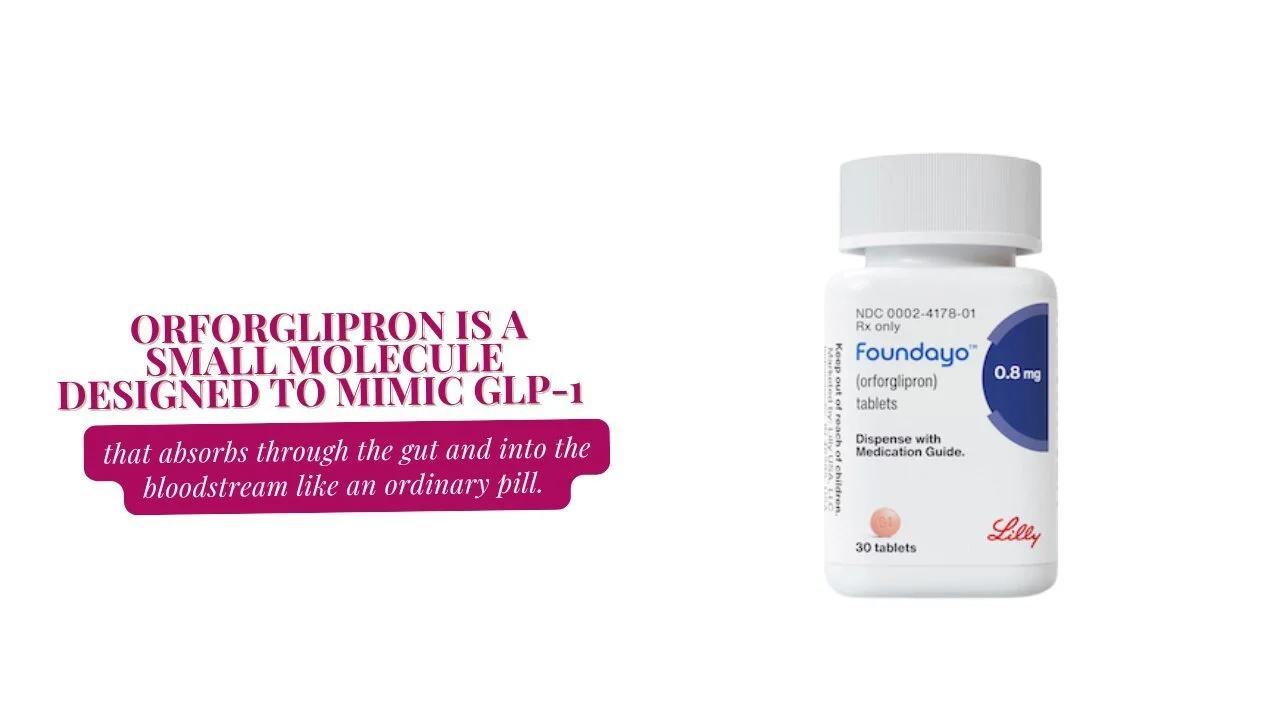
Orforglipron (Foundayo): The New Kid on the Block
Orforglipron, sold as Foundayo, is our newest option, and I covered it in a full episode earlier this year. Like Wegovy, it works on GLP-1, but it’s built differently. Wegovy and Zepbound are peptides, which are protein-like molecules that normally need to be injected or specially formulated. Orforglipron is a small molecule designed to mimic GLP-1 that absorbs through the gut and into the bloodstream like an ordinary pill. That means you can take it any time of day, with or without food or water, which is a huge selling point. It also has many dose steps, so you can fine-tune what’s right for you.
The side effects and precautions are the same as for the rest of the class, with one addition: it can interact with certain medications. Most aren’t common (certain antibiotics, some HIV treatments), but simvastatin, a cholesterol medication, is. The good news is that the interaction doesn’t extend to other statins. These are real medications with real interactions, so make sure your prescriber reviews everything you take.
Weight loss averages about 11%, less dramatic than the injections. For someone who mostly wants the metabolic benefits and would be thrilled with 11%, that can be perfect, and taking a pill whenever you like feels like less of a commitment. My patients have tolerated it well so far, though it’s new and I don’t have years of experience with it. For many people it’s an easy, low-pressure way in.
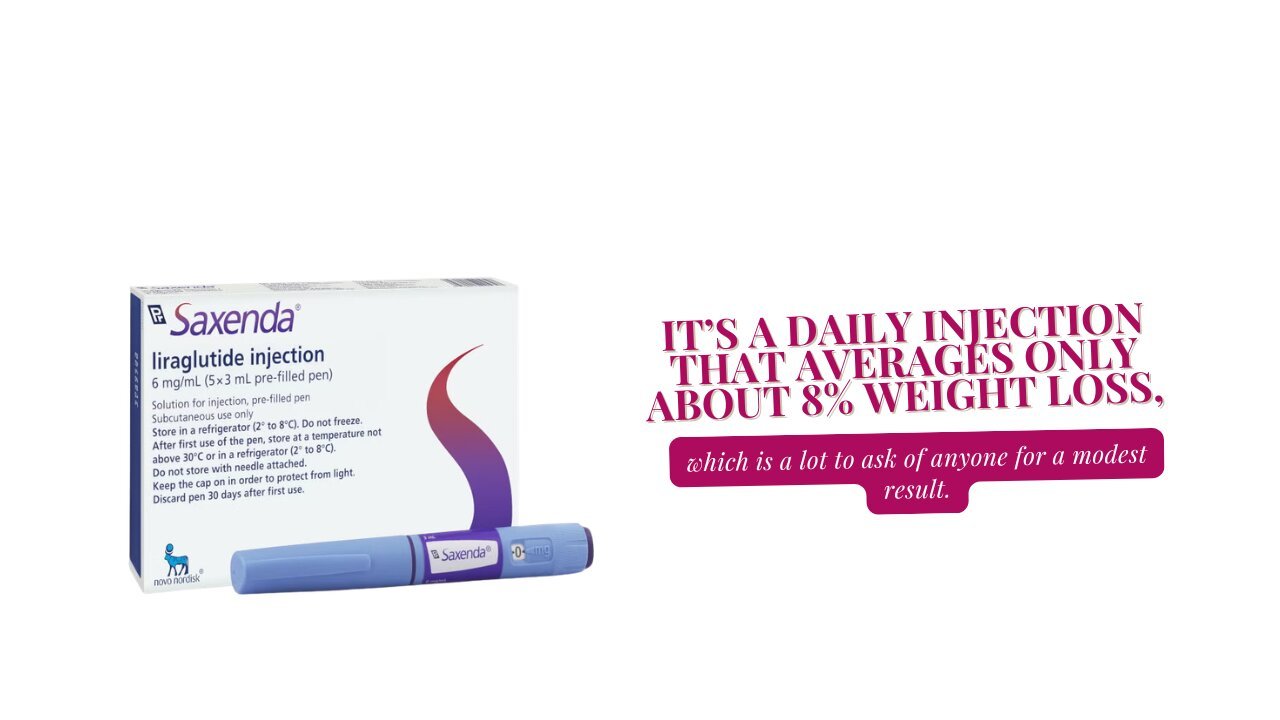
Liraglutide: The Forgotten Stepchild of the GLP-1 Family
Liraglutide was the original GLP-1 approved for weight loss, so it deserves a mention. Its brand name, Saxenda, is being discontinued, but generics should stay available. It’s a daily injection, which is a lot to ask of anyone, and it averages only about 8% weight loss, which is why many of us reached for phentermine, Contrave, or Qsymia first. The side effects and precautions match the rest of the class.
So why would a doctor still suggest it? It may be the cheapest option, and it’s approved for kids 12 and up, so it can make sense for some children. I was hoping a really inexpensive generic would appear, but that hasn’t happened yet.
As for how the options line up, Wegovy comes as a weekly shot or a daily pill, Zepbound as a weekly shot, Foundayo as a daily pill, and liraglutide as a daily shot. There’s no best medication for everyone, only the one you can take consistently, afford, and tolerate. Which of those is most likely to be yours?
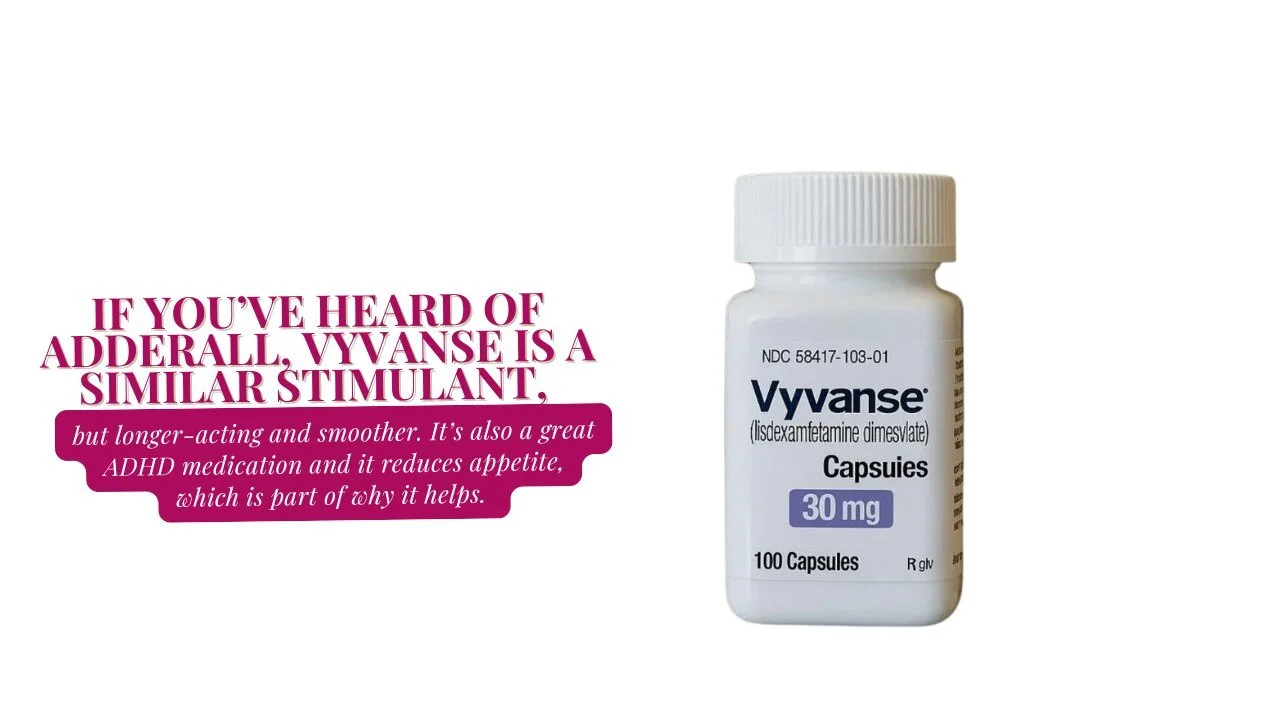
Vyvanse (Lisdexamfetamine): The Binge Eating Disorder Medication
A few other medications may come up with your prescriber, and Vyvanse is one I use often. It’s now available as a generic, and it’s the only medication approved for binge eating disorder, which means regularly eating large amounts of food while feeling out of control. Not everyone with binge eating disorder has obesity, and not everyone with obesity has it, but about 20% of people who come to a medical weight loss clinic do. The official dose is 60 mg, though lower doses can be fine.
If you’ve heard of Adderall, Vyvanse is a similar stimulant, but longer-acting and smoother. It’s also a great ADHD medication and it reduces appetite, which is part of why it helps. The side effects resemble phentermine’s: jitteriness, a faster heartbeat, trouble sleeping, irritability, dry mouth, and headaches. It’s a Schedule 2 controlled substance, the most tightly regulated category for prescription medications that are still medically useful, so there are more rules around prescribing and filling it. The generic has made it pretty affordable.
I frequently combine it with a GLP-1 when one alone isn’t enough. They complement each other: the GLP-1 quiets hunger and food noise while Vyvanse targets the binge-eating pattern. If you’ve felt out of control around food, it’s worth asking whether binge eating could be part of your picture.
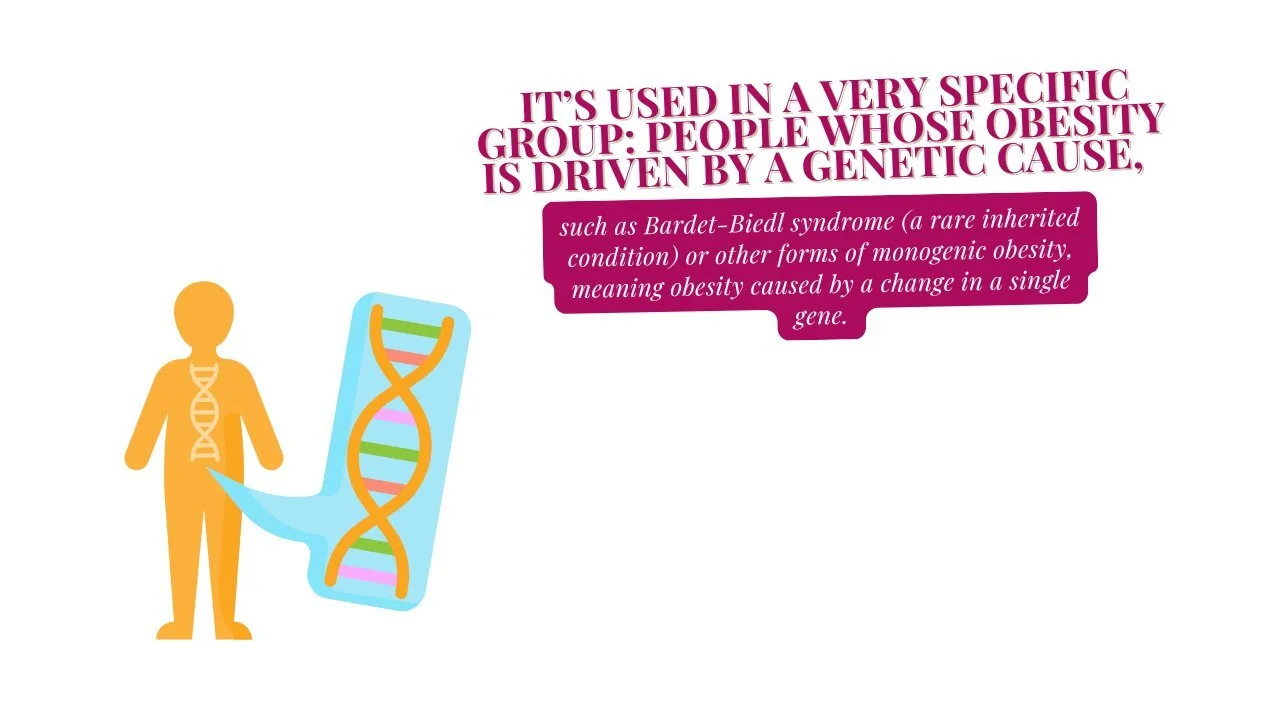
Setmelanotide: A Rare but Important Option
I’ve honestly never prescribed setmelanotide myself, but it’s worth knowing about. I had Jesse Richards on my podcast, and he’s the expert on it in my opinion. It’s used in a very specific group: people whose obesity is driven by a genetic cause, such as Bardet-Biedl syndrome (a rare inherited condition) or other forms of monogenic obesity, meaning obesity caused by a change in a single gene. In these conditions, particular genetic pathways that control hunger don’t work properly, and this medication targets them.
It’s a daily injection and can be used in children as young as six who qualify. Possible side effects include sexual side effects, skin color changes, and digestive symptoms. Because the eligible group is so specific, it’s prescribed after a clear diagnosis, not as something to try.
I mention it because I think it’s important to be balanced. If Zepbound or Wegovy didn’t work for you, there may be a deeper reason, and sometimes it’s worth exploring whether something else is going on. If that sounds like you, you can ask your clinician about it.
Metformin: The “Salt” of Obesity Medicine
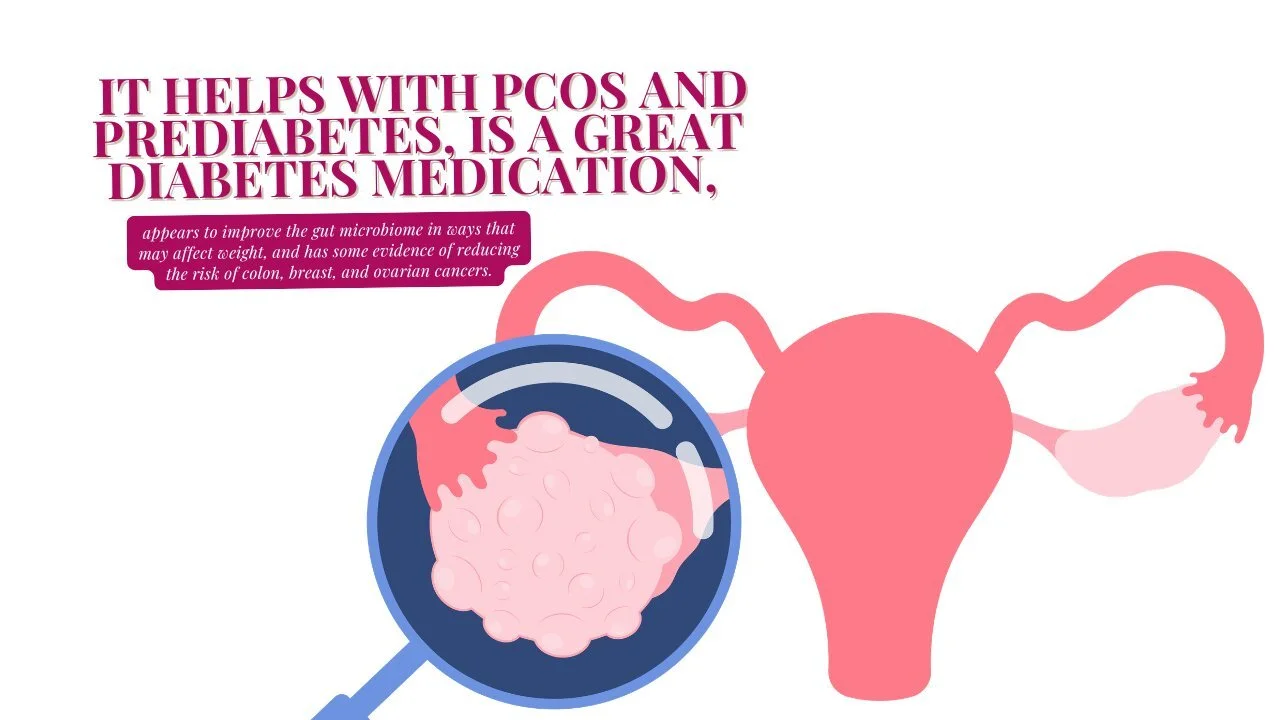
Metformin is the last of my oldies but goodies. It’s an old type 2 diabetes medication, generic for many years and incredibly cheap. It improves insulin sensitivity, helping people whose cells don’t respond well to insulin (insulin resistance). It isn’t a dramatic weight loss drug, averaging only a couple of percentage points, but it helps level the playing field. I used to call it the salt of obesity medicine because I’d sprinkle a little on everyone. It helps with PCOS and prediabetes, is a great diabetes medication, appears to improve the gut microbiome in ways that may affect weight, and has some evidence of reducing the risk of colon, breast, and ovarian cancers.
It also plays nicely with everything else we’ve covered, so I often add it to Vyvanse for binge eating, phentermine for appetite, or even a GLP-1. If you’re already taking it for prediabetes and wonder whether to continue, that’s a good question for your prescriber.
That’s the full rundown of obesity medications and the adjuncts as of October 2026. Please get these medications from a prescriber you have a relationship with, someone you can reach with questions and side effects. Many obesity medicine specialists, primary care doctors, and endocrinologists are experts in this. Don’t click around online and buy these from just anywhere. The most important part of this journey may not be which medication you choose, but who walks through it with you.
You’ve now seen every option on the table, from Phentermine and Contrave to Wegovy, Zepbound, and Foundayo, along with the specialty and supporting medications. No single one is right for everyone. The best choice depends on your health, your goals, your budget, and what you can stick with.
If one of these stood out, go back to that section, jot down your questions, and bring them to a prescriber who knows you. For a closer look at these medications, their differences, side effects, and what to consider when choosing one, explore the full episode of Obesity Medication Essentials: Zepbound, Wegovy, Foundayo, Phentermine, Contrave. This field keeps changing, so check back for updates as new options arrive. You don’t have to figure out the next step alone.
More from The Dr. Francavilla Show:
Subscribe to The Dr. Francavilla Show on