
If the hardest part of your day begins after dinner, you are far from alone.
Overeating at night is one of the most common struggles I hear about from my patients. The kitchen often feels louder in the hours between dinner and bedtime, and even people with plenty of motivation find themselves reaching for snack after snack. If that sounds familiar, here are seven strategies for you, and they can work whether or not you are taking a medication to support your weight. Many of them will help at other times of the day too.
This topic is close to home for me. It was one of the first I ever covered, almost five years ago, and it is time for a fresh take. Much of the advice will sound familiar, because the same question keeps coming up in clinic. I deal with it myself: if there is a time of day when I am going to overeat, it is after dinner.
The good news is that nighttime overeating can be changed, and the solutions are usually simpler than people expect. Here are my top seven tips, along with why each one works.
Tip Number One: Eat Enough Throughout the Day
The most important thing you can do to stop overeating after dinner is to eat enough during the day. When you go too long without fueling up, you build what I like to call a hunger deficit. By evening, you are not just a little peckish. You are truly physiologically hungry, with your blood sugar dipping and your body sending out every “I need fuel” signal it has. Add a long, tiring, stressful day, and your capacity for thoughtful choices is nearly gone. Real hunger, exhaustion, and the urge to unwind make a perfect storm for overeating, and it has far more to do with biology than with willpower.
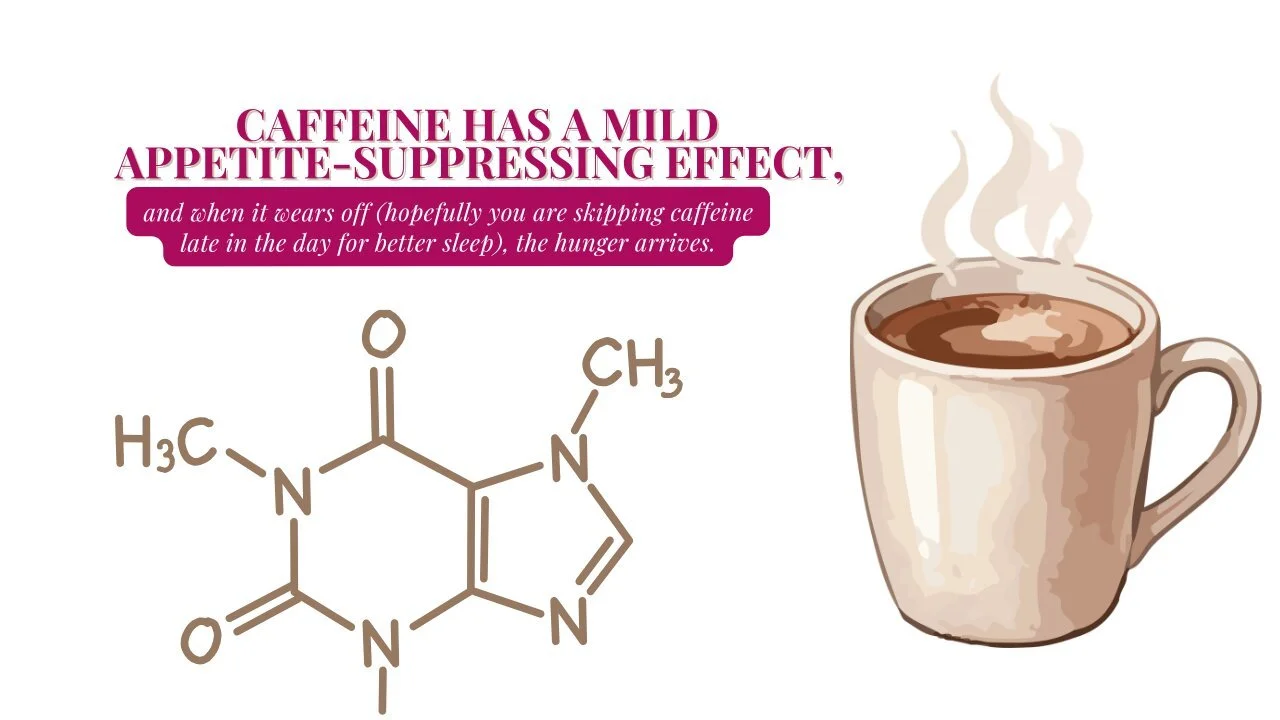
This pattern can become even more intense depending on what is suppressing your appetite during the day. Obesity management medications all dial down your drive to eat, whether it is a daily pill like phentermine or Contrave, or even a GLP-1. The daily pills tend to wear off as the day goes on, so hunger can come roaring back in the evening. Even with a GLP-1, your body still needs fuel, and under-eating will eventually catch up with you. Caffeine works in a similar way. Coffee, tea, and energy drinks are mild appetite suppressants, and when they wear off (hopefully you are skipping caffeine late in the day for better sleep), the hunger arrives. And even if you use none of these, a naturally small appetite or a very busy schedule can set you up for exactly the same pattern.
The fix is simple: aim for at least three balanced meals a day. Start with breakfast, ideally with some protein, such as Greek yogurt, cottage cheese, egg whites, a protein shake, or oatmeal paired with extra protein. Intermittent fasting works for some people, but they are the minority, so if what you are doing isn’t working, breakfast is worth a try. Next, make sure you actually take a break for lunch, aiming for some protein and fiber. If you are still ravenous by dinner, add an afternoon snack, because the gap between a noon lunch and a 7 p.m. dinner is seven hours, and it is no wonder you are starving. An apple with peanut butter, string cheese, hummus and carrots, boiled eggs, a protein bar, or yogurt can tide you over. Eating balanced meals throughout the day is the foundation for calmer, more in-control evenings.
Tip Number Two: Plan Your After-Dinner Snack Instead of Fighting It
If you already know you like to eat after dinner, the second tip is to decide in advance what you will eat. This is especially worth considering if the habit is long-standing, maybe even lifelong, and you have struggled to kick it. At some point, it may be more effective to accept the habit and work with it. If you can use the strategies from the first tip, have a balanced dinner, and then not eat again until breakfast, that is wonderful and worth doing. But if you have tried that over and over and still end up eating whatever is closest, planning ahead sets you up for success instead of leaving you white-knuckling it until you give in.
So what does a plan actually look like? If you don’t really need food but want a cozy wind-down ritual, a zero-calorie option like plain herbal tea or sparkling water can be calming and signal that the day is done. If you genuinely feel you need something to eat before bed, that is fine too. You just want it to be reasonable and not undo the rest of your day. Some people do well with a 100-calorie ice cream to satisfy a sweet tooth and feel rewarded. Others find those are a slippery slope into eating three or four, so it takes a bit of experimenting to see what works for you. Other options include Greek yogurt, carrots or an apple with peanut butter, a protein shake or bar, or a small bowl of whole grain cereal.
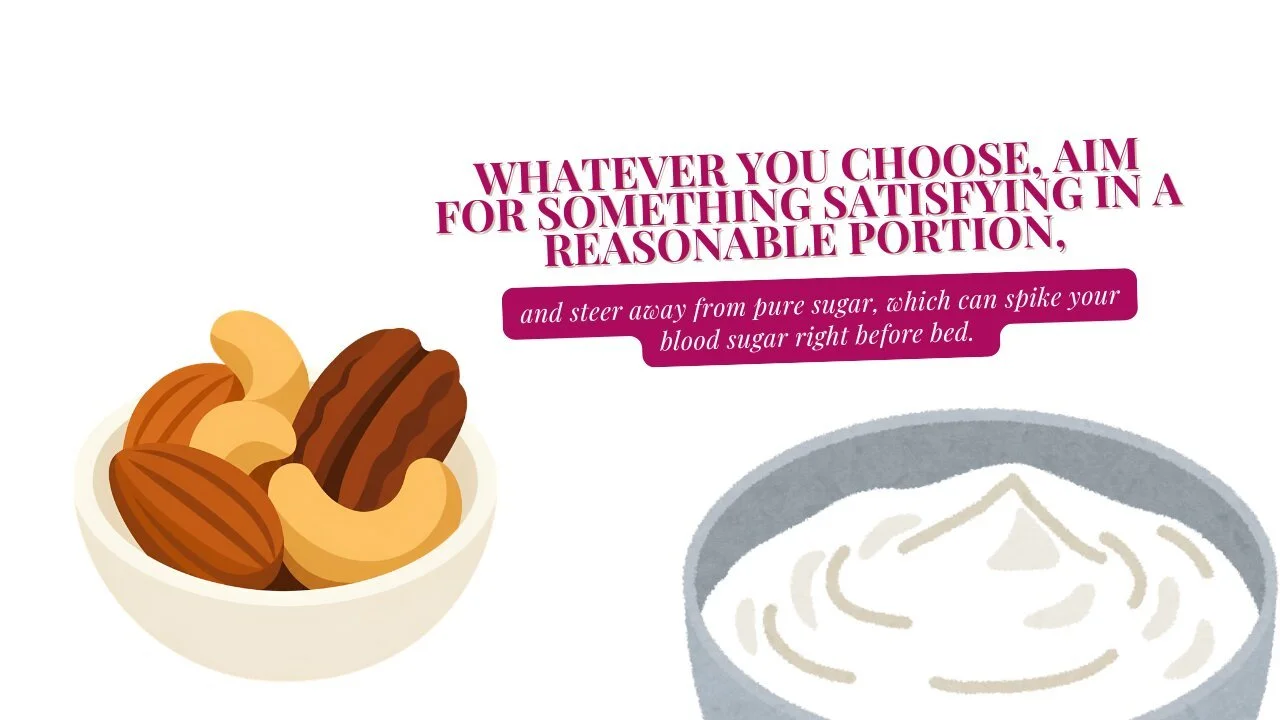
Whatever you choose, aim for something satisfying in a reasonable portion, and steer away from pure sugar, which can spike your blood sugar right before bed. The goal is to enjoy it, feel done, and move on with your night, rather than fighting the urge all evening and ending up in the Halloween candy, a bag of chips, or a frozen pizza. Notice, too, that my first two tips for eating less at night are really about eating more, because your body needs fuel. Eat consistently throughout the day, and if you know you will want something before bed, plan for it, even if that plan is just a cup of herbal tea.
Tip Number Three: Brush Your Teeth to Signal That the Kitchen Is Closed
Once you have decided you are done eating for the day, meaning your body has gotten the nourishment it needs and you don’t actually want more food, the third tip is to brush your teeth or chew some gum. Brushing is a powerful little signal to your brain that eating is over for the night. Think of it as a mini ritual: finish your last bite, head to the bathroom, brush, floss, and enjoy that minty clean feeling. It tells your body, “We’re done here,” and your dentist will be thrilled, too.
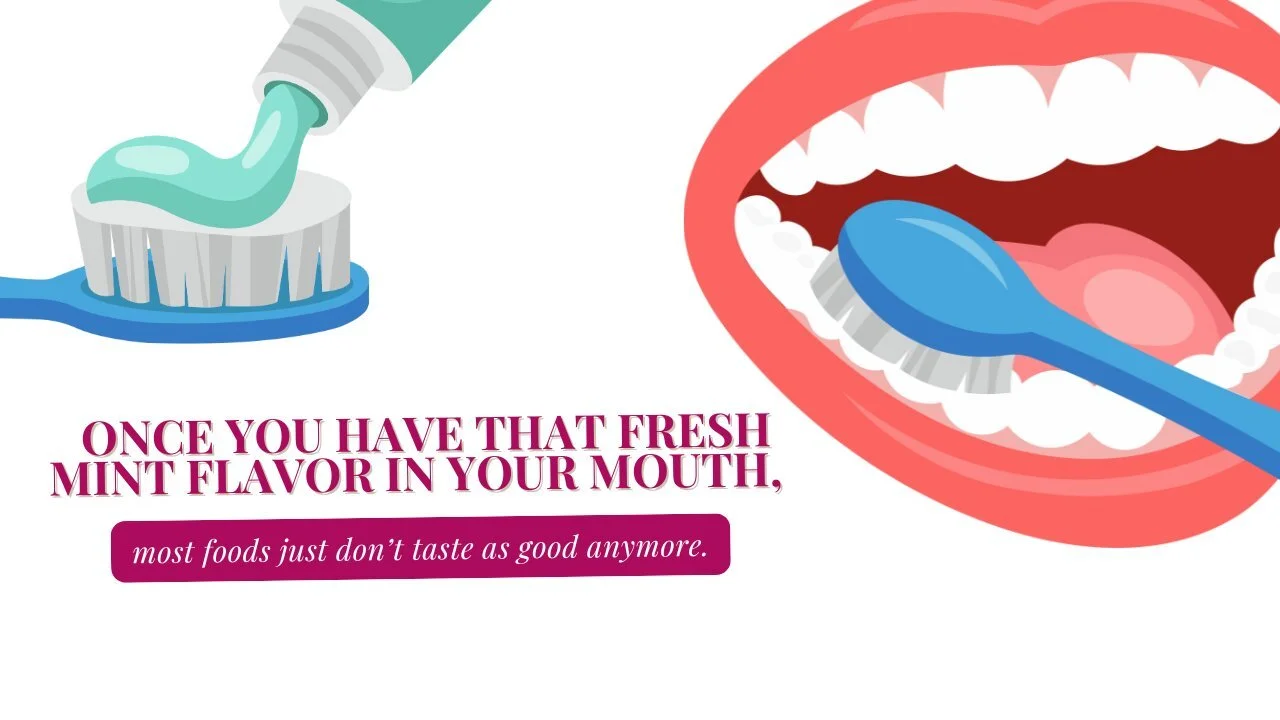
This works partly for psychological reasons and partly for sensory ones. Once you have that fresh mint flavor in your mouth, most foods just don’t taste as good anymore (orange juice after brushing, anyone? Total yikes). That slightly off taste is a helpful deterrent, especially against mindless eating. If you do go back for a bite, the minty flavor serves as a gentle reminder that you already decided you were finished, which gives you a moment to pause and reconsider instead of grazing on autopilot.
If brushing isn’t practical, chewing gum can do a similar job by resetting the pattern and keeping your mouth occupied. One small caveat is that some people get TMJ discomfort or jaw soreness quickly from chewing gum, so if that sounds like you, skip it and stick with brushing. Either way, the goal is to interrupt the habit loop and give yourself a clear end point for the day, so you can say, “My mouth feels clean, my body has had what it needs, and I’m done eating for tonight.”

Tip Number Four: Separate Your Snacking from Your Screen Time
Most of us tend to do two things at the same time: eat, and do whatever activity we usually snack through. For many people that is watching TV, but it could also be scrolling online or anything else where snacking has become automatic. The fourth tip is to unbundle the two. This doesn’t mean you can never watch TV at night, and it doesn’t mean you can’t eat at night either. You can absolutely still have an intentional snack. The only change is that you stop doing both things at once.
What does that look like in real life? Say you usually settle onto the couch with a bowl of popcorn, chips, or candy, or you keep popping up for more because you never quite feel satisfied. Instead, when you decide you want a snack, whether it is a brownie, some chips, or an apple with peanut butter, pause your show and head to a spot meant for eating, like a table or a counter. If your TV area is also where you eat, turn the screen off so you can focus on your food. Try to avoid switching to another screen, too, because scrolling on your phone defeats the purpose. Then enjoy your snack, clean up when you are done, and go back to what you were doing. It may take a little buy-in from the people you live with, especially if they are used to snacking alongside you, but it is entirely doable.
The reason this works is that mindless eating is remarkably easy to slip into. When you are absorbed in your favorite show, you can go through four, five, or even ten portions of chips without realizing the whole bag is gone. Because you weren’t paying attention, you probably didn’t enjoy it much either, which is why you keep going back for more. By slowing down and actually tasting what you are eating, you disrupt that automatic habit and take back control of how much you eat. The best part is that nothing is off limits. You are not giving up TV, and you are not giving up snacks. You are simply giving each one your full attention.
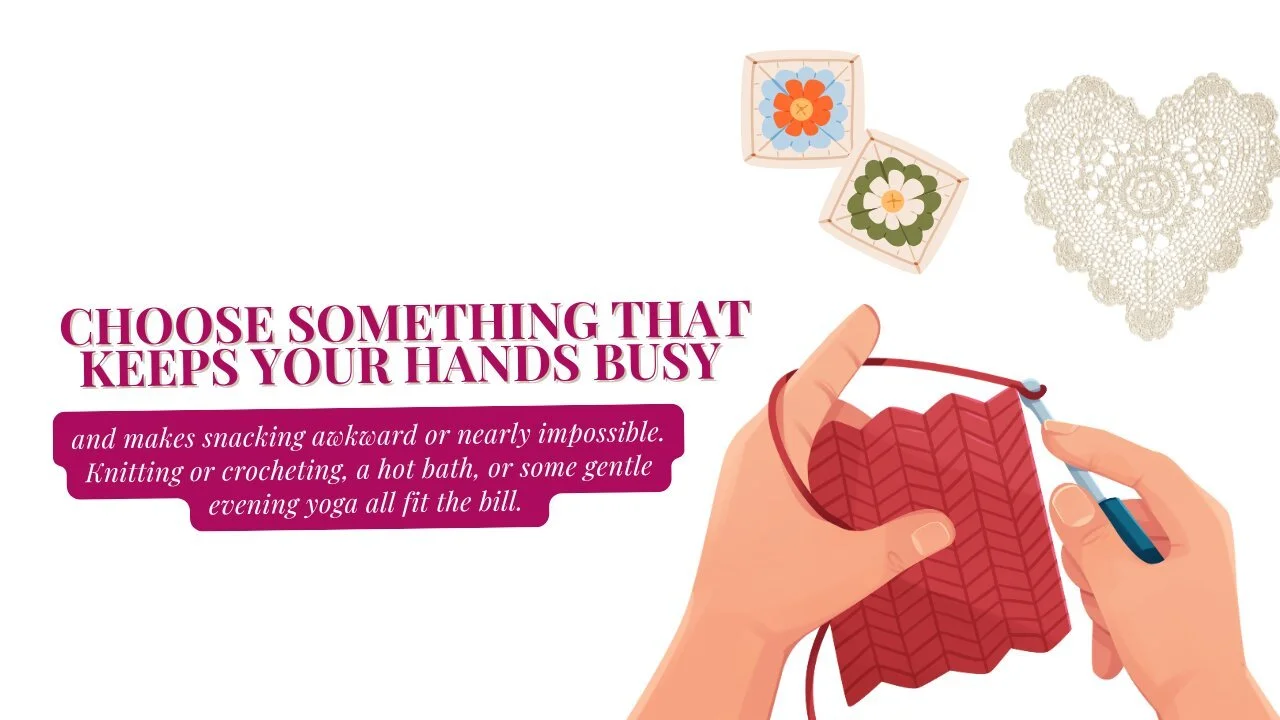
Tip Number Five: Find a New Way to Wind Down That Keeps Your Hands (and Your Stress) in Check
Tip number five pairs naturally with number four: find a new relaxing evening activity. For many people, the classic evening combination is eating and watching TV, so one of the easiest ways to reset the pattern is to swap in something different. Ideally, choose something that keeps your hands busy and makes snacking awkward or nearly impossible. Knitting or crocheting, a hot bath, or some gentle evening yoga all fit the bill. A bath is a great example, because you technically can eat in the tub, but you would have to plan ahead and it is a hassle, which is exactly the point. Meditating or journaling can work well, too.
This tip helps for more than one reason. Yes, it separates eating from the TV or scrolling and keeps your hands occupied. But activities like these are also very good at lowering stress, and stress is a major driver of overeating at night. When we are stressed all day, our bodies release stress hormones like cortisol, which can push us toward salty and sweet snacks. (Honestly, what are we overeating that isn’t salty or sweet most of the time?) If you can find calming ways to unwind that don’t revolve around those foods, the whole process becomes much easier.
Now picture this: you have eaten balanced meals throughout the day, you have given yourself permission to have a planned, reasonable snack, you have brushed your teeth to signal that you are finished, and you have a new evening routine that relaxes you without stressing you out or triggering you to eat. Or, if you are keeping the TV, you at least pause it when you want a snack. It really could work, right? If you decide to make these changes, you can absolutely get a handle on overeating at night. And there are two more tips coming to help you along the way.
Tip Number Six: Cut Back on Alcohol, Because It Brings Friends
If you drink alcohol, tip number six is to cut it out, or at least cut way back, on most nights of the week. If you don’t drink, feel free to skip ahead, because this one may not apply to you. For those who do, here is the thing: alcohol tends to bring friends. I don’t mean the neighbors coming over for board games. I mean more drinks and more food. One glass of wine or one cocktail can easily turn into two, three, or even more, and soon that second round isn’t the only thing you are reaching for.
The reason is that alcohol is disinhibiting, which is exactly why many people enjoy it. It makes it easier to do things you wouldn’t do when sober, including ignoring the plan you had for the evening. After a drink, the chips start calling your name, then the chocolate, and then you are suddenly thinking, “Maybe I do need seconds,” or “I should totally dig into that dessert in the fridge.” Even if your goal is to eat less at night, alcohol can quietly work against you by lowering your guard right when your willpower is already running low.
The good news is that this is an easy place to make progress. If you have a drink most nights of the week, swapping it for herbal tea, seltzer, or another zero-calorie option can cut 100 or more calories. And if you are having a nightly drink, there are probably times it turns into more drinks or more food, so the real savings are likely even bigger. Cutting out alcohol on most nights, especially if it is a trigger for overeating, is a simple, supportive step toward feeling more in control of your evenings.
Tip Number Seven: Make Your Trigger Foods Harder to Get
Last but definitely not least, the final tip is to keep trigger foods out of your house if you can. This one helps with overeating at any time of day, not just at night. I know it can be tricky, because most of us live with other people who have their own food preferences and may not be on board with the changes we are making. Sometimes they don’t need to be, and sometimes the relationship simply isn’t at a place where those conversations feel doable. Still, if you can manage it, start by thinking about which foods you tend to overeat. Most people aren’t going to overdo carrots and peanut butter, but hand them a can of Pringles, a bag of tortilla chips, some pretzels, or a chocolate bar, and it is a different story.
The simplest move is to not buy those foods. That doesn’t mean you can never have them again. It just means making them less available, like saving them for restaurants or buying them only occasionally. If other people in your home love them and aren’t as invested in the change, the next best thing is to make them harder to get. Put the tortilla chips on a high shelf so you have to grab a step stool, or tuck them in the back of the cupboard behind foods you are less likely to overeat. That little bit of extra effort creates a pause, and that pause gives you a moment to ask yourself, “Do I really need these right now?”
Of course, some people find they can overeat almost anything, and if you have tried all of these strategies and they just aren’t working, that is okay and not a personal failing. It may be a sign to step up your care and work with a professional who treats binge eating or compulsive eating, since more targeted treatments are available. For everyone else, the goal is to make your life easier by not having constant, easy access to the foods you know you are likely to overdo. Pair that with tip number two, a satisfying, pre-planned option ready to go, and you are setting yourself up for success.
That covers all seven strategies: eat enough throughout the day, plan your after-dinner snack, brush your teeth to signal that the kitchen is closed, separate your snacking from your screens, find a new way to wind down, cut back on alcohol, and make your trigger foods harder to get.
You do not need to do all seven at once. Pick one or two that feel realistic, try them for a week or two, and build from there. If you slip up along the way, that is not a failure. It is useful information about what your evenings need.
Overeating at night is rarely about willpower. It is usually a mix of biology, habit, and stress, and all three can be worked with. If you have tried these strategies and still feel stuck, consider reaching out to a professional who treats binge or compulsive eating, since more targeted help is available.
Want to hear these tips explained in more depth? Check out the full episode for the complete discussion, plus extra insights.
More from The Dr. Francavilla Show:
Subscribe to The Dr. Francavilla Show on