
Could your GLP-1 medication put your vision at risk? As of November 2026, the FDA requires every medication in this class, including Zepbound, Wegovy, Ozempic, and Mounjaro, to carry a new warning about NAION, a rare eye condition that can cause sudden, permanent vision loss. People taking these medications appear to have a slight increased risk, and that’s why regulators decided patients should be told about it before they start treatment.
So how did this end up on the label? It started with an observational study in 2024 that raised a concern about semaglutide and NAION. The FDA then went back through 126 clinical trials, along with a large database of people with type 2 diabetes, to see whether the signal held up. What they found is the reason for the new warning, and we’ll go through it together, including what the numbers really mean in everyday terms.
Today we’ll also walk through what NAION is, who is most at risk, and the symptoms to watch for. And we’ll talk about what you can do to lower your risk, and when to get care right away.
Most importantly, we’ll talk about how worried you should be. NAION is a real risk, but it’s also a very, very rare one. My goal is for you to leave this episode better informed and more comfortable with your decisions. So without further ado, let’s get started.
Can GLP-1 Meds Cause Blindness?
For most people, no. But there is a very rare eye condition called NAION, short for non-arteritic anterior ischemic optic neuropathy, that has researchers and regulators paying closer attention to GLP-1 medications like Zepbound, Wegovy, Ozempic, and Mounjaro. There appears to be a real but very small link, and the evidence is still being sorted out.
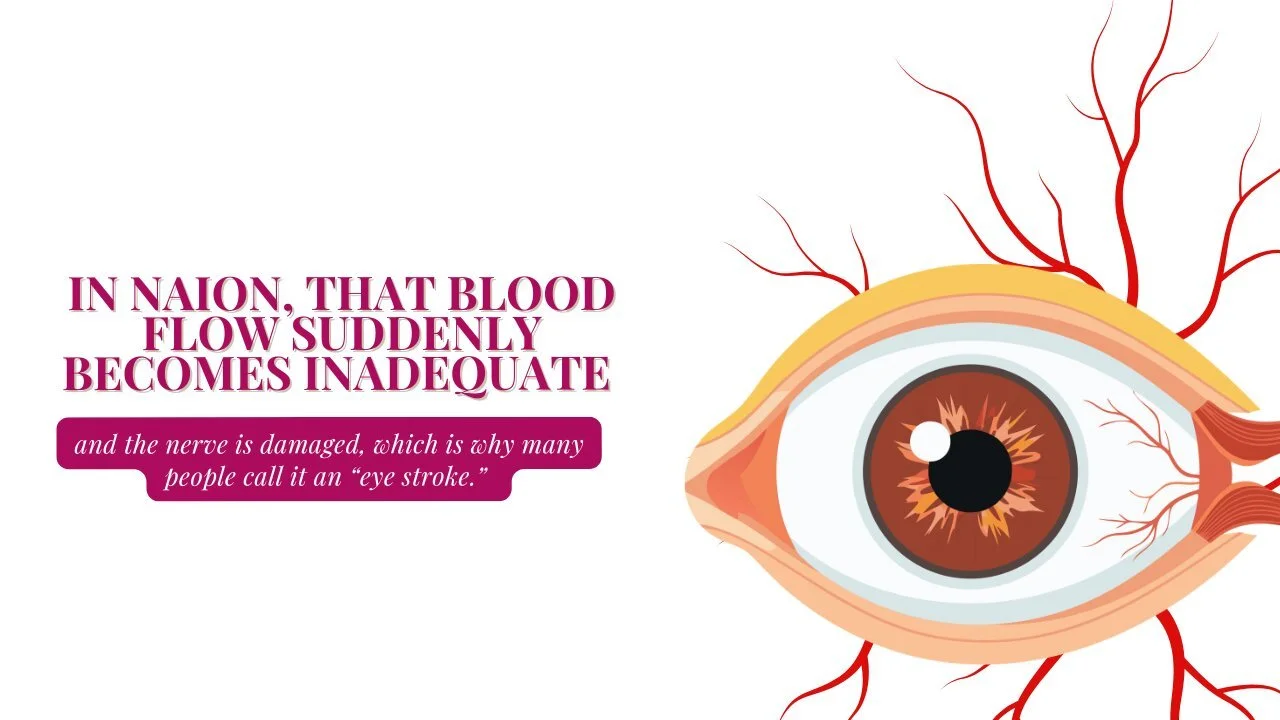
To understand NAION, start with the optic nerve, the cable at the back of your eye that carries what you see to your brain. Like every part of your body, it needs a steady blood supply. In NAION, that blood flow suddenly becomes inadequate and the nerve is damaged, which is why many people call it an “eye stroke.” For most people the lost vision doesn’t come back, and there’s no reliable way to reverse it.
That’s why recognizing the signs matters. NAION typically causes sudden, painless vision changes in one eye, such as blurriness, a dark patch, or a missing area of vision, often noticed first thing in the morning. Please don’t wait and see. Any sudden vision loss needs same-day care from an ophthalmologist or, if you can’t reach one quickly, an emergency room. Other causes can be treated, so getting checked fast matters.
So how worried should you be? Informed, not panicked. The risk for any one person appears very small, and these medications have well-documented benefits for diabetes, weight, and heart health that often outweigh the potential risk. Don’t stop on your own. Talk with your prescriber, especially if you have risk factors for optic nerve problems or have had NAION before, and keep up with regular eye exams if you have diabetes.
What NAION Looks Like and Who Is Most at Risk
NAION usually shows up as sudden vision loss in one eye, and many people notice it when they wake up. You may see a dark spot, a shadow, a blurry patch, or a missing area of your visual field, sometimes mostly in the upper or lower half. It’s typically painless, and the eye isn’t red, itchy, or irritated, which makes it easy to underestimate.
Any sudden vision change needs same-day care, because it doesn’t automatically mean NAION. It could be a retinal artery occlusion or a retinal detachment. In people over 50, it could be giant cell arteritis, an inflammatory condition that can affect both eyes but is treatable if caught early. Don’t wait to see if it improves, and don’t self-diagnose. Your primary care doctor or weight-management physician can help coordinate a quick appointment, but an ophthalmologist is the one who can diagnose it.
NAION isn’t new. It existed long before GLP-1s and has simply been in the news more because of the connection. In the general population, it affects roughly 2 to 10 people per 100,000 each year, so it was rare before and remains rare. Age is the biggest risk factor, with most cases in people over 50. Anatomy matters too: some people have a “disc at risk,” a small, crowded optic disc where the optic nerve enters the back of the eye.
If you’re curious about your own anatomy, it’s reasonable to ask an eye doctor, especially if you haven’t had an exam in a while. A pre-treatment eye exam isn’t officially recommended, but it may help you feel more informed. Keep it in perspective: an at-risk disc is fairly common, while actually developing NAION is very rare.
More Risk Factors for NAION, and Why GLP-1 Users Are Hard to Study
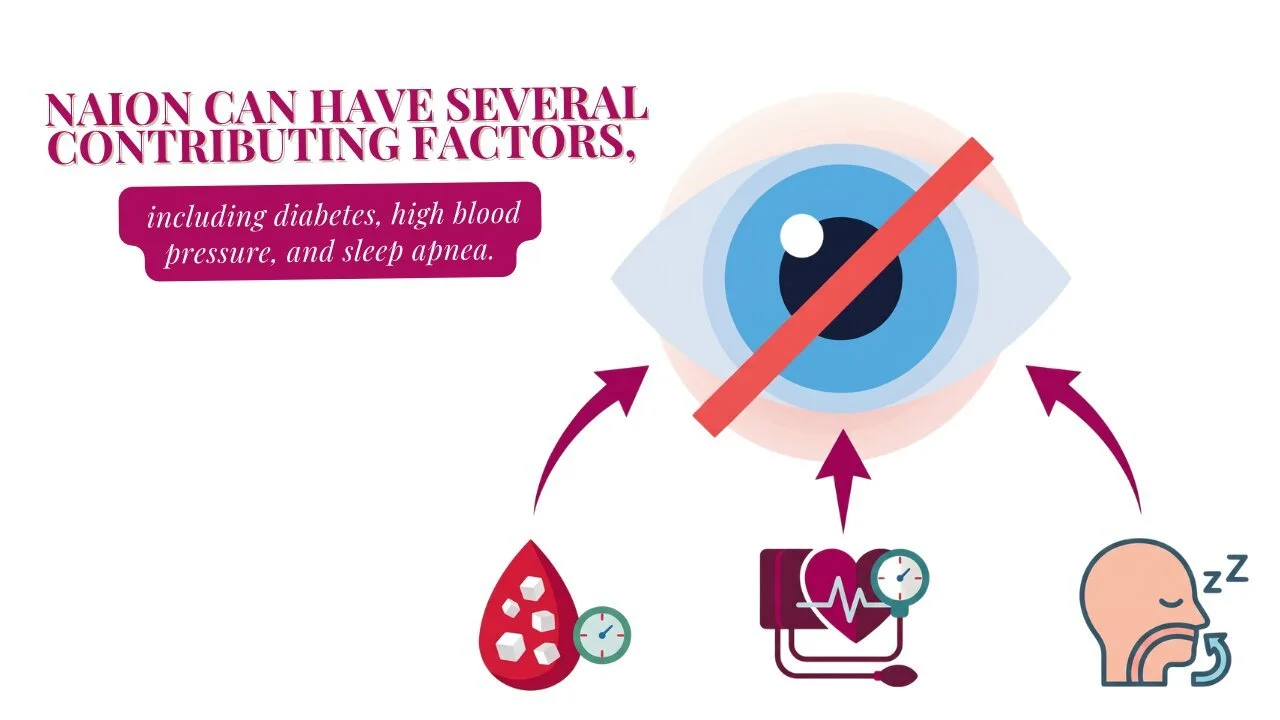
Several other conditions raise the risk of NAION, including diabetes, high blood pressure, high cholesterol, obstructive sleep apnea, and cardiovascular disease. Many of these go hand in hand with obesity, so even if you take a GLP-1 purely for weight, you may already have risk factors. Diabetes matters especially, since GLP-1s are a common treatment for type 2 diabetes. Smoking is another risk factor, and quitting helps in many ways beyond this one.
This overlap is why the data has been hard to read. Many people at higher risk for NAION are the same people prescribed GLP-1s, so we may be seeing more cases in this group simply because they were already at risk. That makes it difficult for researchers to tell whether the medication adds risk on top of what’s already there.
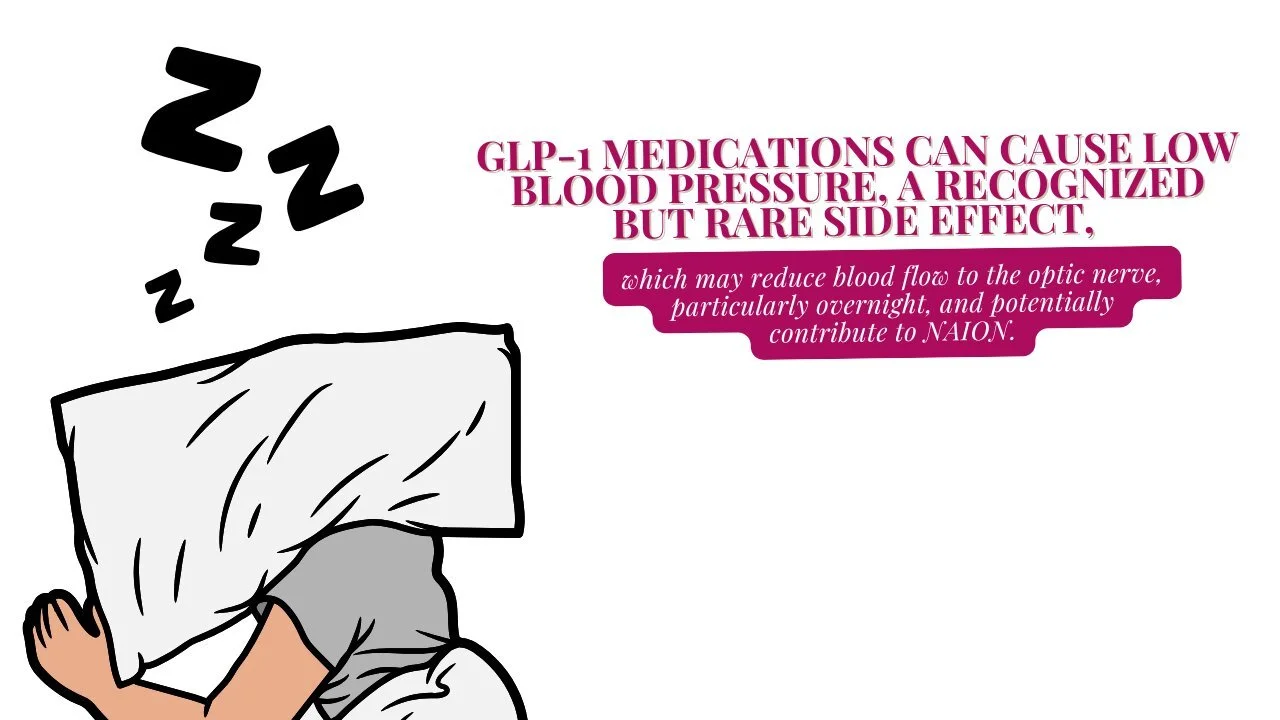
One factor may be more specific to these medications: low blood pressure, especially overnight. Weight loss often lowers blood pressure, and hypotension is a rare but recognized side effect of these drugs. Since NAION is a blood supply problem for the optic nerve, dips in blood pressure could plausibly play a role.
There are practical steps you can take. Consider monitoring your blood pressure at home while on these medications. If it’s trending low, work with your prescriber to reduce or stop any blood pressure medications you may no longer need. If your numbers are low even without them, ask your doctor what else can help keep your pressure from dropping too far overnight.
ED Medications, Overlapping Risks, and the New FDA Label
Certain erectile dysfunction medications, including Viagra, Cialis, and their generics, have also been associated with NAION. These drugs can lower blood pressure too, and the effects may be additive. If you take a GLP-1 and an ED medication together, the combination could further raise your risk. It’s not a reason to panic, but it’s worth mentioning to your prescriber so they have the full picture of everything you take.
This is a multifactorial situation with many moving parts. Diabetes, high blood pressure, sleep apnea, and other conditions common in GLP-1 users are risk factors on their own, and other medications can contribute too. That makes it hard to tell whether a GLP-1 itself increases the risk or whether the conditions and drugs that travel with it are responsible, which is why the relationship wasn’t clear at first.
Even so, the picture has become clearer. As of November 2026, the FDA has required manufacturers of all GLP-1 medications to add the risk of NAION to their labels. Despite the competing explanations, the evidence was strong enough for regulators to decide people should be told about this risk before they start treatment. It reflects a real, if small, signal.
In practice, that means being informed rather than worried. If you’re starting or already taking a GLP-1, read the new label language and ask your prescriber about your personal risk factors, including any ED medications. Keep an eye on your blood pressure, stay current on eye exams, and remember that any sudden vision change means seeing an eye doctor the same day. The risk remains very low, and these medications offer major benefits for many people.
How the NAION Warning Ended Up on the Label
The first red flag came in July 2024, when a study in JAMA Ophthalmology found that people prescribed semaglutide (Wegovy and Ozempic) had more cases of NAION than people prescribed other medications. The study had limits, though. It came from an eye clinic, where patients are already more likely to have eye problems, and nobody was randomly assigned to take the drug or not. It was a signal worth checking, not proof.
To dig deeper, the FDA went back through 126 clinical trials involving more than 134,000 people. Across all of that data, they found only 15 probable cases of NAION: 10 in people taking a GLP-1 and 5 in people who weren’t. That’s why the problem never showed up in the original studies. A single trial with a few thousand participants might have had one case, or none, which isn’t enough to raise concern.
So what does that mean in everyday terms? Imagine a stadium with 100,000 people, all taking a GLP-1 for a year. You’d expect about six of them to develop NAION. In a second stadium of 100,000 people not taking one, you’d expect about four. That’s a difference of roughly two or three people out of 100,000, which is very small. The trials also included people taking these medications for both weight loss and type 2 diabetes, so we can’t tell which group, if either, carries more of the added risk. Diabetes is already a known risk factor for NAION.
This is also a good example of why the FDA’s review process matters. Regulators keep watching a drug after it’s approved and can go back through the data to catch small but real risks that early trials couldn’t. It can feel slow and adds to costs, but it helps keep people informed and safe. Knockoff, compounded, and unregulated versions of these drugs don’t go through that process, so risks like this one could easily go unnoticed.
The FDA’s Second Look: Diabetes, Unanswered Questions, and Blood Pressure
The FDA’s second step was to examine a large database of people with type 2 diabetes. They compared people starting a GLP-1 with people starting two other kinds of diabetes medication, called SGLT2 inhibitors and DPP4 inhibitors. In all of these groups, roughly 26 to 32 out of every 100,000 people developed NAION. That’s higher than in the earlier clinical trials, which suggests that people with type 2 diabetes are already at higher risk to begin with.
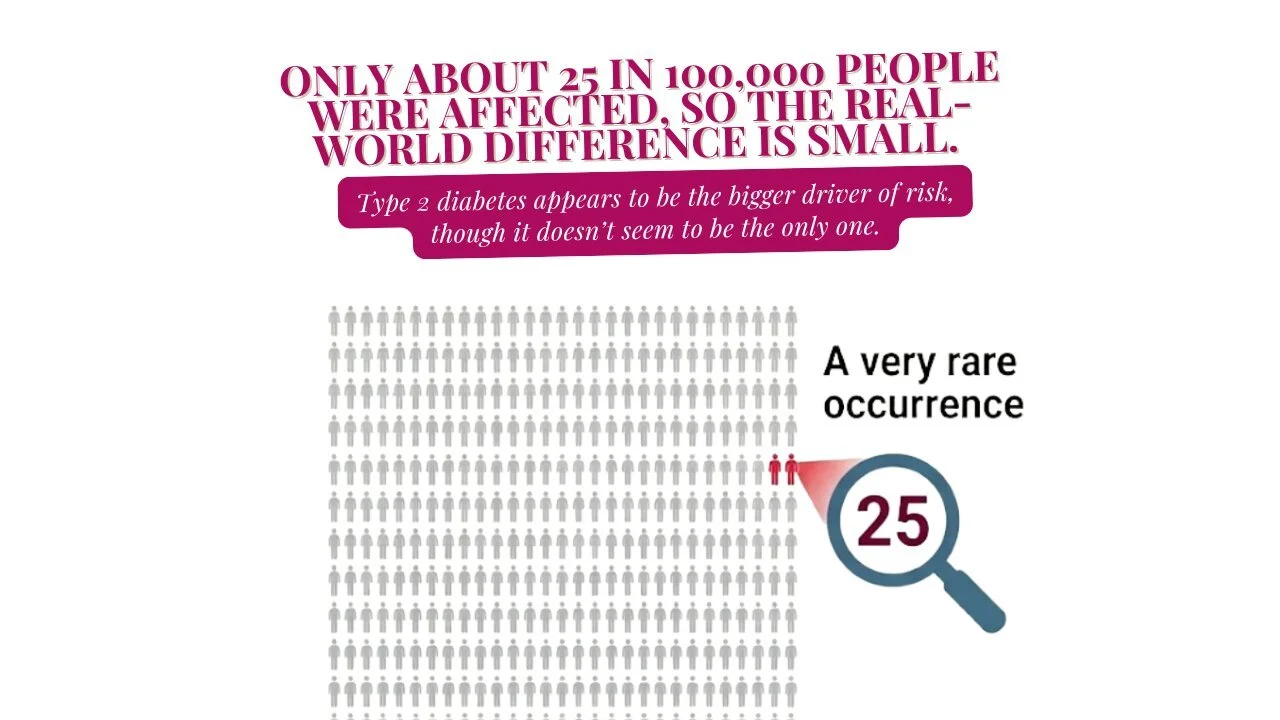
When the groups were compared, GLP-1 users and people on SGLT2 inhibitors had about the same risk. Compared with people on DPP4 inhibitors, GLP-1 users had a higher risk, about 43% higher. That sounds alarming, but it’s a percentage of a very small number. Only about 25 in 100,000 people were affected, so the real-world difference is small. Type 2 diabetes appears to be the bigger driver of risk, though it doesn’t seem to be the only one.
Why GLP-1s might add any risk at all isn’t known. Animal studies didn’t show an increased risk, which adds to the mystery. These medications change both blood sugar and blood pressure, so two theories are that fast swings in blood sugar could affect the optic nerve, or that blood pressure dropping too low could reduce blood flow to it. Both are educated guesses, not proven explanations. Low blood pressure seems especially plausible, since Viagra and Cialis also lower blood pressure and have been linked to NAION.
Blood pressure is something you can easily check at home. If your readings are consistently low, around 100 to 110 over 60, let your doctor know sooner rather than later. It’s a simple step that gives you useful information while you benefit from your treatment.
If NAION Happens, Should You Stay on Your GLP-1?
If you’re diagnosed with NAION, is it okay to keep taking your GLP-1? Other countries added this risk to their labels before the U.S. did, and their guidance is direct. In Europe, the recommendation for semaglutide is to stop the medication if NAION is confirmed. The U.S. label is less prescriptive, leaving more room for you and your doctors to decide together.
The key factor is that having NAION in one eye raises the chance of it happening in the other, by roughly 15% over about five years. Because the vision loss is usually permanent, losing sight in both eyes would be life-changing. You might not be able to drive, everyday technology could become hard to use, and activities you enjoy could feel out of reach.
Weighing that, the stakes look lopsided. GLP-1s offer real benefits, but the risk of bilateral vision loss is severe and can’t be undone, so it would be hard to recommend continuing the medication if NAION occurs. Still, this is a personal decision to make with your prescriber and eye doctor, who know how much you rely on the medication for diabetes or other conditions.
If you ever face this, you aren’t without options. Get a same-day eye exam, let your prescriber know right away, and talk through alternatives. There are other ways to manage blood sugar and weight, so stopping a GLP-1 doesn’t mean running out of choices.
What I Recommend to My Own Patients
I’ve had one patient develop NAION. It’s impossible to know whether the medication was the cause, but I reported the case to the safety data registry, since reports like that help regulators track small but real signals and decide what belongs on a label. She also had several of the other risk factors, and because NAION in one eye raises the risk in the other, I recommended she stop this class of medication. Why add to her risk when the downside could be losing vision in both eyes?
My approach differs a little from the official guidance. In the U.S., the formal recommendation is “shared decision-making,” meaning you and your doctor talk through what makes sense for you. Personally, I have a hard time imagining a patient for whom continuing would be worth it. If a GLP-1 were truly the only thing that could treat someone’s disease, the math might change, but that would rarely be the case. There’s bariatric surgery, a wide range of type 2 diabetes medications, and other treatments for sleep apnea, so stopping doesn’t mean running out of options.
If this all feels a little scary, I understand, and I want to reassure you: NAION is incredibly rare, and the absolute difference in risk in the data was small. Most people taking these medications will never experience it and will simply enjoy the benefits for their weight, blood sugar, and overall health.
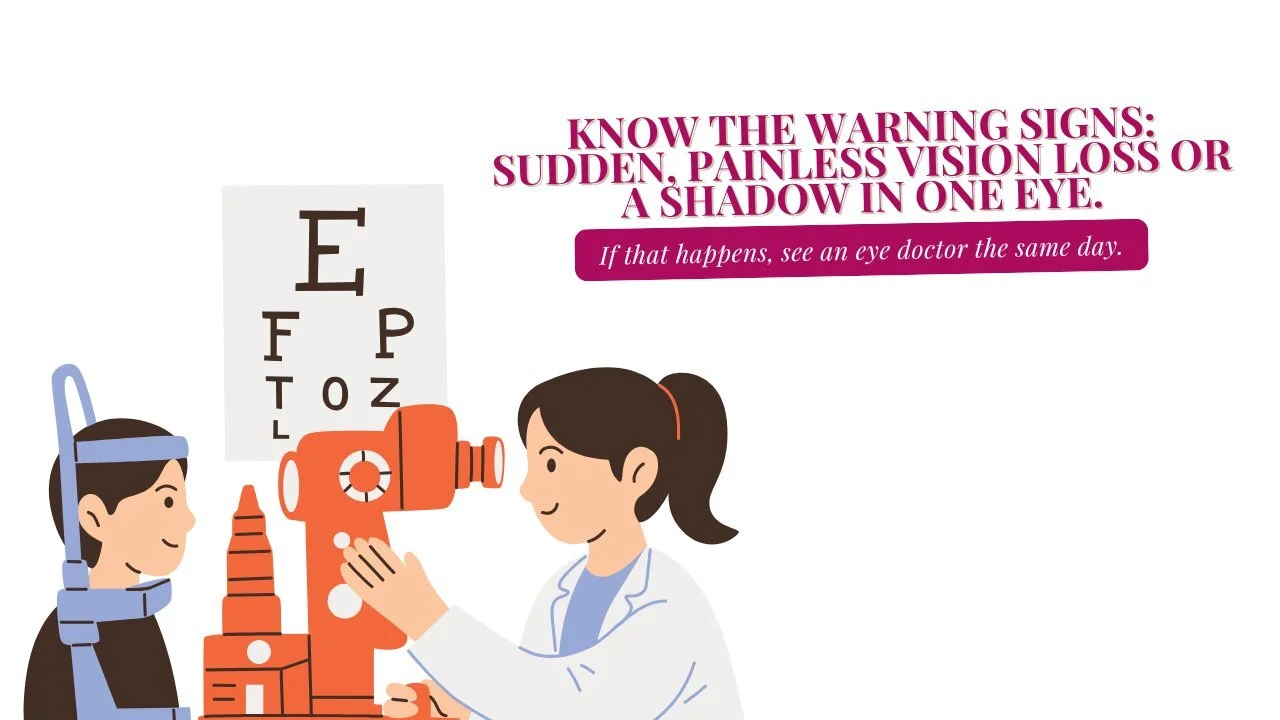
Here’s the practical takeaway. Know the warning signs: sudden, painless vision loss or a shadow in one eye. If that happens, see an eye doctor the same day. Talk with your prescriber about your personal risk factors, including blood pressure, diabetes, sleep apnea, smoking, and any ED medications you take. And if you’ve had NAION, have an honest conversation with your care team about alternatives. Being informed isn’t the same as being afraid, and a little awareness helps you make confident choices about your care.
How to Lower Your Risk of NAION
The good news is that there are real things you can do to lower your risk. The big one is improving your overall vascular health, which means keeping diabetes, blood pressure, and cholesterol well managed. If you smoke, quitting helps in many ways, including this one. Sleep apnea is also a risk factor for NAION, so it’s one more reason to use a CPAP or APAP machine alongside other treatments like weight loss or Zepbound, rather than relying on the medication alone.
Blood pressure may also play a role. If you take blood pressure medication and are starting a GLP-1, monitor your readings at home and follow up with whoever prescribes your meds to see if adjustments are needed. Don’t change doses on your own. Some blood pressure medications taken at bedtime might raise the risk, so if timing doesn’t matter for yours, morning dosing may be better. ED medications like Viagra and Cialis can also lower blood pressure and have been linked to NAION, which is worth factoring into your decision if this risk concerns you.
If you notice any vision change, see an eye doctor the same day. Your primary care doctor can help coordinate an appointment if you have trouble getting in, and the emergency room is another option, since sudden vision loss in one eye can signal something more serious that needs to be ruled out quickly.
Finally, if your GLP-1 has been life-changing, please don’t stop it suddenly out of fear. This isn’t a new risk, it’s very rare, and when it happens it’s almost always in part of one eye. Untreated diabetes can also threaten your vision, and these medications help protect your heart and overall health. If you’re worried, talk with your prescriber and decide together whether the tradeoff feels right for you.
In short, NAION is serious and can cause permanent vision loss, but the absolute risk is tiny: 15 cases among about 134,000 trial participants. That’s 0.0001%. It’s real, but very unlikely.
If you’re taking a GLP-1 or thinking about it, this is the episode to hear in full. I go deeper on the research behind the new warning, the role blood pressure may play, and what I’ve seen in my own practice. Tune in and get the complete picture.
More from The Dr. Francavilla Show:
Subscribe to The Dr. Francavilla Show on