
Do you love the holidays but dread what they do to your routine?
You’re not alone. This time of year is genuinely hard. The days get shorter, it feels like it’s dark by 5:00, and the calendar fills up fast with family events, office parties, performances, shopping, and cards.
On top of that, there’s food everywhere: cookies, cider, hot cocoa, big fabulous meals, cocktails, and wine. It’s a wonderful season, but it can make taking care of yourself feel a lot harder, and I saw that over and over with my medical weight management patients.
Here’s the thing, though: you don’t have to wait until January to start healthy habits, and you don’t have to choose between enjoying the holidays and being healthy. There’s a middle ground. In this episode, I’ll share some information and simple challenges to consider, and at the end, you can join the holiday health challenge by picking a couple of goals to carry you through the rest of the year. Because I want you to end this year feeling good, not guilty.
Savoring the Season: A Mindful Approach to Holiday Eating
Holiday eating is a huge part of the season. Thanksgiving kicks things off, and then the invitations keep coming: second dinners, office parties, travel, cookie swaps. One big meal is just that, but when celebrations stack up into six weeks of “special” meals and you walk in without a game plan, it’s easy to eat on autopilot, and that’s when the regret shows up, whether it’s feeling uncomfortably full, seeing the scale creep up, or feeling like you lost control of the season. A little planning now makes it so much easier to enjoy everything without the “why did I do that?” feeling afterward.
A big thing that derails people is the scarcity mindset. Holiday foods like turkey and pumpkin pie are tied to one time of year, which makes them feel rare, and our brains naturally respond to rarity by wanting to grab as much as possible before it’s gone. But that belief usually isn’t true. Pumpkin pie is easy to make, and you could probably buy one in July if you really wanted to. One or two foods that trigger this feeling are no big deal, but when the peppermint mocha, the eggnog latte, both kinds of pie, and the office party spread all feel like a once-a-year event, nothing is really special anymore.
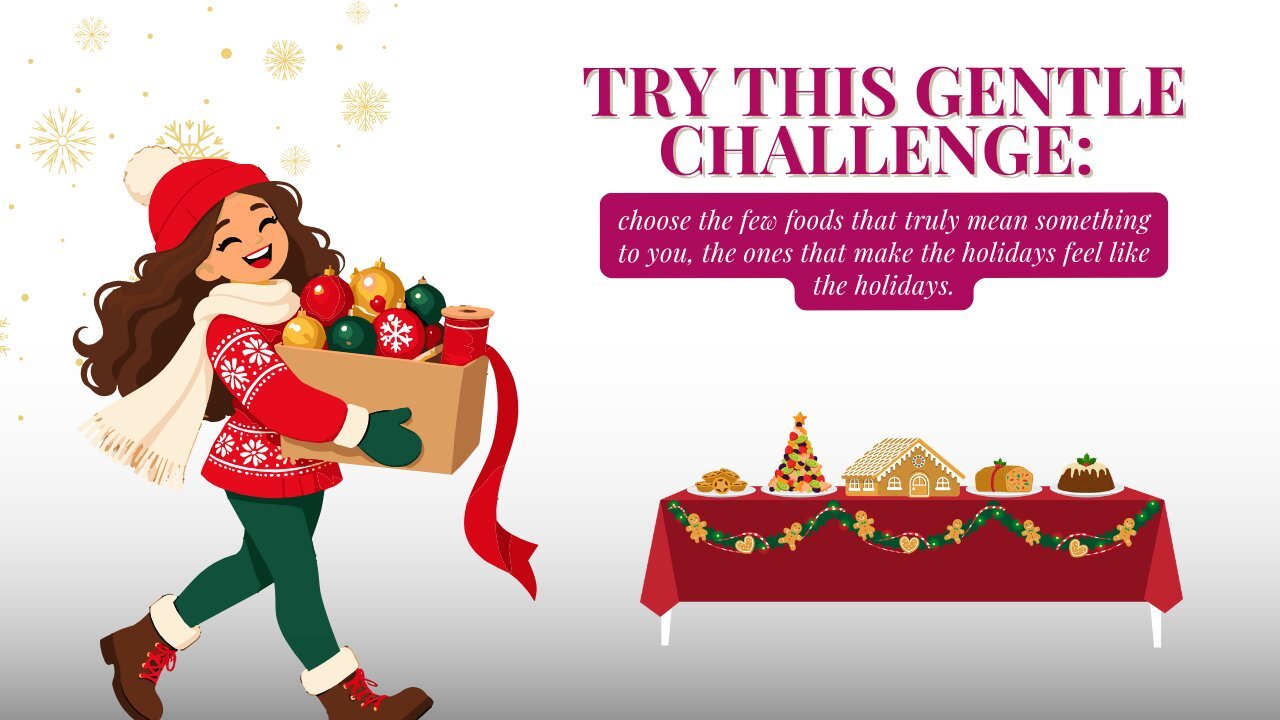
So here’s the gentle challenge: pick the few foods that truly mean something to you, the ones the holidays wouldn’t feel like the holidays without. Savor them, then move on without needing seconds, thirds, or a week of leftovers. And don’t skip meals to “save up” calories for the big dinner, since restricting all day and then overeating usually leaves you feeling sick and uncomfortable. Balance is the real goal: one meal won’t undo your hard work, but if every single day starts to feel like a special treat, that’s a good cue to dial it back.

Realistic Holiday Goals: Consistency Over Perfection
The first thing I always encourage is setting realistic goals for the holiday season. This is not the time of year when most people see big weight loss, thanks to all the special meals, parties, and travel. So the goal I usually suggest is simply to maintain: when you step on the scale at the end of the year, the number should ideally match where it is right now. If you’re in the middle of a weight-loss journey, it’s totally okay if the scale doesn’t budge downward during this stretch. Giving yourself a little grace is a healthy mindset, not a failure.
Realistic also means not trying to make up for the whole year in the last six weeks. If you’re feeling that “I only have a month left!” pressure about your 2026 goals, this is the moment to step back from all-or-nothing thinking. Going extreme usually backfires and leaves you burned out and frustrated, and you simply can’t undo eleven months in a few weeks. Focus on moderation now, then get back to consistent routines in the new year.
The flip side is that this isn’t the time to abandon what you’ve built, either. If you’ve got solid habits, like regular balanced meals, staying active, or taking a medication that’s helping you, keep them going through the season. Those routines are what make maintenance realistic and keep a few indulgent meals from throwing you off course. So aim for consistency rather than perfection: you don’t have to wait until January to make healthy changes, but you also don’t need to pile on pressure and ruin your holidays in the process.
Keep Moving This Season: Something Beats Nothing
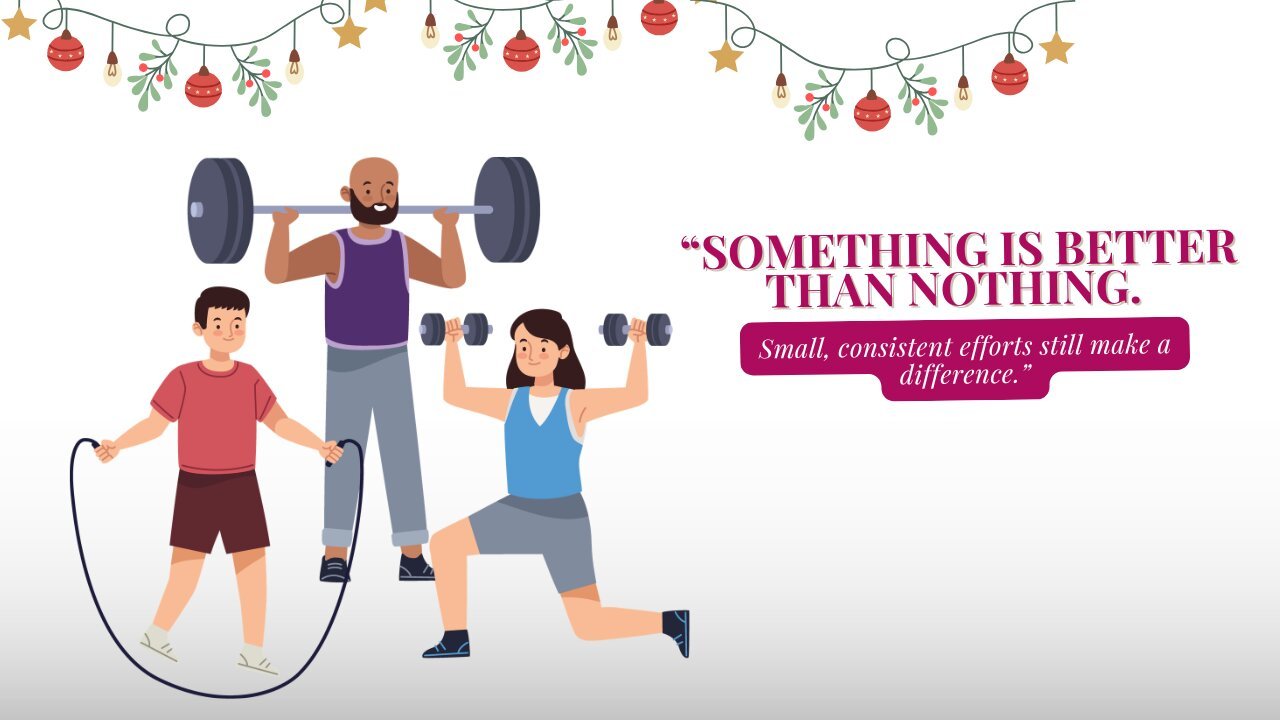
Let’s talk about movement, because it’s important for everyone’s health, no matter what the scale says. The holidays make it surprisingly tricky, though. Daylight is short, the weather might not cooperate (although if you live somewhere warm, this could actually be the perfect time to walk outside), and your calendar is packed with parties and errands. So here’s the mindset to adopt: something is better than nothing. This may not be the season for your most intense workouts, but small, consistent efforts are still powerful.
A great starting point is a simple 10-minute walk once a day after a meal. It can happen on your lunch break, after breakfast, or after dinner if it’s safe where you live. Walking after meals is especially helpful for blood sugar, so it’s a really smart habit to build right now. If you want to add strength training, a home-based program with little to no equipment is a wonderful option. You can use a light weight, or just fill a bag with heavy items from around the house. Two days a week is plenty to get started, and you don’t need to be on a GLP-1 medication to benefit from it.
Another easy option is “exercise snacks,” which are tiny bouts of movement scattered throughout your day. The idea is to do 10 squats and a few push-ups, about five times a day. And push-ups can absolutely be modified, so if you need to do them against a wall, that totally counts. These little bursts are a low-pressure way to build momentum, and for some people they become a stepping stone into more structured strength training.
Finally, try to build movement into your holiday traditions. Instead of always gathering around food, suggest a walk to look at Christmas lights, or go ice-skating, bowling, or sledding with friends, family, or kids who are off school. You get fresh air, you get to move, and you make fun memories at the same time. Pick one of these options, stay consistent, and you’ll be setting yourself up to feel great heading into the new year.
Fueling Your Holidays: Protein, Fiber, and One Simple Strategy
The holidays aren’t just a time to moderate the treats, they’re also a time to, like, stay on top of balanced nutrition. It’s not only about what you’re limiting; it’s about what you’re making sure to include. The two nutrients I emphasize the most are protein and fiber, with the fiber coming mostly from produce. Both help you feel full and satisfied throughout the day, which is a big deal when there are cookies on every counter and a party every weekend. Feeling full means you’re less likely to overdo it on the treats, and your energy stays steadier too. When your regular meals are solid, it’s so much easier to enjoy the festive stuff without feeling out of control around it.
To make this practical, a good goal is about 20 grams of protein per meal. That might look like eggs or Greek yogurt at breakfast, chicken or beans at lunch, and fish, turkey, or tofu at dinner. Another simple goal is to include a fruit or vegetable with every meal, whether that’s berries with your oatmeal, a side salad, or some roasted veggies next to the main dish. And if you already have a routine that’s working well for you, the goal can simply be to keep doing it.
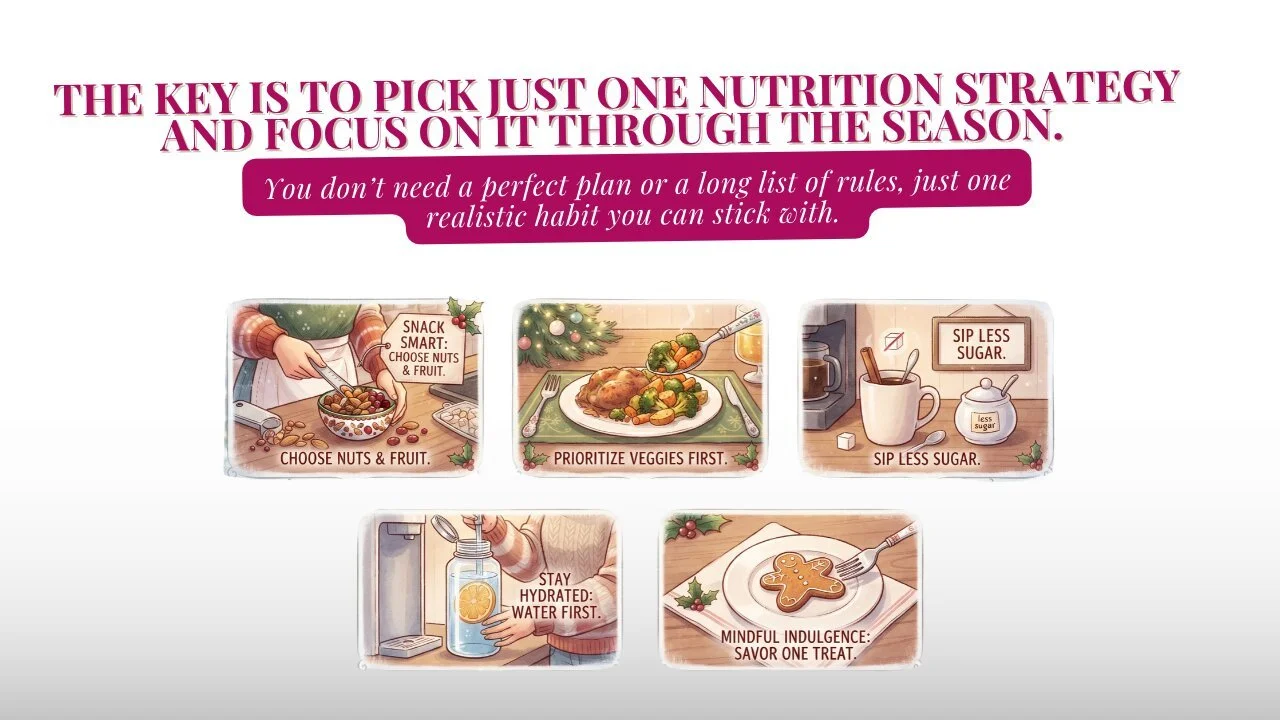
The key is to pick just one nutrition strategy and focus on it through the season. You don’t need a perfect plan or a long list of rules, just one realistic habit you can stick with. Choose your protein goal, your produce goal, or your current routine, and let it carry you through the holidays feeling nourished, satisfied, and still able to enjoy the good stuff.

Rethinking the Holiday Drink: Why Going Alcohol-Free Might Be Worth It
Alcohol is something I bring up more and more these days, and the research keeps pointing in the same direction: it just isn’t great for our health. It affects sleep quality, so even if it helps you doze off, you tend to get less restorative rest. It carries long-term health consequences, and it certainly doesn’t do any favors for weight loss, since it adds extra calories and can make it harder to stick with your goals. Plenty of people like the idea of a “dry January” to reset after the holidays, but this might be the perfect time to flip the script and start your alcohol-free stretch now instead of waiting.
The holiday season is exactly when alcohol sneaks in more often. Between office parties, family gatherings, festive cocktails, and toasts at every get-together, it’s easy for a drink here and there to turn into a pretty regular habit through the whole season. Because it all feels celebratory, you might not even notice how much it’s adding up, and that can quietly chip away at your sleep, your energy, and your consistency with other healthy habits.
So one health goal to consider is skipping alcohol altogether through the end of the year. It might sound ambitious, but the easiest way to make it work is to swap in something fun rather than just going without. Think sparkling water with cranberry and a squeeze of lime, warm spiced apple cider, a pretty mocktail, or a festive hot cocoa. Having a special drink in your hand keeps you part of the celebration, and you may find you sleep better, wake up with more energy, and head into the new year already feeling like you’ve got a strong start.

Protecting Your Peace: Mental Health Maintenance During the Holidays
Mental health can be a really big challenge this time of year, so it’s worth bringing some intention to it. One important note: this advice is for maintaining your mood and stress levels, not treating a mental health condition. If you’re dealing with severe depression, please reach out to a medical professional, since you may need more support, whether that’s therapy, starting medication, or adjusting what you already take. Getting that help is a sign of strength, not weakness.
For everyone else, start by protecting your sleep. It affects cravings, hunger, energy, and mood, yet it’s usually the first thing to go when the calendar fills up, so aim for a consistent bedtime and seven and a half to eight hours a night. Then tackle stress, which climbs with family dynamics, travel, end-of-year finances, and work deadlines. Think ahead about what will truly bring you joy, what really needs to get done, and what you’re only doing out of pressure. It’s totally okay to say no to the rest and avoid overscheduling.
A small mindfulness practice can help too. Try meditating for five minutes a day, or keep a gratitude journal where you jot down one to three things you’re thankful for, which research links to lower stress. They don’t have to be big: working plumbing, food on your plate, and healthy loved ones all count. With Thanksgiving this week, it’s a perfect time to start. You don’t need to do everything, so pick what feels doable and let those small habits keep you steady through the season.
GLP-1s and the Holidays: Enjoying the Season on Your Medication
If this is your first holiday season on a GLP-1 (or your second, third, or fifth), it’s worth knowing these medications may change how you eat this time of year. Most people still really enjoy food on them though. You can savor a delicious holiday meal just as much as before, just in smaller portions. But you shouldn’t feel like you hate food or are disgusted by it, so if your medication has taken away your enjoyment of eating altogether, check in with your prescriber about a dose adjustment or a different medication.
Portion size is the big thing to keep in mind. You can still enjoy your holiday favorites, but a very large portion or a heavy, high-fat meal can trigger more reflux, nausea, and bloating. Moderation helps you feel good and stay on track with your goals. The usual tips still apply too: prioritize protein and fiber at meals and stay well hydrated, because those habits are what help you feel your best on these meds.
Please keep taking your medication through the season. It’s tempting to think, “I’ll just pause it so I can really enjoy the food,” but that’s usually the wrong approach. If you truly can’t enjoy the holidays on your current regimen, talk with your prescriber about changing or lowering the dose rather than stopping on your own. These meds are there to support your healthy habits and goals, so keep using them the way they’ve been helping you.
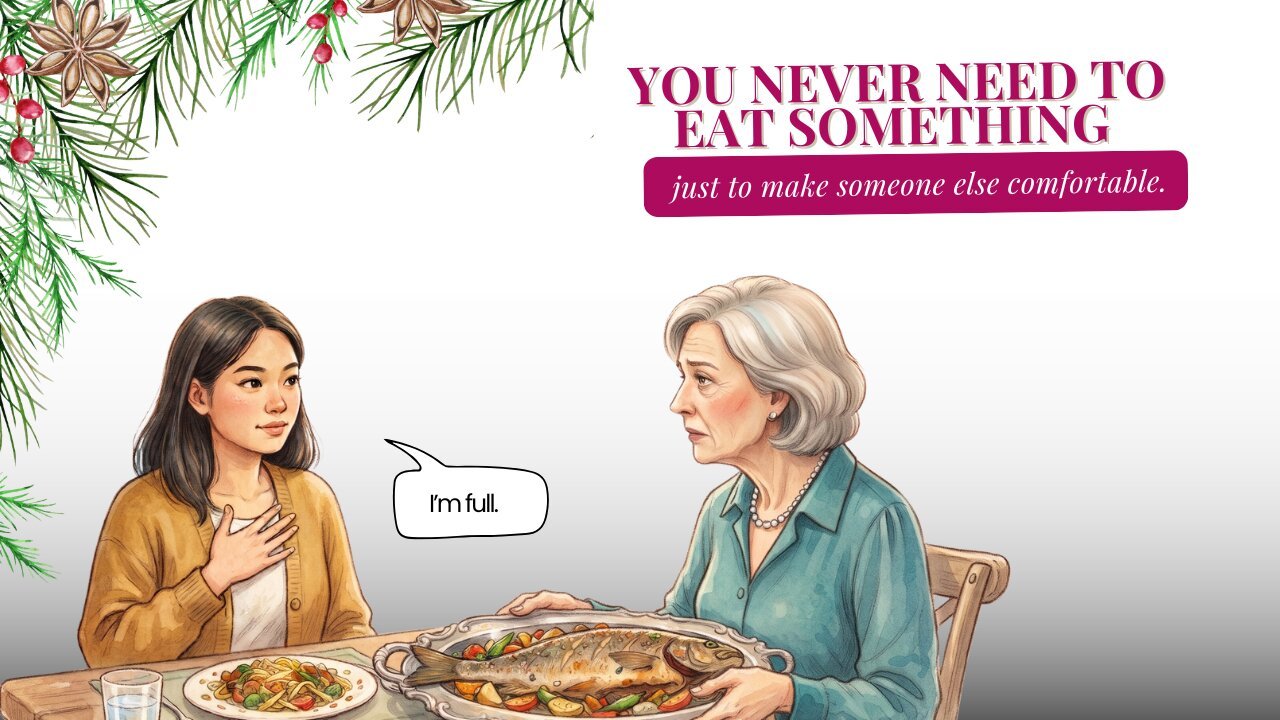
Social situations can get tricky when your appetite is suppressed, since well-meaning people may pressure you to eat. You’re allowed to politely say you’re full or not hungry. If someone made gorgeous sugar cookies, you can say, “Oh my gosh, those are so beautiful!” and enjoy them with your eyes, or ask, “Can I take some home with me?” so you can have one later when you actually want it. You never need to eat something just to make someone else comfortable.
The Holiday Health Challenge: Pick Your Habits and Stick With Them
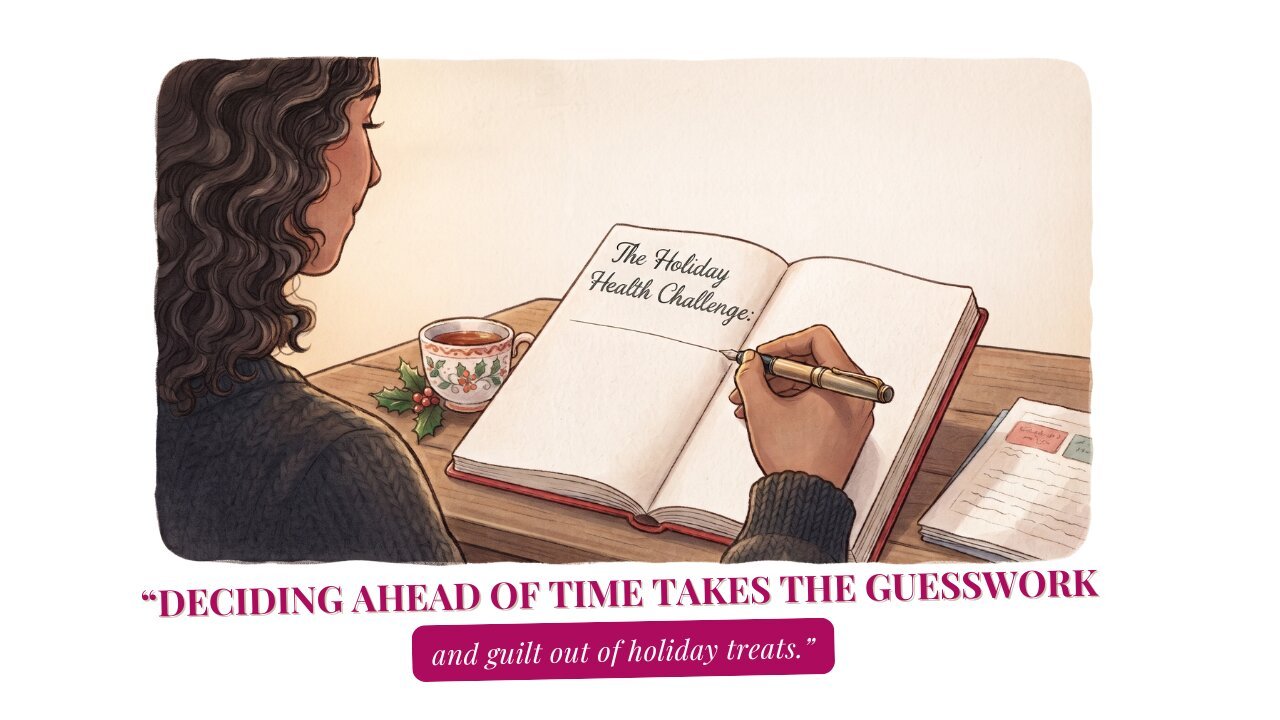
This challenge pulls together everything we’ve talked about so far. The idea is simple: choose a few habits to stick with through the end of the year, and keep it realistic. There’s a printable PDF in the show notes so you can check off your choices, because writing it down makes it so much easier to follow through.
Start with movement and pick one of three options: a 10-minute walk once a day after a meal, the GLP Strong program (just 20 minutes of strength training twice a week, at glpstrong.com), or exercise snacks, which are 10 squats and five push-ups, modified is totally fine, five times throughout the day. For nutrition, choose at least one: skip alcohol for the rest of the year, aim for at least 20 grams of protein with each meal, or include produce at every meal, so at least three times a day. Then pick one daily habit: keep a consistent bedtime, meditate for five minutes, or start a gratitude journal where you write down three things you’re thankful for each day. None of these are complicated, and that’s kind of the point, since small, doable habits are the ones that actually stick.
The bonus challenge might honestly be the most important one: the holiday treat challenge. Take time now to pre-commit to two holiday treats you’d truly miss if they weren’t part of the season. Mine are sugar cookies with frosting, because I love decorating them with my family and getting silly and creative, and pumpkin pie with whipped cream. Those are the two I’m going to enjoy mindfully, in moderation, and then move on from. Deciding ahead of time takes the guesswork and guilt out of it, so you can fully savor them.
For everything else that comes your way, pause and ask, “Do I really want this? Does it serve me? Or is it okay to skip it this year to reach my goals?” Sometimes the answer will be yes, and that’s fine, and sometimes you’ll realize you’re happy to pass. Either way, you’re making an intentional choice instead of going on autopilot. Choose your habits, pick your two treats, and enjoy a happy, healthy holiday season.
The holidays don’t have to be a choice between enjoying yourself and taking care of your health. With a few realistic habits, two treats you’ve pre-committed to, and a little grace along the way, you can have both.
Before you go, pick your goals for the holiday health challenge: one for movement, one for nutrition, one daily habit, and your two holiday treats. The printable PDF in the show notes makes it easy to check off your choices. If you have a rough day or a heavy meal, just return to your plan at the next one.
Every tip and challenge is covered in more detail in the full episode, available now on your favorite podcast app, with the link in the show notes. Here’s to finishing this year feeling good, not guilty. I’ll see you in the next episode!
More from The Dr. Francavilla Show:
Subscribe to The Dr. Francavilla Show on