
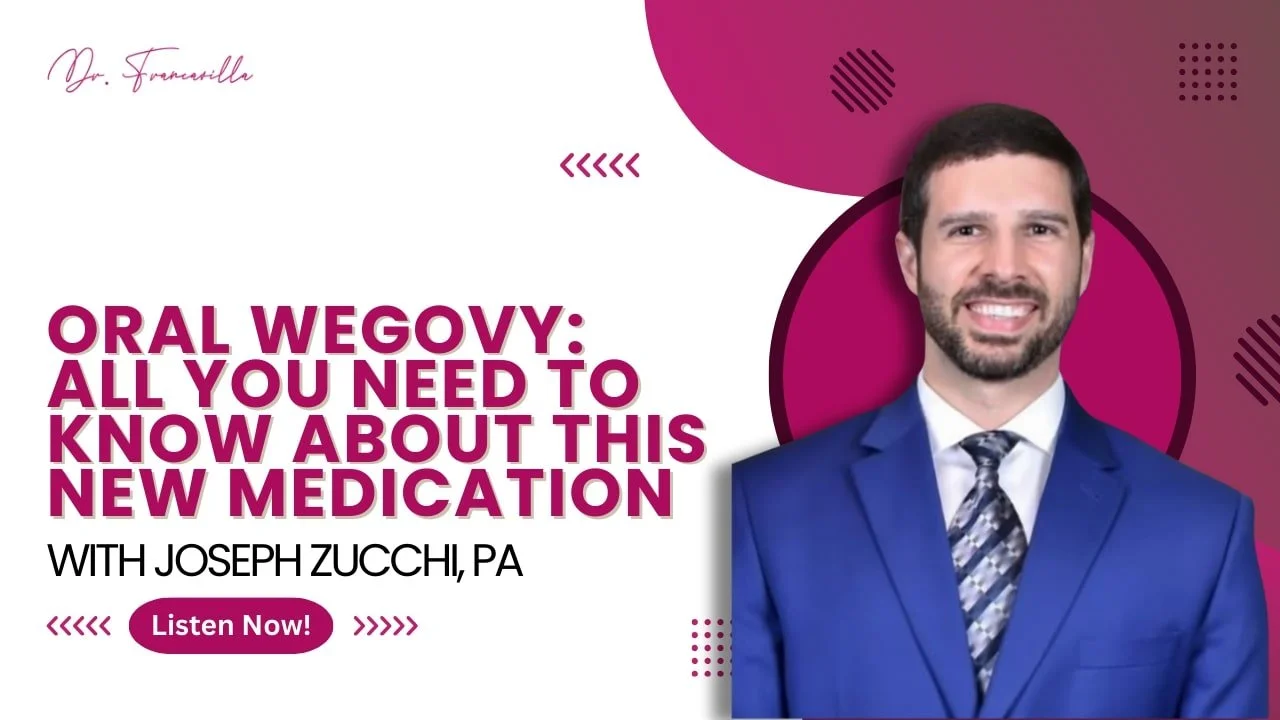
Oral Wegovy: All You Need to Know About This New Medication, with Joseph Zucchi
Ever wondered what’s really changing the game in weight loss treatments?
Well, oral Wegovy might be it. Unlike other GLP-1 medications that require weekly injections, this is the first long-term weight-loss pill in its class, and for many people, the idea of taking a daily tablet just feels way more doable. It’s a big deal because it gives patients more flexibility, lowers mental barriers, and makes managing weight feel like something that can actually fit into real life.
To give us some real-world perspective, the episode’s guest is Joseph Zucchi, a physician assistant and personal trainer with over a decade of experience in obesity medicine. He leads a multidisciplinary team in Salem, New Hampshire, focused on helping patients achieve sustainable weight loss through a mix of fitness, nutrition, and medical care. Joe has been recognized for his work—leading his center to win awards, writing for outlets like the Wall Street Journal, MedPage Today, Healthline, and Doximity, and advocating for patient access to treatments like Zepbound. His perspective helps show that oral Wegovy isn’t just another pill—it’s part of a thoughtfully designed, patient-centered approach to obesity care.
So, what makes oral Wegovy so different from other options, and who might it actually help? Let’s break it down in simple terms, from how it works in the body to what success looks like, proper dosing, side effects, and what patients can realistically expect when this pill becomes part of a long-term weight management plan.
Breaking Down GLP-1 Medications
GLP-1 medications may sound brand new, but they’ve actually been around longer than most people realize. The first one was approved back in 2005, and if earlier clinical trials are included, there’s close to 30 years of data behind their use in diabetes and obesity care. That long history matters. It’s part of why these medications are so well studied today. GLP-1 stands for glucagon-like peptide-1, which is a hormone the body naturally releases after eating. It helps signal fullness and plays a role in how the body handles blood sugar and metabolism. GLP-1 medications basically copy this hormone, but in a way that lasts much longer and works more consistently.
The body’s natural GLP-1 breaks down very fast because of an enzyme called DPP-4. That’s why supplements that claim to “boost GLP-1 naturally” don’t really do much. Prescription GLP-1 medications are designed to resist that breakdown, so they stay active in the body longer. Over time, these treatments have also gotten easier to use, moving from daily injections to weekly injections, and now even oral pill options. One of their main effects happens in the brain, where they help reduce hunger and appetite. Many patients describe fewer cravings and a drop in constant thoughts about food, often called “food noise,” which can feel like a big mental shift.
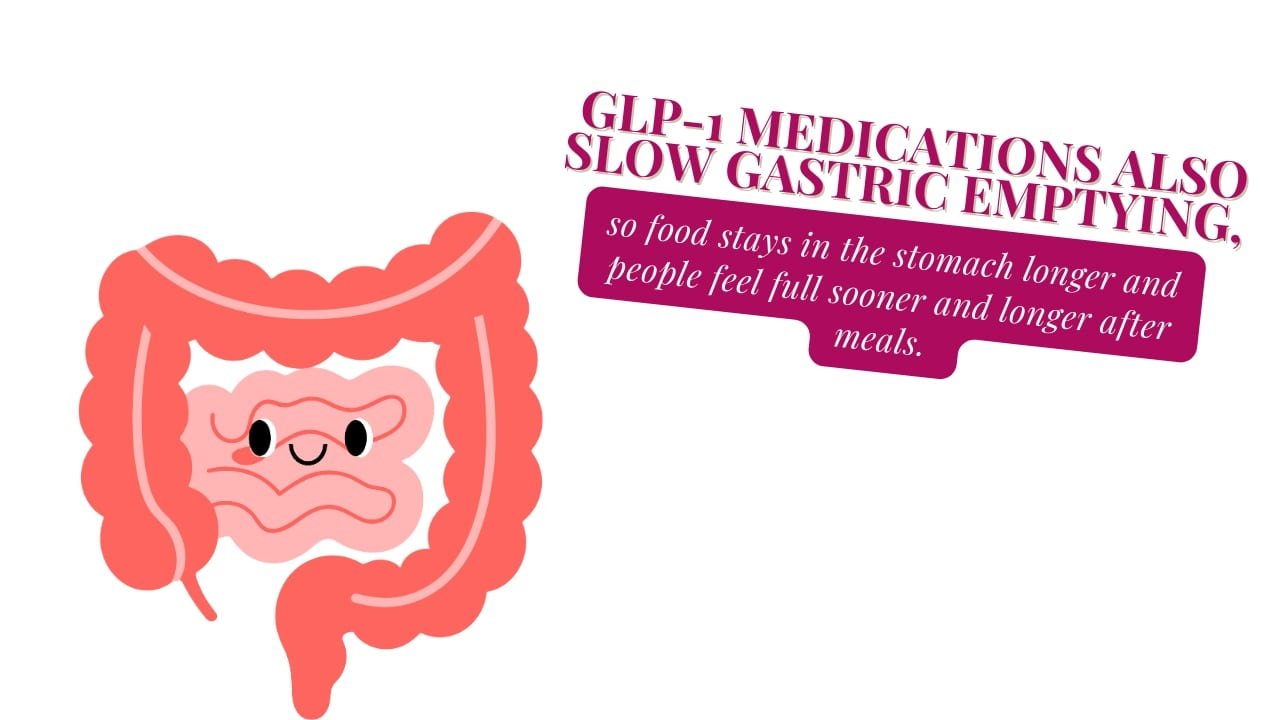
GLP-1 medications also slow gastric emptying, so food stays in the stomach longer and people feel full sooner and longer after meals. On the metabolic side, they help the body release insulin only when it’s needed and improve insulin sensitivity, which supports steadier blood sugar levels and overall metabolic health. Research has also shown added benefits, including anti-inflammatory effects and cardiovascular risk reduction. Wegovy is FDA-approved to lower the risk of heart attack and stroke in certain patients in addition to treating MASH, an advanced form of fatty liver disease, while Zepbound is approved for sleep apnea. Taken together, GLP-1 medications aren’t only about weight loss—they’re part of a broader approach to treating obesity as a chronic condition with many connected health concerns.
Oral Wegovy and the Future of GLP-1 Weight Treatments
Oral Wegovy is kind of a big deal in weight management. It’s the first GLP-1 medication that comes as a pill for long-term weight loss, which is a huge shift from injections. For a lot of people, taking a daily pill feels way more doable than getting a weekly shot. It makes treatment feel less intimidating and easier to fit into everyday life, giving patients and doctors a new, flexible option.
Some people—especially doctors—have been a little hesitant about oral Wegovy, mostly because they compare it to Rybelsus, another pill used for type 2 diabetes. That makes sense at first glance, but the comparison isn’t really fair. Rybelsus uses lower doses and an older formula that isn’t absorbed very well, so weight loss was modest and side effects sometimes worse. Oral Wegovy, on the other hand, is a higher dose—up to 25 mg—and uses a newer formula that gets more of the medication into your system.
Put those together, and the results are pretty impressive. Clinical trials show people lose about 14–16% of their body weight, which is similar to the injectable version. Plus, the studies focused on people with overweight or obesity, not diabetes, so the results are really relevant for weight management. Basically, oral Wegovy isn’t just Rybelsus in a different form—it’s a carefully designed pill that works. For many patients, it offers a more flexible, personalized way to approach weight loss that actually fits into real life.
What Counts as Success on Oral Wegovy
One of the first questions people usually ask about weight loss medications is, “Okay, but what does success actually look like?” With oral semaglutide, the answer is pretty encouraging—and it lines up closely with what we know from injectable GLP-1s. Clinical trials, especially the OASIS-4 study, looked at people with overweight or obesity who were trying to lose weight—not patients with diabetes—so the results give a clearer picture of how the medication works for long-term weight management.
The numbers can feel a little confusing at first because trials report weight loss in two ways. One reflects people who took the medication exactly as prescribed, which tends to be higher. The other includes everyone, even people who missed doses or stopped early. In OASIS-4, those who stayed on the pill lost about 16.6% of their body weight, while the overall average was around 13.6%. That puts oral semaglutide in roughly the 14–17% range—basically similar to injectable Wegovy. Some people lost more, some less, and that’s completely normal.
It’s also important to know that success doesn’t have to mean huge weight loss. Even a 5–10% drop in body weight is a meaningful win because it improves blood sugar, heart health, and other conditions linked to obesity. In the trials, about 75% of participants lost at least 5% of their total weight, around 60% hit 10%, and nearly half reached 15%. That 5% mark is key—if someone doesn’t get there after several months on the full dose, it may mean this particular medication isn’t the best fit, and that’s totally fine. The great thing is having both oral and injectable options makes it easier to find the approach that works best for each person’s body, lifestyle, and preferences.
What Patients Should Know About Oral Wegovy Side Effects
Once people see how well oral Wegovy works, the next question is usually about side effects—and honestly, that’s totally fair. There’s a lot of buzz online and some scary-sounding stories, but the actual data tells a calmer, more realistic story. Overall, the side effects of oral Wegovy are pretty similar to the injectable version, which is reassuring. Most of them are digestive-related, which is what doctors expect with this type of medication.
In trials, about 45% of people experienced nausea, which was basically the same for the pill and the injection. Vomiting was a little more common with the oral version in the OASIS-4 study—around six percentage points higher—but that trial was small, so it might look different as more people take it. Constipation and diarrhea happened at similar rates, and constipation was actually slightly less common with the pill. The main takeaway? Oral Wegovy doesn’t cause dramatically worse side effects, though, of course, everyone’s experience can differ. Some people tolerate one form better than the other, and that’s totally normal.
Dose matters a lot, too. Earlier tests used higher doses, like 50 mg, which did help people lose a bit more weight but also came with more side effects. The 25 mg dose ended up being the “sweet spot”—it gives strong results without making side effects worse than the injection. It’s a good reminder that more isn’t always better. For most patients, oral Wegovy strikes a solid balance between effectiveness and tolerability, making it a realistic and practical option for long-term weight management.
The Technology Behind Oral Wegovy
As GLP-1 medications have become more popular, the internet has been flooded with ads for “oral semaglutide,” which is where a lot of confusion starts. Before brand-name oral Wegovy was approved, there was no FDA-approved GLP-1 pill for weight loss. Still, people were being sold pills, drops, patches, and sublingual products claiming to do the same thing. The issue is that most of these options don’t have clinical data, proven absorption, or real regulatory oversight. In many cases, they don’t work—and some even carry pretty significant risks.
What makes oral Wegovy different is the technology behind it. It uses a compound called SNAC (Sodium N-[8-(2-hydroxybenzoyl) amino] caprylate), which solves a real biological problem. Semaglutide is a fragile protein, and stomach acid would normally break it down almost immediately, much like the protein in food. SNAC acts as a temporary shield, allowing the medication to pass through the stomach lining and enter the bloodstream. Even with this protection, only about 1–2% of the oral dose is absorbed. That low absorption rate is why oral Wegovy requires a much higher daily dose—up to 25 mg—compared to the 2.4 mg weekly injection, which is almost fully absorbed.
This is also why taking oral Wegovy exactly as prescribed matters so much. It must be taken once daily, first thing in the morning, on a completely empty stomach, with less than four ounces of plain water. No food, no coffee, no other drinks or medications. After taking the pill, it’s important to wait at least 30 minutes before eating, drinking anything else, or taking supplements or other meds. That fasting window allows absorption to happen, and even small changes—like sipping coffee too soon—can sharply reduce how well it works. Many clinicians suggest keeping the pill by the bedside and taking it immediately upon waking to make the routine easier.
The medication is also started gradually to improve tolerability. Dosing begins at 1.5 mg daily, then increases to 4 mg, 9 mg, and eventually reaches the FDA-approved maintenance dose of 25 mg daily for weight loss. Providers can slow this schedule if side effects come up, which is common and expected. Absorption can also vary between people, especially in those with certain types of gastric surgery, and blood levels seem to be slightly less consistent than with injections. Still, when taken correctly and consistently, oral Wegovy can be an effective option. It isn’t just semaglutide in a pill—it’s a carefully designed solution to a real absorption challenge, and that’s why not all “oral semaglutide” products are created equal.
How to Transition Safely Between Wegovy Forms
Some people are naturally drawn to oral Wegovy, and honestly, the reasons make a lot of sense. For some, a daily pill just feels easier or sometimes even cheaper. Others really don’t love the idea of giving themselves a weekly injection, so a tablet feels more comfortable. Whatever the reason, it’s good to know that switching between the shot and the pill is totally possible—as long as it’s done carefully and with the right timing.
If someone is taking the full 2.4 mg weekly injection and wants to move to oral Wegovy, the usual recommendation is to start the 25 mg pill one week after the last shot, basically when the next injection would have been due. This helps keep the medication working steadily. If switching the other way—from the pill to the injection—the shot can usually be started the next day since the pill is taken every day. And if the full 25 mg pill feels like too much, doctors may suggest starting with a smaller injection, like 1.7 mg. Many clinicians take it slow in real life, focusing on making sure patients feel okay and can stick with the treatment, rather than rushing for bigger weight loss.
Having the right provider really makes a difference as well. Research shows that people who work with obesity specialists are much more likely to stay on GLP-1 therapy long term compared to those treated only through a general doctor or online services. These specialists help adjust doses, manage side effects, set realistic expectations, and guide healthy habits like nutrition and exercise. Doctors certified by the American Board of Obesity Medicine, along with experienced PAs and NPs, are trained to handle these switches safely. Working with someone knowledgeable and supportive can make the process less stressful and way easier to stick with over time.
Is Oral Wegovy Right for You? Who Benefits Most and Who Should Avoid It
When it comes to who might benefit most from oral Wegovy, a few clear patterns tend to show up. This option can be a great fit for people who are hesitant about injections—especially those with needle anxiety—or for anyone who feels that shots just seem more intimidating or intense. Taking a daily pill can feel more familiar, like managing blood pressure or cholesterol, and for some patients that makes starting treatment feel more approachable. Cost can also matter, and oral Wegovy is currently one of the more affordable FDA-approved GLP-1 options. It may also work well as a maintenance tool for patients who have already reached their goal weight and want to stay there.
That said, injectable Wegovy still makes a lot of sense for many people. Once-weekly dosing is convenient and delivers a very steady medication level, without the need to think about fasting or morning routines. Oral Wegovy requires more structure, since it must be taken first thing in the morning on an empty stomach. Still, the pill can be a really good alternative for patients who travel often, don’t want to deal with refrigeration, prefer something more discreet, or simply like the idea of a daily routine. Some even find that taking a pill each morning becomes a small, intentional reminder to stay focused on their health, which can be surprisingly motivating.
Oral Wegovy isn’t for everyone, though. It’s approved only for adults 18 and older, unlike the injectable version, which can be used in adolescents. Patients who can’t reliably follow the empty-stomach dosing instructions, who have had certain stomach surgeries, or who take medications like levothyroxine that also require fasting may struggle with the timing. And of course, all standard GLP-1 contraindications still apply, including a personal or family history of medullary thyroid cancer or multiple endocrine neoplasia type 2. That’s why this medication should always be started with the guidance of a knowledgeable healthcare provider. Oral Wegovy offers a new and helpful option—but the best results come from choosing the right tool for the right person, with the right support in place.
Oral Wegovy: Cost, Coverage, and What to Expect in 2026
Oral Wegovy is kind of a game-changer in obesity medicine, giving patients a flexible option that wasn’t really available before. One of the first questions people usually ask is about cost, as affordability often determines whether someone can actually start or stick with therapy. As of January 2026, oral Wegovy is the most affordable FDA-approved GLP-1 medication for obesity. While the list price is $1,349, most patients won’t pay that full amount thanks to Novo Nordisk’s savings programs. Lower doses, like 1.5 mg and 4 mg, are around $149 per month until mid-April, and the higher doses—9 mg and 25 mg—are $299 per month. Compared to previous years, that’s a pretty big drop, which makes it more realistic for many patients.
Insurance coverage is another key piece of the puzzle. Like the injectable version, coverage for oral Wegovy varies by plan and may require prior authorization. Some commercial insurance plans do cover it, and a Wegovy savings card can knock up to $100 off out-of-pocket costs. Coverage isn’t universal yet, but the hope is that as prices continue to decrease and the government negotiates drug costs, access will get easier for more people. Even without perfect coverage, the combination of savings programs and insurance options makes this medication way more attainable than many initially assume.
From a clinical perspective, the real benefit is the flexibility oral Wegovy provides. For patients who prefer a pill over a weekly injection, it’s an effective alternative when taken correctly. This makes it easier for providers to tailor treatment plans based on lifestyle, routines, and personal preference, while still keeping the focus on a comprehensive approach that includes nutrition, exercise, and sustainable habits. Looking ahead, more oral GLP-1 medications are expected to hit the market, which will expand options even further. Overall, oral Wegovy in 2026 is not just cost-effective and accessible—it’s a practical, flexible tool that can be a key part of a personalized obesity management plan.
Oral Wegovy is opening up new possibilities in weight management, giving patients a flexible, effective option that fits into real life. Whether you’re curious about how it works, who it might help, or what to expect with dosing and side effects, understanding the science and the practical tips can make all the difference.
If you want to hear more insights from experts like Joseph Zucchi and get the full scoop on oral Wegovy straight from a clinician’s perspective, check out the latest episode of the podcast. You’ll get real-world advice, expert tips, and answers to the questions that matter most about this groundbreaking treatment.
More from The Dr. Francavilla Show:
Subscribe to The Dr. Francavilla Show on