
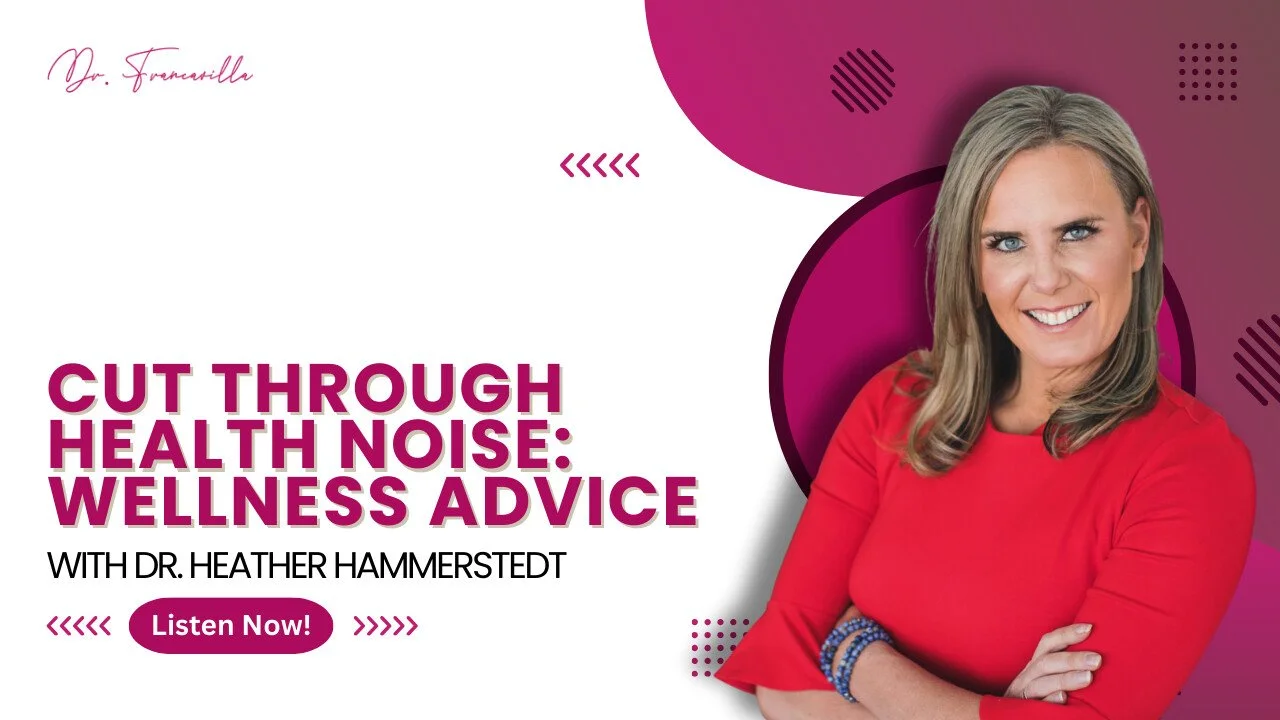
Cut Through Health Noise: Wellness Advice with Dr. Heather Hammerstedt
Feeling overwhelmed by all the health advice out there? Wondering what actually makes sense for your body, your life, and your goals?
In this episode, we’re sharing how to make sense of all the advice, tips, and trends you see on social media that can make you feel like you’re falling short. Joining me for this conversation is Dr. Heather Hammerstedt, an emergency medicine physician, lifestyle medicine physician, menopause medicine physician, and integrative nutrition coach. She’s also the CEO of Whole List, where she and her team help women understand their brains and bodies and pair that knowledge with food, health, and behavior change.
Dr. Hammerstedt’s journey began in medical school, clutching the book Healing with Whole Foods by Paul Pitchford, hoping to learn about holistic health through traditional Chinese medicine, only to realize that wasn’t part of the curriculum. She went on to become a certified health coach through the Institute of Integrative Nutrition in New York City and has spent more than 22 years guiding people through nutrition, behavior change, and lifestyle medicine. About eight years ago, she founded Whole List and has since added services focused on perimenopause and menopause, recognizing that the women who come to her often reflect her own life experience: midlife professionals balancing careers, family responsibilities, and unexpected changes in their bodies and moods.
Her philosophy is simple but powerful: women are often the center of their families’ well-being, so taking care of yourself ensures that everyone around you benefits. She helps clients find their personal “why” and builds practical strategies to get them where they want to go. In today’s nutrition and weight space, the conflicting advice can be overwhelming, and that’s exactly what we’re unpacking in this episode—how to focus on what actually works for your life, not what’s trendy or flashy, and how to build habits that are realistic, sustainable, and supportive of long-term health.
Lifestyle Medicine: Powerful, Personal, and Not a Cure-All
Lifestyle medicine feels like the cross between intuition and research. At its core, it’s about using evidence to help people improve their current and future metabolic health through things like nutrition, movement, sleep, stress management, and social connection. A lot of it emphasizes regular exercise, plant-forward eating, and practical ways to manage stress. But what’s really key is understanding how our brains and bodies work, since that’s what makes these changes actually stick. Stress, sleep, nutrition, and social connection have always mattered, but lifestyle medicine frames them in a way that helps changes stick.
Here’s the truth: there’s no one-size-fits-all approach. Health is super individualized, and sometimes even people doing “everything right” aren’t meeting their goals. That’s okay, it doesn’t mean the principles don’t work, it just means we have to get creative and flexible. Personalized care is where lifestyle medicine shines, but it does take time. Conversations about habits, past attempts, emotional patterns, and personal preferences can’t happen in a rushed 10-minute appointment or through a quick online survey. Figuring out what works for someone and what they actually enjoy requires patience, trust, and guidance. That’s what marks the difference between a fad solution and lasting change.
And honestly, the modern weight-loss world can be super overwhelming. Social media is flooded with advice that feels urgent, dramatic, and perfect for everyone, but remember it’s marketing, not medicine. Quick fixes and low-cost plans can feel convenient, but they rarely consider individual context or long-term success. Real progress comes from taking the time to understand your goals, your challenges, and your lifestyle, and then building habits that actually fit. It’s less flashy than clicking a few buttons, but, honestly, it actually works—and that’s way more empowering than chasing the latest trend.
Medication as a Tool, Not a Shortcut
Medications inevitably come up when we talk about modern weight care, especially now that GLP-1s are so easy to access online. The real question isn’t whether they work, but really how they fit into someone’s lifestyle.
What’s really interesting is what happens once people start seeing progress on these meds. For many, the frustration from past lifestyle efforts fades. Habits like eating well, moving regularly, and prioritizing sleep start to feel less like chores and more like support systems. For some, medication provides relief from the mental load of decades of dieting, tracking macros, and reading every nutrition study: they already know what to do, they just needed the capacity to actually do it. One of the most noticeable shifts is the quieting of “food noise.” When the constant mental math around calories and hunger eases, people regain mental space. Movement becomes enjoyable, food becomes fuel rather than a source of guilt, sleep improves, and negative self-talk softens.
A big part of this transformation is separating food from exercise. Food is fuel. Movement supports strength, mobility, cardiovascular health, and mental well-being; and it’s definitely not punishment. When food and movement aren’t tied together, something amazing happens: people move because it feels good, not to “earn” what they ate. Exercise becomes a choice—running because it energizes: strength training because it builds confidence, yoga because it soothes stress. The most effective approach is often the least flashy. Honest conversations, thoughtful support, and tools—lifestyle-based and/or medical—that work together instead of competing.
The Problem With “Everyone Should” Health Advice
In the health and wellness world, there’s a huge temptation to act like one size fits all. Everyone should do keto. Everyone should hit a certain protein goal. Everyone should follow the same plan. But honestly, that’s just not realistic. The truth is, nuance doesn’t go viral the way absolutes do. The most dramatic books and posts promise fast results and crystal-clear rules: eat this, never eat that, do this one thing and everything will magically work. Sure, they get clicks, but clicks don’t equal accuracy.
Quick fixes aren’t new, either. The desire for a fast, clean answer has always been human, but bodies and brains just don’t operate that way. Real health changes happen slowly because they involve biology, habits, and neural pathways that develop over time. So when something is framed as easy, fast, and universally correct, it’s usually only part of the picture, or based on someone’s limited perspective.
One of the biggest problems in modern health media is the flood of blanket statements aimed at midlife women. Messages like “women in their forties must never do this” or “every woman should do that” completely ignore individuality. By midlife, people have very different histories, different exercise routines, sleep patterns, stress levels, and relationships with food. Some have decades of structured movement under their belts, while others are just starting out. Sure, this approach is less flashy than the bold headlines, but it’s honest, sustainable, and ultimately far more effective.
The Problem With Rigid Nutrition and Exercise Rules
Health advice only works if it’s realistic. Like, if someone gives guidance that doesn’t actually fit into a person’s life, no matter how “science-backed” it sounds like, it stops being helpful. Instead of support, it just adds stress. A classic example comes up a lot with midlife women: the idea that you must eat within a strict window before or after exercise, or risk messing up cortisol, hormones, or metabolism. Or that myth that protein won’t work unless it’s perfectly timed, and missing that window supposedly ruins everything. Honestly, that kind of messaging just triggers anxiety. The better first question is: what fear is this advice really activating? Naming the fear makes the conversation so much more productive.
When it comes to exercise and nutrition, the real focus should be how the body actually feels. Some people crush it by eating before lifting; others can’t handle food before a run without feeling sick. Some thrive eating afterward, some prefer to wait. Workout type, intensity, personal history, all of it matters. Tiny tweaks like meal timing are far less important than sleep, stress management, consistency, and overall energy balance. Behavior change happens through small, workable steps. One habit at a time, layering in the next doable step. For example, if eating before a workout helps someone actually show up consistently, awesome. If not, forcing it just creates friction. Low-hanging fruit matters more, like getting seven hours of sleep beats perfect nutrient timing any day.
Context and understanding also make a huge difference. Knowing how protein is used over several hours, how carbs and fats fuel energy, and how muscle repair works can take the stress out of rigid rules. Protein alone doesn’t magically build muscle, and more isn’t always better, especially if strength training isn’t happening. Skepticism is healthy, too. Consider that any advice may have bias, whether personal, financial, or based on what worked for them at a specific time. What worked in the past may not work now or for anyone else, and that’s okay. The most effective care is flexible, curious, and individualized. It’s about understanding the body, reducing fear, and building changes that actually fit your life, not following a one-size-fits-all prescription.
Why the Basics Matter More Than Quick Fixes
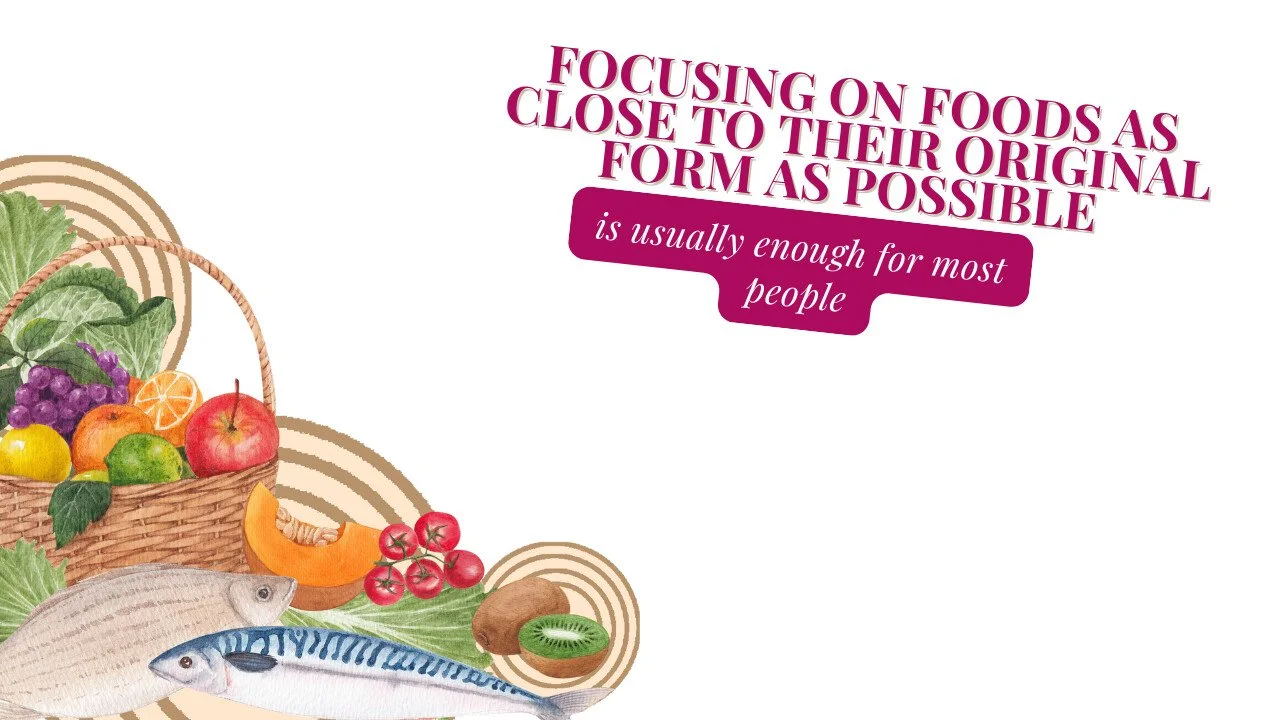
Sometimes the best health advice is this: keep things simple. Good nutrition doesn’t need to be complicated or overwhelming. Highly processed foods that are engineered to be extra desirable don’t often support long-term health. Focusing on foods as close to their original form is usually enough for most people. If it grew or it was born, it’s a solid starting point. When meals are built around real food, obsessing over macros or strict rules becomes far less necessary.
Movement matters too, but only if it’s something a person will actually do. Walking, Pilates, lifting weights, training for a race, whatever works for the individual counts. The “best” exercise is the one that fits into real life and can be done consistently. Remember, consistency always wins over perfection. And don’t forget sleep and stress. Restorative sleep and intentional ways to decompress aren’t luxuries, they’re essential. Life will always have stressors, but not all of them deserve constant space in the mind or body. Learning what to let go of and how to recover matters far more than chasing the latest health hack.
Nutrition, movement, sleep, and stress management form the foundation of health. Medical support can absolutely be layered on when needed, whether it’s integrating habits with a physician, discussing medications, or considering hormone therapy. But no pill, supplement, or low-cost online plan can replace the fundamentals. When those foundational pieces are in place, the body is better able to restore, adapt, and support long-term metabolic health. Everything else medications, tools, or protocols becomes an addition, not a substitute. Progress isn’t about chasing the newest solution; it’s about building a strong foundation and then adding what’s appropriate, at the right time, for the right person.
If today’s episode helped you feel a little more clarity and a lot less pressure, share it with someone who might need that reminder too. And don’t forget to subscribe so you never miss a conversation that helps you cut through the noise and focus on what truly works for your health and your life.
More from The Dr. Francavilla Show:
Subscribe to The Dr. Francavilla Show on