
Tips for Binge Eating from “I Blew My Diet Now What” Author Connie Benett
Have you ever found yourself mindlessly reaching for chips, popcorn, or sweets and wondered, “Why do I keep doing this even when I know better?”
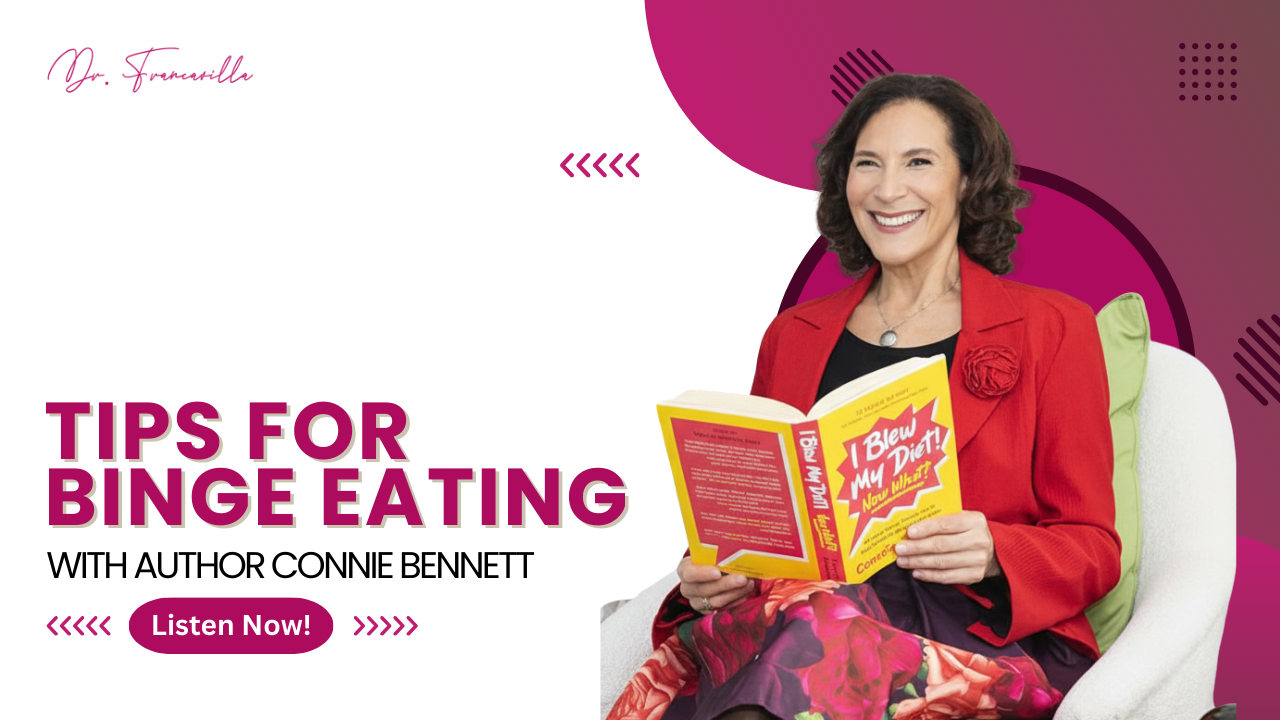
You’re definitely not alone—and that’s exactly what we’re diving into on this week’s episode of the podcast. Today, I’m joined by Connie Bennett, a self-described former sugar and carb addict who has turned her struggles into a mission to help others. Connie is a transformational speaker, TEDx presenter, journalist, and bestselling author of Sugar Shock and I Blew My Diet. Now What? She’s also a certified health coach, DreamBuilder coach, life coach, and Bounce Back Boldly coach, and the creator of National Bounce Back Month.
Connie has spent over seven years researching why people eat the way they do—and what quick, practical strategies actually work to regain control without relying on willpower alone. From emotional triggers like grief, breakups, or trauma, to the constant temptations of what she calls the “junk food jungle,” she’s seen it all. Today, she’s sharing science-backed techniques, like the FAST method and the hug-hum-rock relief process, that help people interrupt cravings, release feel-good chemicals in the brain, and make intentional food choices. Whether you’re struggling with sugar, processed carbs, or emotional eating, her insights give real tools for taking back your power—no shame, no guilt, just practical strategies that actually work.
So get ready to learn how to bounce back boldly, understand your triggers, and reclaim control over your food choices.
Bounce Back Boldly
By February, a lot of people have already drifted away from their New Year’s resolutions. Studies show that most resolutions fade within just a few weeks of January, but if that’s you, don’t stress. That’s actually the whole idea behind National Bounce Back Month. Recognized officially in February, it’s meant to give people a guilt-free reset—a chance to pause, reflect, and start again with a little more clarity and compassion. It’s not about beating yourself up; it’s about giving yourself permission to try again, smarter and more realistically.
The key is shifting the focus from rigid resolutions to achievable goals. Life happens—schedules get crazy, illness or injuries pop up, and sometimes even the most well-intentioned plans fall apart. Missing a workout, eating a sweet treat, or having a rough week doesn’t erase your effort or mean you’ve failed. Progress isn’t linear, and health changes take consistency over perfection. Setting flexible, realistic goals actually sets you up for long-term success because it accounts for real life, rather than expecting everything to go perfectly.
“Bouncing back boldly” is really about giving yourself grace and permission to start whenever it feels right. You don’t have to wait for January 1 to hit “restart.” It can be a Monday, your birthday, or literally any day that motivates you. If you slip up, just adjust and begin again the next day—no drama, no all-or-nothing thinking. February is a reminder that the year is still young, your goals are still valid, and it’s never too late to refocus. Health and behavior change work best when you stay consistent, flexible, and, most importantly, kind to yourself.
Why We Really Overeat: Understanding the Triggers
Overeating isn’t usually a willpower issue. It’s driven by the triggers behind food choices. Research shows that foods high in carbs and sugar are chosen for many reasons, with temptation being one of the most obvious. We live in what’s often called the “junk food jungle,” surrounded by highly palatable, easy-to-grab options everywhere. Blood sugar swings can also play a big role. When people don’t eat regularly, hunger can build quickly and set the stage for binge eating. This is one reason strategies like intermittent fasting may not work for everyone, especially those who already struggle with irregular eating patterns. Eating consistently throughout the day, starting with something as simple as breakfast, can help stabilize blood sugar and reduce the urge to overeat later.
Understanding why overeating happens is the real starting point for change. It isn’t about shaming past choices. It’s about recognizing what is driving behavior in the moment. Once emotional, environmental, or physiological triggers become clear, it becomes easier to make choices that align with goals instead of reacting on autopilot. That awareness creates space to interrupt patterns before they spiral into overeating.
One of the most important shifts is realizing that it isn’t just about what is being eaten, but what is happening underneath. Stress, trauma, and emotional patterns can influence food choices just as strongly as hunger. Once you understand the “why” behind your eating habits, you can create strategies that work for your body and your life. It’s a shift from restriction to awareness, and that’s where real, sustainable change begins.
Eating for How It Feels, Not the Food Rules
The real shift happens when the focus moves away from labeling foods as “good” or “bad” and toward noticing how food actually feels in the body. It’s not about weight loss or restriction. It’s about eating in a way that supports both physical and mental well-being. Paying attention to how food affects energy, mood, and focus can be far more helpful than following rigid rules.
A simple way to start is with awareness. After eating certain foods—like chips or cookies late at night—notice how the body feels the next day or even the day after. Some people experience what’s often called the “three-day crud”: feeling wired at first, then having poor sleep, followed by a day or two of feeling off before things settle again. That connection makes food choices feel more real and grounded, not abstract.
This mindset also lets go of the whole willpower narrative. Willpower isn’t reliable when the body and brain react so strongly to sugar and processed carbs. Understanding how cravings work—and choosing foods that support steady energy and mood—makes consistency much easier. When eating starts to feel better day to day, sticking with what works becomes more natural, not forced.
Stop Relying on Willpower and Start Eating Intentionally
Willpower gets talked about a lot, but honestly? It’s kind of a myth. Research shows that willpower tends to fade as the day goes on, and if you’re relying on it alone to make better food choices, you’re setting yourself up for disappointment. A much more effective approach, according to Connie, is what she calls goal power. This means getting super clear on why you want to eat healthy in the first place. Maybe it’s to have the energy to keep up with your kids, to play a game of pickleball without getting winded, or simply to feel strong and confident in your own body. Once you tap into these real motivations, that clarity becomes a far more reliable guide than relying on willpower alone.
Using goal power is all about giving yourself the pause to actually think before you eat. So if you’re tempted by a snack, take a moment and ask yourself, “Okay, how is this going to make me feel afterward? Why did I decide not to eat this in the first place?” This simple pause can make a huge difference. And it’s not about perfection—you can even give yourself permission to have the treat, like a few chips, while still staying in the driver’s seat. The key is portioning it out thoughtfully or putting it somewhere out of reach, so you’re choosing intentionally rather than just reacting. Over time, this habit of checking in with your goals and feelings builds a real sense of agency around food.
Another super important piece is knowing your trigger foods and how your body responds to them. Some people get a huge spike from sugar, while others might be fine with a small portion of chocolate or a few sweet potato chips. For example, dried fruits like apricots or dates can hit your bloodstream with sugar super fast, which may make cravings worse. By noticing which foods affect you physically or emotionally, you can make smarter decisions, like avoiding certain items altogether or limiting portions. The combination of goal power, thoughtful pausing, and awareness of triggers creates a practical, sustainable way to navigate cravings—without relying on the unreliable rollercoaster of willpower.
The FAST Technique: Quick Strategies to Beat Cravings
Cravings hit all of us, which is why the FAST technique is such a game-changer. It’s designed to work quickly, so you don’t have to struggle for long to regain control. Each part of FAST is built around small, research-backed actions that can calm your brain and help you make better choices. F stands for frolic with fractals. This means taking a moment to notice patterns in nature, like the shapes of leaves, the flow of rivers, or the waves of the ocean. Research shows that our brains respond to these repeating patterns with a sense of calm and focus, which can lower stress and give you a mental reset before a craving takes over.
The A and S in FAST focus on mindset and empowerment. A is for Applaud yourself—give yourself credit for noticing the craving and for your effort to take control of your eating. S is for Stand in your power—own the choice you’re about to make and remind yourself that you get to decide what’s best for your body and mood. These steps aren’t about guilt; they’re about awareness and conscious control.
T is for Test—try different tactics to see what works best for you. Not every strategy works for everyone, so FAST encourages experimentation. This way, you can find the approaches that actually help you stop a binge or manage cravings in real time.
One of the coolest parts of FAST is that it can be combined with other little tricks that release feel-good chemicals in your brain. For example, the hug-hum-rock relief process—hugging yourself, humming, and gently rocking—activates oxytocin and dopamine, giving you a sense of calm and comfort that can replace the rush you might get from sugar or processed carbs. The best part? You can do it anywhere—at home, in a movie theater, or even at a party—and no one has to know. By layering these fast, science-backed strategies, FAST gives you practical tools to take control of cravings, reduce emotional eating, and make food choices that actually support how you want to feel.
If you want to learn more from Connie, check out her books Sugar Shock and I Blew My Diet. Now What?, or visit her website at connieb.com for resources, tools, and a special gift for listeners.
Don’t forget to subscribe, leave a review, and share this episode with anyone who could use a little extra support with their health and food choices. We’ll see you next week with more tips to help you live your healthiest, happiest life!
More from The Dr. Francavilla Show:
Subscribe to The Dr. Francavilla Show on