
Wegovy, Zepbound, and Foundayo Coverage for Medicare Patients with the Bridge Program
What if Medicare finally made GLP-1 medications for weight management more affordable—could this be the moment that changes access for millions of people?
Today, we’re talking about something that has been years in the making in the world of obesity care: the expanded coverage of anti-obesity medications for patients with Medicare.
Starting July 1st, there is now a real opportunity for eligible Medicare beneficiaries to access GLP-1 receptor agonist medications at a much more affordable monthly cost through a new federal program. For many patients, this could represent a major shift in access to treatment that has historically been limited or completely out of reach under Medicare coverage rules.
This change didn’t happen overnight. It comes after years of advocacy, policy discussions, and ongoing efforts to recognize obesity as a chronic medical condition that deserves treatment just like any other disease.
In today’s episode, we’ll break down where this program came from, how it connects to broader efforts in obesity care, who it applies to, and what you need to know about eligibility, medications covered, and how the process actually works in real life.
How the Bridge Program Could Expand Access to Obesity Medications
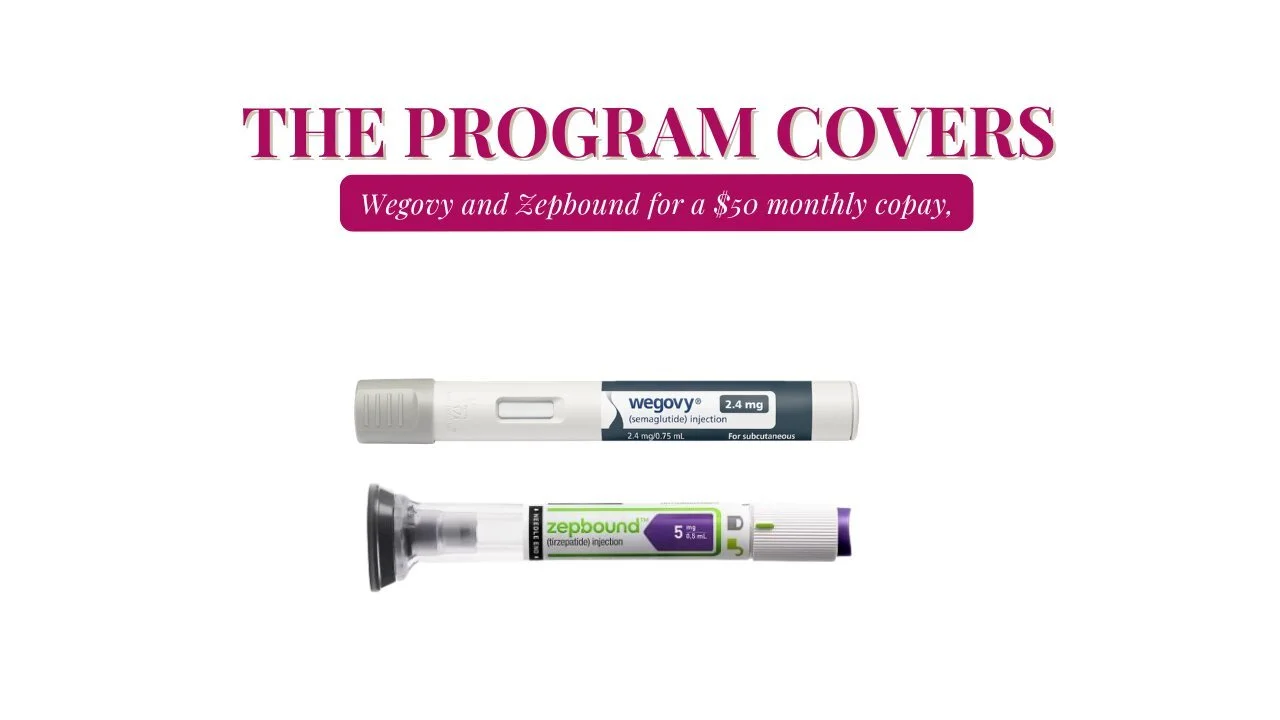
If you've been hearing buzz about Medicare finally covering obesity medications, here's the deal: it's called the Medicare GLP-1 Bridge, and it's a genuinely big moment for obesity care. Starting July 1, 2026, CMS began providing Part D beneficiaries with coverage of select GLP-1s for obesity through this short-term demonstration, and it's set to run through the end of December 2027, providing 18 months of coverage. (Quick refresher: Part D is the part of Medicare that covers prescription drugs, separate from Part A for hospital stays and Part B for doctor visits — and it's also the piece that, until now, has flat-out excluded weight-loss medications.) The program covers Wegovy and Zepbound for a $50 monthly copay, which is honestly a pretty huge deal considering Medicare has historically been a no-go zone for weight-loss drug coverage.
Here's the bigger picture, because this Bridge isn't happening in a vacuum — it's, like, step one of a two-step plan. CMS originally proposed this as a two-step approach: the temporary Bridge as a stopgap, paired with a longer-term CMMI model called BALANCE, which was supposed to layer in more comprehensive support like nutrition and lifestyle care on top of medication coverage. The catch? CMS has since announced an indefinite delay in implementing BALANCE for Medicare, even though state Medicaid agencies can still join the BALANCE model starting in May 2026. So for Medicare folks specifically, the Bridge is currently the only pathway in — which makes understanding it even more important.
Now, who actually qualifies? Eligibility is based on a BMI of 35 or more on its own, or a BMI of 27 or more plus other clinical criteria, and you do need to be enrolled in Medicare Part D to participate, even though the program technically runs outside the Part D benefit itself. That last part matters for budgeting purposes too — since the $50 copay won't count toward your Part D deductible or out-of-pocket spending cap, it's worth factoring that into the bigger financial picture. It's not a perfect, forever solution, and there's real uncertainty about what happens after 2027 since permanent coverage still needs Congress to act. But as a first real crack in the wall around obesity treatment coverage, the Bridge Program is something patients and families should know about, and lean into, while it lasts.
For the First Time, Medicare Is Opening the Door to Obesity Medications
The Bridge Program is designed to make GLP-1 receptor agonist medications for chronic weight management more affordable for Medicare beneficiaries. Through a partnership between the federal government and pharmaceutical companies, eligible patients will be able to access these medications for a fixed cost of $50 per month.
This is a notable change because Medicare has historically excluded coverage for medications prescribed specifically for weight loss. Since the creation of Medicare Part D, obesity medications have been largely unavailable to beneficiaries, regardless of medical need. For years, advocates have worked to change this through legislation such as the Treat and Reduce Obesity Act (TROA), which aims to expand access to comprehensive obesity treatment. While that legislation has not yet been passed, the Bridge Program offers a meaningful step forward.
The program officially begins on July 1, 2026, and is currently scheduled to run through December 2027. During that time, eligible Medicare beneficiaries may be able to access brand-name GLP-1 medications for chronic weight management at a significantly reduced cost. While many hope that broader and more permanent coverage options will follow, there is no guarantee about what will happen after the program ends. Because obesity is a chronic condition that often requires long-term treatment, some patients may understandably have concerns about what coverage will look like beyond 2027.

The BMI and Health Condition Criteria
Qualifying for the Bridge Program really comes down to a mix of body mass index and certain health conditions, and once you break it down, it's actually pretty manageable. There are four main paths in, and each one is designed to identify people who are most likely to benefit from GLP-1 receptor agonist medications for chronic weight management. If your BMI is above 35, that's enough on its own — no extra conditions needed, no additional paperwork required to prove medical necessity beyond that number.
If your BMI falls between 30 and 35, you'll need a qualifying cardiometabolic condition alongside it. That includes things like heart failure with preserved ejection fraction, uncontrolled hypertension (defined as 140/90 or higher despite already being on at least two blood pressure medications), or chronic kidney disease at stage 3A or beyond. These conditions reflect a higher level of cardiometabolic risk, which is exactly where weight management can make a real clinical difference.
A BMI of 27 or higher opens up two more paths into the program. One is prediabetes, which matters a lot here — early intervention at this stage, especially with medications like tirzepatide, has been shown to meaningfully cut the risk of progressing to full type 2 diabetes, which is why an A1C test becomes such an important piece of figuring out eligibility. The other is a history of major cardiovascular events, like a prior heart attack, stroke, or peripheral artery disease. Taken all together, these four routes — BMI above 35, BMI above 30 with cardiometabolic conditions, or BMI above 27 with either prediabetes or cardiovascular history — make up the current framework, and while it's not a perfect system, it's a solid, structured starting point.
Why the Reason for Your Prescription Matters Just as Much
Here's where things get a little more nuanced, because eligibility for the Bridge Program isn't only about your diagnosis — it's also about why the medication is being prescribed in the first place. Two people could have the exact same condition on paper and end up on completely different coverage pathways, simply based on what the GLP-1 is actually being used for.
If you're already taking a GLP-1 for type 2 diabetes, obesity-related sleep apnea, or MASH (metabolic dysfunction-associated steatohepatitis) with moderate-to-advanced liver fibrosis, you'll continue getting that medication through your regular Medicare Part D benefits rather than through the Bridge Program. Those conditions may already be covered by Medicare, sure, but that coverage doesn't come with the same flat $50 monthly rate the Bridge Program offers — which is an important distinction for anyone budgeting around this.
Cardiovascular disease is, like, the trickiest case of all. Medicare already covers certain GLP-1 medications when they're prescribed specifically to reduce cardiovascular risk in people with established heart disease. But if you have cardiovascular disease and you're being prescribed the medication specifically for chronic weight management rather than risk reduction, you may still qualify for the Bridge Program instead. It really comes down to how the prescription gets documented by your treating physician, so this is genuinely worth a direct conversation with your doctor to make sure everything's coded correctly from the start.
The Details That Make a Real Difference — Prior BMI and Lifestyle Support
A couple of practical details in the Bridge Program are honestly really encouraging once you understand them, especially for anyone worried about getting disqualified down the line. Eligibility isn't locked to your BMI today — qualification can also be based on your documented BMI at the start of treatment, which matters a lot for people who've already been using a GLP-1.
For example, say someone started therapy out of pocket with a BMI of 28 and prediabetes, met the eligibility criteria at that point, and then lost weight after consistent use of a medication like semaglutide or tirzepatide. Even if their current BMI has dropped to 25, they can still qualify under the program, as long as that original BMI and medical criteria were properly documented by their healthcare provider. This approach makes a lot of clinical sense — these medications are meant for long-term use, so eligibility reflects where a patient started, not just where they've landed.
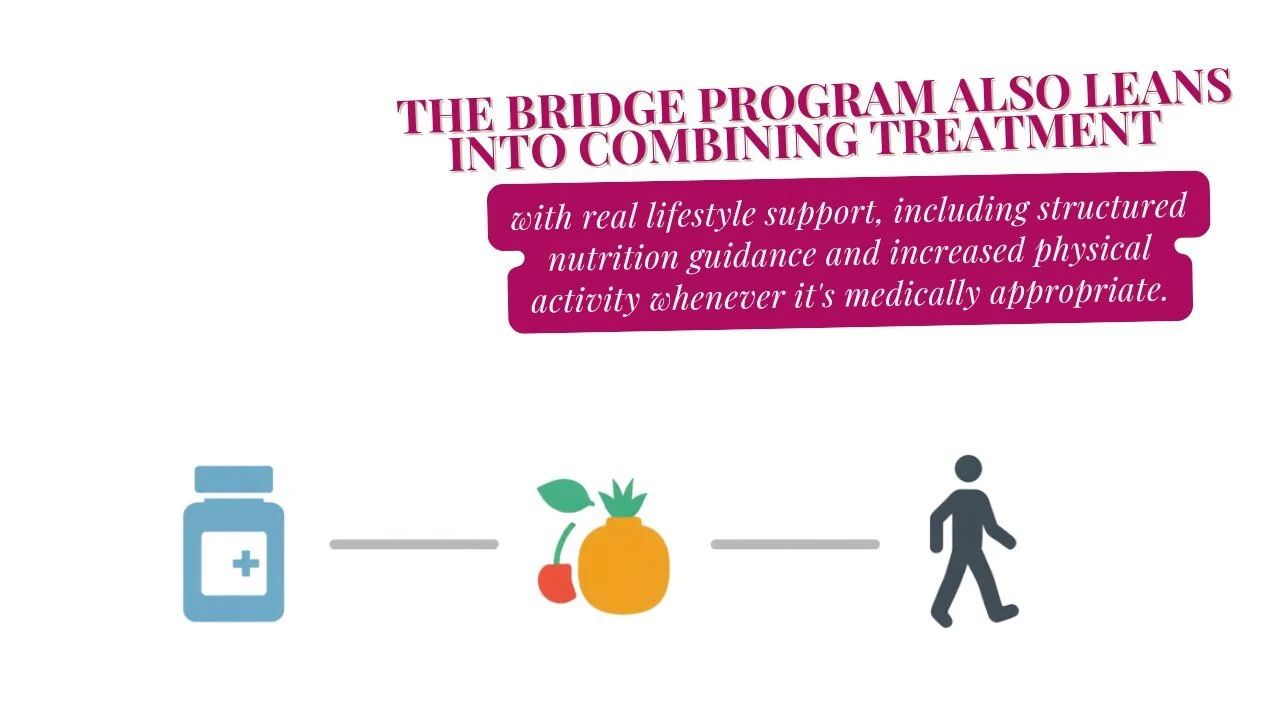
On top of medication access, the Bridge Program also leans into combining treatment with real lifestyle support, including structured nutrition guidance and increased physical activity whenever it's medically appropriate. That said, there's flexibility built in — for anyone unable to be physically active due to recent surgery, mobility limitations, or other medical restrictions, that requirement can be adjusted. And one more detail worth knowing: the $50 monthly cost is completely separate from Part D, meaning it doesn't count toward your deductible or other cost-sharing — it just functions as its own standalone benefit built to improve access to care.
The List of Weight Loss Medications Covered by the Bridge Program
The Bridge Program covers a specific lineup of GLP-1 receptor agonist medications for chronic weight management, and there's actually a nice range of options here depending on what fits your life best. Right now, that includes Wegovy in both pill and auto-injector forms, the Zepbound QuickPen, and the newer oral option, Foundo. Each one comes with its own practical perks — the Zepbound QuickPen, for instance, uses a simple click-dosing system that delivers four doses per pen, and it's travel-friendly since it can stay at room temperature once it's in use, which is honestly a nice convenience factor for anyone with a busy or on-the-go lifestyle.
It's worth knowing what's not on the list too. Older medications like Saxenda, along with certain other oral GLP-1–related therapies, aren't part of this specific coverage pathway — they may still be available outside the Bridge Program, just not at this $50 rate. Newer agents still in development haven't been added to the framework yet either, so the list is expected to evolve over time as more options hit the market. If you do need to switch medications because of side effects, personal preference, or just not seeing the response you'd hoped for, that's totally allowed — you'll just need a new prior authorization each time, since that step confirms the new prescription still meets eligibility criteria.
Speaking of prior authorization, that's really the engine that keeps this whole program running smoothly. Your prescribing clinician submits documentation confirming your BMI, relevant medical conditions, and that the medication is specifically for chronic weight management rather than another Part D–covered use like diabetes. The submission also needs a clear Bridge Program indication along with an obesity diagnosis code to kick off the review, and most patients can expect a response within a few days, though full processing might take closer to a week. Once you're approved, you're looking at that flat $50 monthly cost — completely separate from your Part D deductible or coverage phases — which makes the Bridge Program a genuinely structured, affordable pathway to treatment that simply hasn't existed for Medicare beneficiaries until now.
So that's the Bridge Program, beginning to end — from how it qualifies you, to which medications make the list, to how the whole prior authorization process actually works in real life. And honestly, if there's one thing to take away from today's episode, it's this: for the first time ever, Medicare beneficiaries have a real, structured pathway to obesity treatment, and that's genuinely a big deal.
Is it perfect? No — there's still uncertainty about what happens after December 2027, and there's paperwork involved, and not every medication or every patient situation is covered. But for a population that's historically been completely shut out of this kind of treatment, having any door open is a meaningful shift. If you think you might qualify, the best next step is a conversation with your doctor — bring up your BMI, your health history, and ask specifically about the Medicare GLP-1 Bridge by name, since that's the program your provider will need to reference when submitting documentation.
Thanks so much for reading. If this post helped clear things up, share it with someone who might be navigating this too — chances are, you know someone on Medicare who's been wondering whether this kind of treatment is finally within reach. We'll keep tracking this story as it develops, including whatever comes next after 2027. Until then, take care of yourselves, and we'll see you in the next post.
More from The Dr. Francavilla Show:
Subscribe to The Dr. Francavilla Show on